



Quick Summary: My favorite classic French madeleines, also called madeleine cookies, have a perfect shell shape, density, texture, and a delicious taste. Here is the best madeleine recipe with all the tips and tricks on how to make homemade madeleines with a hump on top.
This post is a part of my Madeleine series in tribute to this iconic French pastry and all that it means, from fascinating madeleine history, choosing the right ingredients and madeleine pan, all the secrets of authentic madeleine hump, and storage suggestions - you name it!
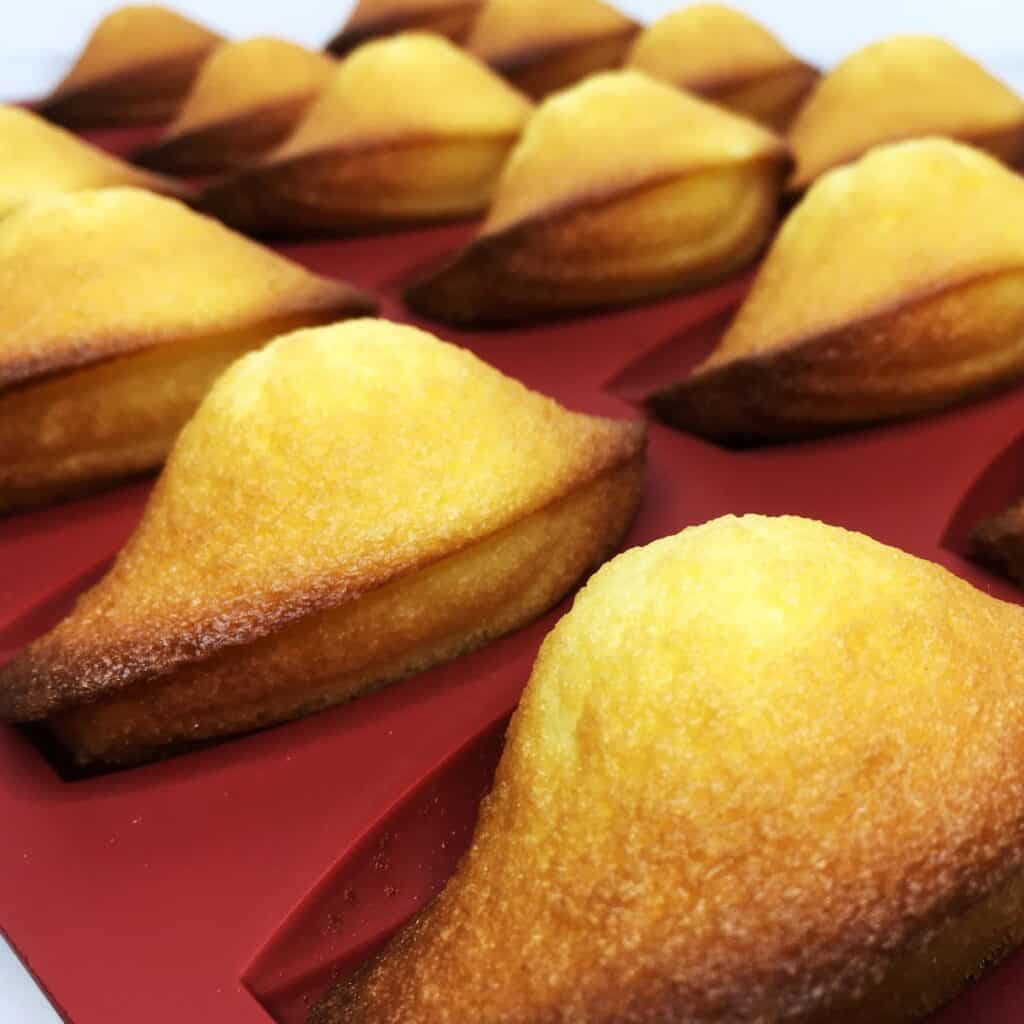
Perfect madeleine recipe
This madeleine recipe is one of those on the Internet that guarantees perfectly shaped, authentic madeleines with a signature hump on top. It is foolproof, tested, and re-tested by me in my home kitchen and numerous readers.
I have put together all the tips and tricks to guide you. So take notes on the essential steps before you get started, and enjoy.
I highly recommend downloading my troubleshooting guide, where I answer all the questions regarding the madeleine pastry.
What are madeleines: cookies or sponge cakes?
French madeleines are authentic shell-shaped cakes of French origin, perfect for breakfast, afternoon snacks, and lunchbox ideas.
There is much debate over whether madeleines are cookies or cakes. Although many think they are teacake cookies (or sponge-cake-like French madeleine cookies), they are actually mini sponge cakes. But even in France, where the madeleines originated, many chefs still call them madeleine cookies.
Ingredients
For ingredients and detailed instructions, refer to the recipe card below.
- Large eggs at room temperature
- Granulated sugar
- Unsalted butter: I always use European or European-style butter with 82% fat content.
- Flour: Use all-purpose flour or French T55 flour.
- Honey: I use chestnut honey, but you can replace it with your favorite honey, golden syrup, or maple syrup. You can use liquid or crystallized honey; its consistency doesn't matter.
- Baking powder, fresh and aluminum-free.
- Vanilla bean: Use scraped seeds or replace them with ½ to 1 teaspoon of pure vanilla extract, orange blossom water, or lemon juice.
- Lemon zest: Use organic lemon to make fresh zest or replace it with orange zest. You can omit this ingredient if desired.
How to make French madeleines
Step 1: Place large eggs, granulated sugar, honey, and the scraped seeds from half of the vanilla bean in a large bowl, and beat with a hand whisk (not a hand or stand mixer) for 1-2 minutes.
Step 2: Sift flour and baking powder into a separate bowl. Add the dry ingredients to the egg mixture, whisking or using a rubber spatula to combine.
Step 3: Pour the melted butter (it must be cooled to 120°F (50 °C) and whisk again. Add lemon zest and gently mix.
Step 4: Cover the batter with a piece of plastic wrap in contact with the surface and refrigerate overnight, or, even better, for 24 hours. The plastic film must touch the batter's surface, not just cover the bowl.
Step 5: Preheat the oven to 425°F (220°C). Using a pastry brush, butter the cavities of a metal madeleine pan. Then dust it with flour and tap off any excess flour. There is no need to grease a silicone mold. Using a piping bag or a spoon, fill the cavities up to ¾.
Step 6: Bake at 425°F (220°C) for 3 minutes. Then, switch off the oven for 8 to 10 minutes. The madeleines will get that famous bump on top. Next, turn the oven to 320°F (160°C) for the other 3 to 4 minutes.
Step 7: Remove golden brown madeleines from the oven and cool in the mold for 5 minutes. Take them out one by one, simply pushing each cavity from the bottom. Place cakes on the side, still in the mold, so they completely cool (do not use a wire rack to avoid its marks on the surface of the madeleines).
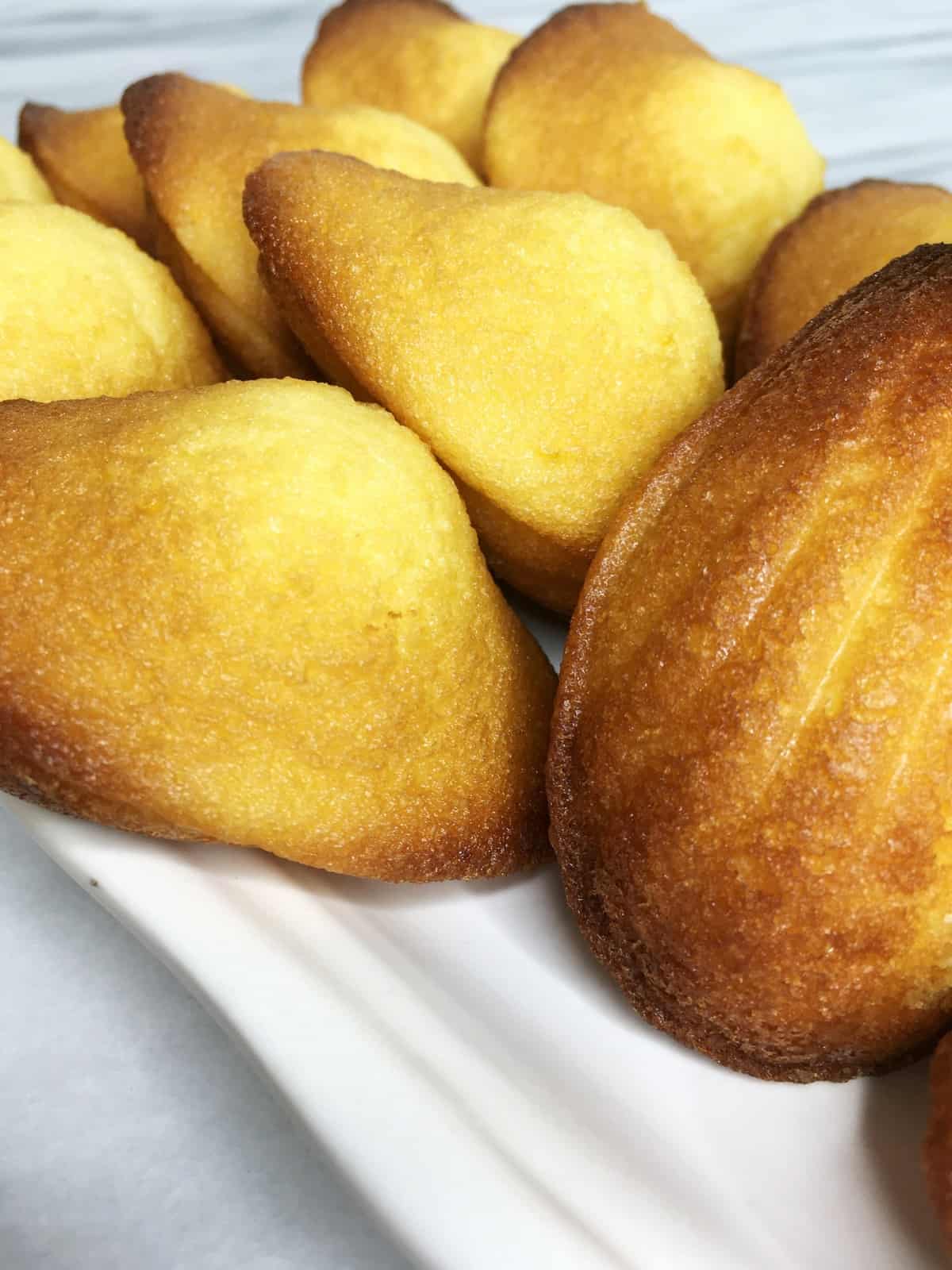
Expert Tips
- Do not overheat butter while melting. To avoid this, use medium heat; then, turn off the heat when half of the butter is melted and mix the butter off the heat.
- Preheat the oven to 425°F (220°C) and let it heat for 10 minutes. A well-prepared hot oven is essential for getting the bump on madeleines.
- Leave the filled mold in the fridge while preheating/heating the oven.
- Respect the temperature regimen to make perfect madeleines. The ideal temperature formula is 3 + 8 + 4, where 3 is 3 minutes of baking at 425°F (220°C), "8" is 8 min with the oven switched off, and "4" is 4 min of baking at 320°F (160°C). You might need to test your oven and adjust this formula, for example, to 3 + 7 + 3 or something different. Adjusting the last few minutes of baking is essential to prevent madeleines from burning.
- Bake madeleines on a baking rack in the middle of the oven and not on a baking sheet.
- Bake one batch of madeleines (one mold) at a time. After each batch, clean the mold, then bake the rest. Between batches, chill the remaining batter in the fridge.
How to serve madeleines
Serve the madeleines immediately (straight from the oven). The French enjoy them with a cup of Earl Grey, a black tea flavored with bergamot.
To appreciate their taste and release their flavor, madeleines must be dipped in tea, as Marcel Proust did with little cakes. Unfortunately, coffee isn't the same.
Recipe variations
Traditional French madeleines are lemon madeleines flavored with lemon zest, but you can customize them:
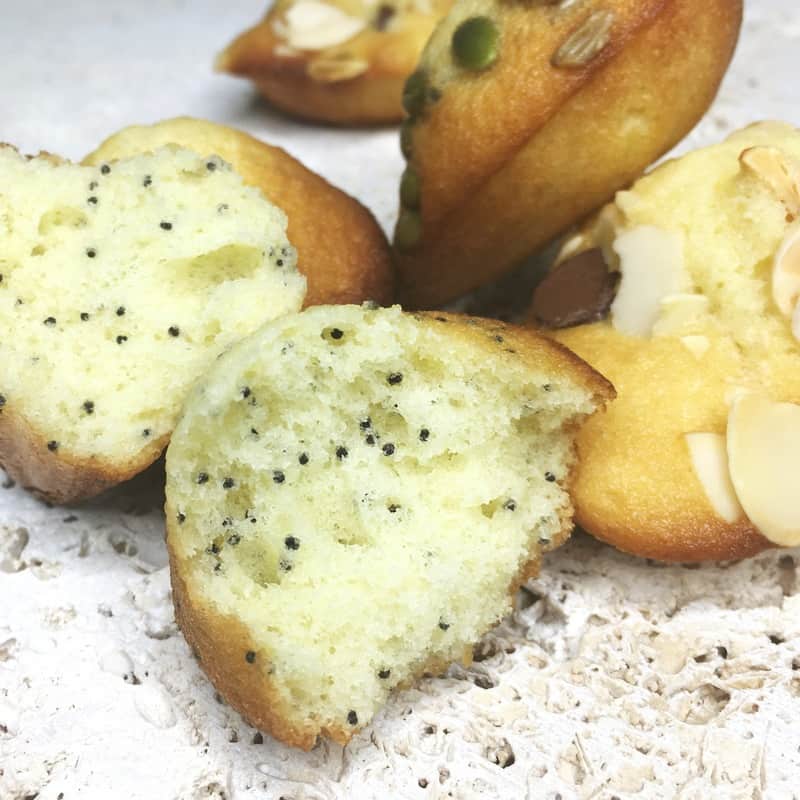
- Add poppy seeds to make Lemon Poppy Seed Madeleines.
- Spice madeleines with spice blends to make Gingerbread Madeleines.
- Dip madeleines in melted dark or white chocolate.
- Create flavored madeleines with a twist on a classic.
- Experiment with different molds, such as a spherical scalloped mold or a heart-shaped pan from CHEFMADE.
- Skip all those pesky steps and make a Madeleine Cake.
Storing & freezing
Store madeleines in an airtight container (preferably glass) for up to 4 days. The baked madeleines don't need to be refrigerated; they can be stored at room temperature
Freeze madeleines for up to 3 months, but they may lose some flavor. To thaw, bring them to room temperature for one to two hours. Read more about how to store madeleines.
Recipe FAQ
Are madeleines cookies or cakes?
Despite often being called madeleine cookies, madeleines are actually small French sponge cakes baked in a shell-shaped mold. The name cookie is a popular nickname because of their small, single-serving size, but their light, cakey crumb makes them true little cakes.
How do you get the hump on madeleines?
The signature hump is caused by a temperature shock. Chill the batter well, ideally overnight, then bake it in a hot oven. The cold batter meeting high heat forces the center to rise quickly into the classic bump.
Why do you chill the madeleine batter?
Chilling firms up the butter and relaxes the batter, which is what creates the hump and gives madeleines their fine, even texture. Rest it for at least a few hours, though overnight gives the best results.
How long can you keep madeleine batter?
Refrigerate the batter covered with plastic film in contact, or in a pastry bag, for up to 2 days. Do not freeze the raw batter.
Can you make madeleines without a mold?
Yes. A silicone muffin pan works as a substitute, and you can line the wells with cupcake liners. You can also bake the batter in small rectangular or round molds. You lose the shell shape but keep the flavor and texture.
How do you store baked madeleines?
Store baked madeleines in an airtight container at room temperature for up to 2 days. They are best the day they are baked, when the edges are still slightly crisp, but they also freeze well once cooled.
More madeleine recipes to try

Want more delicious and beautiful recipes? Subscribe to my newsletter and follow me on Facebook, Pinterest, and Instagram for my latest updates. If you make this recipe, please leave a star rating on the recipe card and comment below!
PrintRecipe card
Classic French Madeleines (Madeleine Cookies)

This guide is the best madeleine recipe for homemade French madeleines. They are perfect in shape, density, and texture, with a delicious taste that can't be matched.
- Prep Time: 20 minutes
- Cook Time: 10 minutes
- Total Time: 30 minutes
- Yield: 36 1x
- Category: Small cakes
- Method: Baking
- Cuisine: French
Ingredients
- 250 g eggs (5 eggs), room temperature
- 1 ¼ cups (250 g) granulated sugar
- 8.8 oz (250 g) unsalted butter, melted and cooled
- 2 cups (250 g) all-purpose flour
- 1 ⅓ tsp (12 g) chestnut honey
- ½ vanilla bean
- 2 tsp (10 g) baking powder
- ½ lemon, zest
Instructions
- To make the batter, place the eggs, granulated sugar, honey, and the scraped seeds from half of the vanilla bean in a large bowl, and beat with a hand whisk. Sift flour and baking powder together in a separate bowl using a flour sifter. Add the dry ingredients to the egg mixture, whisking or using a rubber spatula to combine. Add melted butter (it has to be cooled to 120°F (50°C) and whisk again. Zest half a lemon with a zester grater, add to the butter mixture, and mix.
- Cover the batter with plastic film on contact and refrigerate overnight, or even better, for 24 hours. The plastic wrap must touch the batter's surface, not just cover the bowl.
- Preheat the oven to 425°F (220°C). Using a pastry brush, butter the cavities of the metal madeleine pan, dust it with flour, and tap any excess flour; there is no need to grease a silicone mold. Using a pastry bag, fill the cavities up to ¾.
- Bake at 425°F (220°C) for 3 minutes. Then, switch off the oven for 8 to 10 minutes. The madeleines will get that famous bump on top. Turn the oven to 320°F (160°C) for the other 3 to 4 minutes.
- Remove the madeleines from the oven and cool in the mold for 5 minutes. Then, take them out one by one, simply pushing each cavity from the bottom. Place the madeleines on the side, still in the mold, so they can completely cool (do not use a wire rack to avoid its marks on the madeleines).
Notes
- Do not overheat butter while melting. To avoid this, turn off the heat when half the butter has melted, then mix the butter off the heat.
- Preheat the oven to 425°F (220°C) and let it heat for 10 minutes. A well-prepared hot oven is essential for getting the bump on madeleines.
- Leave the filled mold in the fridge while preheating/heating the oven.
- Respect the temperature regimen while baking. The ideal temperature formula is 3 + 8 + 4, where 3 is 3 minutes of baking at 425°F (220°C), "8" is 8 minutes with the oven switched off, and "4" is 4 minutes of baking at 320°F/160 °C. You might need to test your oven and adjust this formula, for example, 3 + 7 + 3, or something different. Adjusting the last few minutes of baking is essential to prevent madeleines from burning.
- Bake cakes on a baking rack in the middle of the oven and not on a baking sheet.
- Bake one batch of madeleines (one mold) at a time. After each batch, clean the mold, then bake the rest. Keep the rest of the batter in the fridge between batches.
Nutrition
- Serving Size: 1
- Calories: 112
- Sugar: 7.3 g
- Sodium: 27 mg
- Fat: 6.4 g
- Saturated Fat: 3.8 g
- Carbohydrates: 12.7 g
- Fiber: 0.2 g
- Protein: 1.7 g
- Cholesterol: 41 mg
The nutritional information has been calculated using an online recipe nutrition calculator such as Verywellfit.com and is intended for informational purposes only. These figures should be used as a general guideline and not be construed as a guarantee.
The recipe was adapted from http://www.niksya.ru. It was originally published in February 2018. The recipe has been revised to include improved content and photos.
Leave a Reply