
• Skip to primary navigation
  • Skip to main content
  • Skip to primary sidebar

Baking Like a Chef logo

  • ABOUT
  • RECIPES
  • CLUB
  • SHOP
menu icon
go to homepage
  • Recipes
  • Basics
  • Printables
  • Subscribe
  • About
search icon
Homepage link
  • Recipes
  • Basics
  • Printables
  • Subscribe
  • About
×

Want to learn sourdough?

START

Home » Recipe Index

Cucidati (Italian Fig Cookies)

Dec 11, 2024 · Leave a Comment

Cucidati cookies on a white serving plate.

Quick Summary: Cucidati, also spelled cuccidati, are traditional Sicilian fig cookies: a buttery pastry shell wrapped around a spiced filling of figs, dates, and nuts, then glazed and sprinkled. They are a beloved make-ahead Italian Christmas cookie.

Cucidati cookies on a white serving plate.

What are cucidati cookies?

Cucidati are traditional Italian fig cookies originating from Sicily. They feature a buttery, shortbread-like pastry wrapped around a rich, flavorful fruit filling. The filling typically includes dried figs, dates, raisins, and nuts, creating a sweet and chewy center.

The name cucidati translates to "little bracelets" in Sicilian. These cookies are also known by alternate spellings, such as cuccidati or buccellati.

Why you'll love this recipe

  • Simple and delicious. This recipe keeps things simple, and it is perfect for all skill levels.
  • Make-ahead friendly: You can prepare both the dough and filling in advance.
  • Perfect for gifting. These festive cookies make a delicious homemade holiday gift. You will love these cookies alongside traditional German cinnamon star cookies and French Bredele.

Ingredients

For ingredients and detailed instructions, refer to the recipe card below.

  • For the cookie dough: Unsalted butter, powdered sugar, egg, flour, salt, baking powder, lemon zest, and milk.
  • For the filling: Dried figs, dried dates, honey, cognac (or other strong alcohol), orange zest, orange juice, lemon juice, cinnamon, salt, ground cloves, nutmeg, walnuts.
  • For decoration: Powdered sugar, lemon juice, sprinkles, or nonpareils.

Equipment

You need only a few basic tools to make these Italian fig cookies:

  • Stand mixer: to make the cookie dough.
  • Food processor: to blend the fig and date filling.
  • Rolling pin: to roll out the dough.
  • Pastry cutter or knife: to cut and shape the cookies.
  • Baking sheet with parchment paper: to bake the cookies.
  • Wire rack: to cool the cookies before glazing.

How to make Italian fig cookies cucidati

Step 1: Make the cookie dough: Mix flour, sugar, salt, baking powder, and orange zest in a stand mixer. Add cold butter and mix until crumbly. Add egg and milk; mix until dough forms. Wrap and refrigerate for at least 3 hours.

Step 2: Make the filling: Chop figs (remove stems) and dates. Blend with honey, alcohol, orange zest, orange juice, salt, and spices until a thick paste forms. Toast and chop nuts, then mix them into the paste.

Step 3: Assemble the cookies: Divide the dough and filling into two portions. Roll out dough into a 9x6-inch (23x15 cm) rectangle, then cut in half lengthwise. Shape filling into logs and place along the edges of the dough. Roll the dough over the filling and seal. Cut into 1.5-inch (about 4 cm) slices.

Step 4: Bake the cookies: Preheat the oven to 375°F (190°C). Place cookies on a parchment-lined baking sheet and bake for 15-18 minutes until lightly golden. Let them cool completely before glazing.

Step 5: Glaze the cookies: Mix powdered sugar and lemon juice until smooth. Drizzle over cooled cookies and decorate with sprinkles while the glaze is still wet.

Expert tips

  • Chill the dough: Let the pastry dough rest in the refrigerator for at least 2 hours. Cold dough is much easier to handle.
  • Use the right tools: A food processor or pastry cutter works well for preparing the dough.
  • Prevent sticking: Lightly flour your work surface before rolling out the dough. Alternatively, roll it between two sheets of parchment paper for easy cleanup.
  • Get creative: Feel free to experiment with different combinations of dried fruits and nuts for the filling.
  • Cool before glazing: Ensure the cookies are completely cooled before drizzling them with lemon glaze to prevent the glaze from melting.
  • Recipe variations
  • Cucidati are easy to adapt to your taste and family tradition, much like other Italian cookies such as cantucci:
  • Filling: vary the dried fruit and nuts by adding raisins, apricots, walnuts, almonds, or a little chocolate, plus a splash of orange liqueur or rum for extra depth.
  • Shape: form them as sliced logs, individual pinched bundles, or the traditional ring or bracelet shape.
  • Finish: drizzle with lemon or orange glaze and top with nonpareils, or dust simply with powdered sugar for a more rustic look.

Storing and freezing

Store cucidati cookies at room temperature in an airtight container for up to 1 week. You can freeze cookies for up to 3 months.

Recipe FAQ

What are cucidati (cuccidati)?
Cucidati, also spelled cuccidati or buccellati, are traditional Sicilian Italian fig cookies. They have a tender, buttery pastry shell wrapped around a sweet, spiced filling of dried figs, dates, raisins, and nuts, and are usually finished with a lemon glaze and sprinkles.

How do you pronounce cucidati?
It is pronounced roughly "koo-chee-DAH-tee." The double-c spelling cuccidati is said the same way. Both refer to the same Sicilian fig cookie.

What does cucidati mean in English?
The name comes from the Sicilian word for "little bracelets," a nod to the traditional ring- or bracelet-shaped cookies once made for the holidays.

Can you make cucidati ahead of time?
Yes, they are a great make-ahead cookie. You can prepare the dough and the fig filling a day or two in advance and keep them chilled, or bake the cookies and store or freeze them until you are ready to glaze and serve.

How do you store and freeze cucidati?
Store them at room temperature in an airtight container for up to 1 week, or freeze the baked cookies for up to 3 months. For the best look, glaze them after thawing.

Why do you chill the dough?
Chilling firms up the butter, making the pastry much easier to roll, fill, and slice without sticking or tearing. Rest it in the fridge for at least 2 to 3 hours before shaping.

Love cookies? Try these now!

  • Cantucci (Italian Almond Biscotti)
  • Mini Gingerbread Men Cookies
  • French Vanilla Cookies
  • Sweetened Condensed Milk Cookies
  • Cornstarch Cookies
  • Browse all my cookie recipes.

Want more delicious and beautiful recipes? Subscribe to my newsletter and follow me on Facebook, Pinterest, and Instagram for my latest updates. If you make this recipe, please leave a star rating on the recipe card and comment below!

Print

Recipe card

Cucidati (Italian Fig Cookies)

Cucidati cookies on a white serving plate.
Print Recipe
Save Recipe Recipe Saved

5 Stars 4 Stars 3 Stars 2 Stars 1 Star

No reviews

Cucidati, the beloved Italian fig cookies, are rich in flavor and tradition. With a tender butter pastry shell and a spiced fig filling, these festive treats are perfect for the Christmas holiday.

  • Author: Irina Totterman
  • Prep Time: 40 minutes
  • Cook Time: 15 minutes
  • Total Time: 55 minutes
  • Yield: 25 1x
  • Category: Cookies
  • Method: Baking
  • Cuisine: Italian

Ingredients

Scale

For the cookie dough:

  • 1 stick (113 g) unsalted butter 82.5%, cold
  • ½ cup (65 g) powdered sugar 
  • 1 medium egg
  • 1 ½ cups + 4 tablespoons (220 g) all-purpose flour
  • 1 pinch of salt
  • ⅓ teaspoon (2 g) baking powder
  • ½ lemon, zest
  • 1 ⅓ tablespoons (20 g) whole milk

For filling:

  • 7 oz. (200 g) dried figs 
  • 2 oz. (60 g) dried dates
  • 2 teaspoons (15 g) honey
  • 1 ½ tablespoons (25 g) cognac (or other strong alcohol)
  • ½ orange, zest
  • 2 ⅓ tablespoons (35 g) orange juice, freshly squeezed
  • 2 tablespoons (30 g) lemon juice, freshly squeezed
  • 1 pinch of ground cinnamon
  • 1 pinch of salt 
  • 1 pinch of ground clove
  • 1 pinch of nutmeg
  • 3.5 oz. (100 g) walnuts

For decoration:

  • 1 ⅕ cups (150 g) powdered sugar 
  • 1 ⅓ tablespoons (20 g) lemon juice
  • 1 tablespoon sprinkles or nonpareils

Instructions

  1. To make the cookie dough, combine the flour, sugar, salt, baking powder, and orange zest in the bowl of a stand mixer.
  2. Add the cold butter, cut into small pieces, and mix with the paddle attachment until the mixture resembles coarse crumbs.
  3. Add the egg and milk and mix until the dough comes together.
  4. Wrap the dough in plastic wrap and refrigerate for at least 3 hours to firm up.
  5. To make the filling, chop the figs (remove stems) and pitted dates.
  6. Combine the chopped figs and dates in a food processor with honey, alcohol, orange zest, orange juice, salt, and spices. Blend until a thick, cohesive paste forms.
  7. Toast the nuts in a dry pan until aromatic, chop finely, and fold into the fig paste.
  8. To assemble the cookies, divide the dough and filling into two portions for easier handling.
  9. Roll out one portion of dough into a rectangle, approximately 9x6 inches (23x15 cm). Cut it in half lengthwise.
  10. Shape the filling into two thin logs and place them along the long edges of the dough. Roll the dough over the filling to enclose it, forming a sealed log. Alternatively, spread the filling evenly over the dough and roll it up like a jelly roll, creating thinner layers of filling within the dough. Cut the log into 1-½-inch (about 4 cm) slices. Repeat with the second portion of the dough and filling.
  11. Preheat oven to 375°F (190°C). Place the cookies on a baking sheet lined with parchment paper and bake for about 15-18 minutes, or until lightly golden.
  12. Let the baked cookies cool completely before glazing.
  13. To make the lemon glaze, combine powdered sugar with lemon juice in a small bowl, mixing until smooth and pourable.
  14. Drizzle the glaze over the cooled cookies and decorate with festive sprinkles or nonpareils while the glaze is still wet.

Notes

  1. Let the pastry dough rest in the refrigerator for at least 2 hours. Cold dough is much easier to handle.
  2. Use a food processor or pastry cutter to prepare the dough.
  3. Lightly flour your work surface before rolling out the dough. Alternatively, roll it between two sheets of parchment paper for easy cleanup.
  4. Feel free to experiment with different combinations of dried fruits and nuts for the filling.
  5. Ensure the cookies are completely cooled before drizzling them with lemon glaze to prevent the glaze from melting.

Nutrition

  • Serving Size: 1 cookie
  • Calories: 161
  • Sugar: 14.6g
  • Sodium: 31mg
  • Fat: 6.7g
  • Saturated Fat: 2.6g
  • Carbohydrates: 23.4g
  • Fiber: 1.5g
  • Protein: 2.8g
  • Cholesterol: 25mg

Thank you for following me on Pinterest, Facebook, and Instagram. Hashtag #bakinglikeachef so I can see your creations.

The nutritional information has been calculated using an online recipe nutrition calculator such as Verywellfit.com and is intended for informational purposes only. These figures should be used as a general guideline and not be construed as a guarantee.
Christmas Gingerbread Madeleines

Apr 1, 2024 · 12 Comments

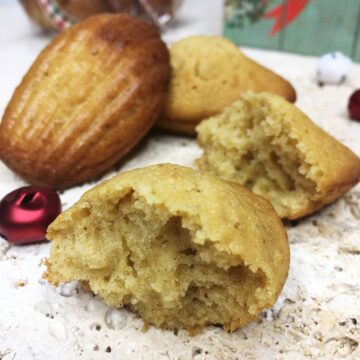
Halved spiced madeleines with the rest of cakes in the background.

Quick Summary: Christmas Gingerbread madeleines, or spiced madeleines, are a holiday twist on classic madeleines and a great, delicious alternative to gingerbread houses. Made with fragrant spices, rich brown sugar, and a dash of dark rum, they will fill your home with holiday cheer.

Whether you arrange gingerbread cookies into a Christmas tree garland, French Gingerbread, or gorgeous Gingerbread Pavlova, they make gingerbread fun. These little bites make great edible holiday gifts and additions to a holiday cookie box.

Halved spiced madeleines with the rest of cakes in the background.

What are madeleines?

Madeleines are small, shell-shaped French sponge cakes, traditionally baked in a scallop-shaped mold and known for the little bump, or hump, that rises on top.

Made with a simple butter-rich batter, they sit somewhere between a cookie and a tiny cake. This gingerbread version keeps the classic buttery, cakey crumb but adds warm holiday spices for a festive twist.

What spices are in gingerbread madeleines?

The spice blend is what gives these madeleines their gingerbread character. This recipe uses ground ginger, cinnamon, nutmeg, and cloves, roughly in a 4:4:2:1 ratio of ginger, cinnamon, nutmeg, and cloves.

You can deepen the flavor with a pinch of ground coriander (no more than ½ teaspoon) or a little ground black pepper (no more than ⅛ teaspoon), or swap the whole blend for 1 teaspoon of store-bought gingerbread spice.

If mixing your own, keep it to no more than four spices at once so the flavor stays balanced rather than muddy.

Equipment

You need only a few basic tools to make these gingerbread madeleines:

  • Madeleine pan: to give the cookies their shell shape.
  • Mixing bowl: to combine the batter.
  • Hand whisk: to whisk the ingredients.
  • Flour sifter: to sift the flour and spices.
  • Pastry bag: to pipe the batter neatly into the mold.
  • Wire rack: to cool the madeleines.

Ingredients

For ingredients and detailed instructions, refer to the recipe card below.

  • Large eggs at room temperature
  • Golden brown sugar: You can replace it with dark brown sugar, light brown muscovado sugar, dark brown muscovado sugar, or French Vergeoise sugar.
  • Unsalted butter, melted and cooled to 120°F (50°C).
  • All-purpose flour
  • Acacia honey: You can substitute another neutral-flavored honey.
  • Baking powder is a leavening agent.
  • Spice blend: Use a mix of ground ginger, cinnamon, nutmeg, and cloves. Experiment with spices by adding or replacing some with ground coriander (no more than ½ teaspoon), ground pepper (no more than ⅛ teaspoon), or using 1 teaspoon McCormick gingerbread spice instead of the recipe's spice mix. Please use no more than four spices at once when mixing your own.
  • Dark rum: Omit this ingredient to make the recipe kid-friendly.

How to make gingerbread madeleines

Step 1: Place eggs (at room temperature), sugar, and honey in a large mixing bowl and beat with a hand whisk.

Step 2: In a second bowl, sift all-purpose flour with baking powder, ground ginger, cinnamon, nutmeg, and cloves. Add the dry ingredients to the main mixture and whisk to combine.

Step 3: Add the melted and cooled butter to 120°F (50°C) and whisk again. Add the dark rum and mix.

Step 4: Cover the batter with plastic wrap, keeping it in contact, and refrigerate overnight.

Step 5: Preheat the oven to 425°F (220°C). Butter the cavities of a madeleine mold with softened butter. Dust the mold with flour, then tap off the excess. If using a silicone mold, there is no need to grease it. Read more about how to bake with silicone molds.

Step 6: Fill the cavities to three-fourths full using a pastry bag or a spoon.

Step 7: Bake madeleines at 425°F (220°C) for 3 minutes. Then, switch off the oven for 7 to 8 minutes. The madeleines will get that famous bump or hump on top. Then, set the oven to 320°F (160°C) and cook for 3 to 4 minutes.

Step 8: Remove the madeleines from the oven and cool them in the mold for 5 minutes. Turn the mold over and tap it firmly; the madeleines will come out on their own. If using a silicone mold, remove them one by one, pushing up from the bottom of each cavity.

Step 9: Place the madeleines on their sides, still in the mold (not on a cooling rack), to cool. Repeat the same procedure to bake the second batch of madeleines.

Gingerbread madeleines on a stone board.

Expert Tips

  1. Learn all the tips and tricks for making perfect French madeleines in this comprehensive guide. Read all the secrets about the madeleine hump.
  2. To ensure perfect madeleines, cool your madeleine pan between batches. Grease and flour the metal mold before each batch.
  3. Serve madeleines warm, right from the oven, or within one hour after baking. Enjoy them with a cup of Earl Grey tea, coffee, French hot chocolate, or a glass of Christmas champagne.

Storing & freezing

Store gingerbread madeleines in an airtight container. A BPA-free, microwave-safe Tupperware plastic box or a large glass jar will also work. Keep your madeleines at room temperature for up to 4 days.

Freeze madeleines in a Ziploc freezer bag for up to 3 months, though they may lose a little of their flavor over time. To thaw, bring them to room temperature for 1 to 2 hours.

Recipe FAQ

What are gingerbread madeleines?
Gingerbread madeleines are a festive twist on classic French madeleines, flavored with warm spices like ginger, cinnamon, nutmeg, and cloves, plus brown sugar and a dash of dark rum. They are often called spiced madeleines or Christmas madeleines.

What are the best ingredients for gingerbread madeleines?
The best ingredients are room-temperature eggs, golden brown sugar (or muscovado for deeper flavor), honey, all-purpose flour, baking powder, high-quality butter, and warm spices. Muscovado sugar and browned butter add extra richness if you want a more intense gingerbread taste.

How do you make madeleines moist?
Moist madeleines rely on good butter, which is why they are called madeleines pur beurre in French. Using high-quality butter and not overbaking keeps them tender inside with a delicate, cakey crumb.

Why do you chill the madeleine batter?
Chilling the batter, ideally overnight, firms up the butter and creates the temperature shock in the oven that produces the signature bump or hump on top of the madeleines.

Do you need to refrigerate madeleines?
The batter should be refrigerated to form the hump, but baked madeleines do not need refrigeration. Store them at room temperature in an airtight container to keep them fresh.

Can you make gingerbread madeleines ahead of time?
Yes. You can prepare the batter and chill it overnight, then bake it fresh when needed. Baked madeleines are best the day they are made, but they keep for up to 4 days in an airtight container and freeze well.

Love madeleines? Try these next!

  • Classic French madeleines
  • Lemon poppy seed madeleines
  • Raspberry madeleines
  • Or read more about all things madeleines

Want more delicious and beautiful recipes? Subscribe to my newsletter and follow me on Facebook, Pinterest, and Instagram for my latest updates. If you make this recipe, please leave a star rating on the recipe card and comment below!

Print

Recipe card

Gingerbread Madeleines

Gingerbread madeleines with a bag of these cakes in the background.
Print Recipe
Save Recipe Recipe Saved

5 Stars 4 Stars 3 Stars 2 Stars 1 Star

5 from 5 reviews

Gingerbread madeleines are a holiday twist on classic madeleines and a great and delicious alternative to gingerbread houses. Made with fragrant spices, rich brown sugar, and a dash of dark rum, they are guaranteed to fill your home with Christmas cheer.

  • Author: Irina Totterman
  • Prep Time: 20 minutes
  • Cook Time: 10 minutes
  • Total Time: 30 minutes
  • Yield: 36 1x
  • Category: Cakes
  • Method: Baking
  • Cuisine: French

Ingredients

Scale
  • 5 large eggs (250 g), room temperature 
  • 1 cup + 1 ½ tablespoons (250 g) brown sugar
  • 8.8 oz. (250 g) unsalted butter, melted and cooled
  • 2 cups (250 g) all-purpose flour
  • 2 teaspoons (12 g) acacia honey
  • 2 teaspoons (10 g) baking powder
  • ½ teaspoon ground ginger
  • ½ teaspoon ground cinnamon
  • ¼ teaspoon ground nutmeg
  • ⅛ teaspoon ground cloves
  • 1 teaspoon dark rum

Instructions

  1. Prepare a madeleine pan. Grease it with softened butter and dust it with flour. Remove the excess flour. No need to grease a silicone mold.
  2. Place eggs (at room temperature), sugar, and honey in a large bowl and beat with a hand whisk.
  3. Sift the all-purpose flour with baking powder, ground ginger, cinnamon, nutmeg, and cloves; add to the main mixture and whisk to combine. Add melted and cooled butter to 120°F (50°C) and whisk again. Add dark rum and mix.
  4. Cover the batter with plastic film in contact and refrigerate overnight. 
  5. Preheat oven to 425°F (220°C). Using a pastry bag, fill the cavities to three-fourths full.
  6. Bake cakes at 425°F (220°C) for 3 minutes. Then switch off the oven for 7 to 8 minutes. The madeleines will get that famous bump or hump on top. Next, turn the oven to 320°F (160°C) for the other 3 to 4 minutes.
  7. Remove madeleines from the oven and cool them in the mold for about 5 minutes. Then, take them out one by one, pushing each silicone mold cavity from the bottom.
  8. If you use a metal madeleine mold/pan, turn the mold over and hit it hard: madeleines will come by themselves. Place cakes on their sides, still in the mold, to cool down. 

Notes

  1. Read this guide on how to make perfect French madeleines. 
  2. Store madeleines in an airtight container at room temperature for up to 2-4 days.
  3. Freeze baked madeleines for up to 6 months, then thaw at room temperature for 1 to 2 hours.

Nutrition

  • Serving Size: 1
  • Calories: 113
  • Sugar: 7.3 g
  • Sodium: 50 mg
  • Fat: 6.4 g
  • Saturated Fat: 3.8 g
  • Carbohydrates: 12.7 g
  • Fiber: 0.2 g
  • Protein: 1.7 g
  • Cholesterol: 41 mg

Thank you for following me on Pinterest, Facebook, and Instagram. Hashtag #bakinglikeachef so I can see your creations.

The nutritional information has been calculated using an online recipe nutrition calculator such as Verywellfit.com and is intended for informational purposes only. These figures should be used as a general guideline and not be construed as a guarantee.

The recipe was originally published on December 11, 2020. It has been revised to include improved content and photos.

Raspberry Madeleines (Ispahan Madeleines)

Apr 1, 2024 · 24 Comments

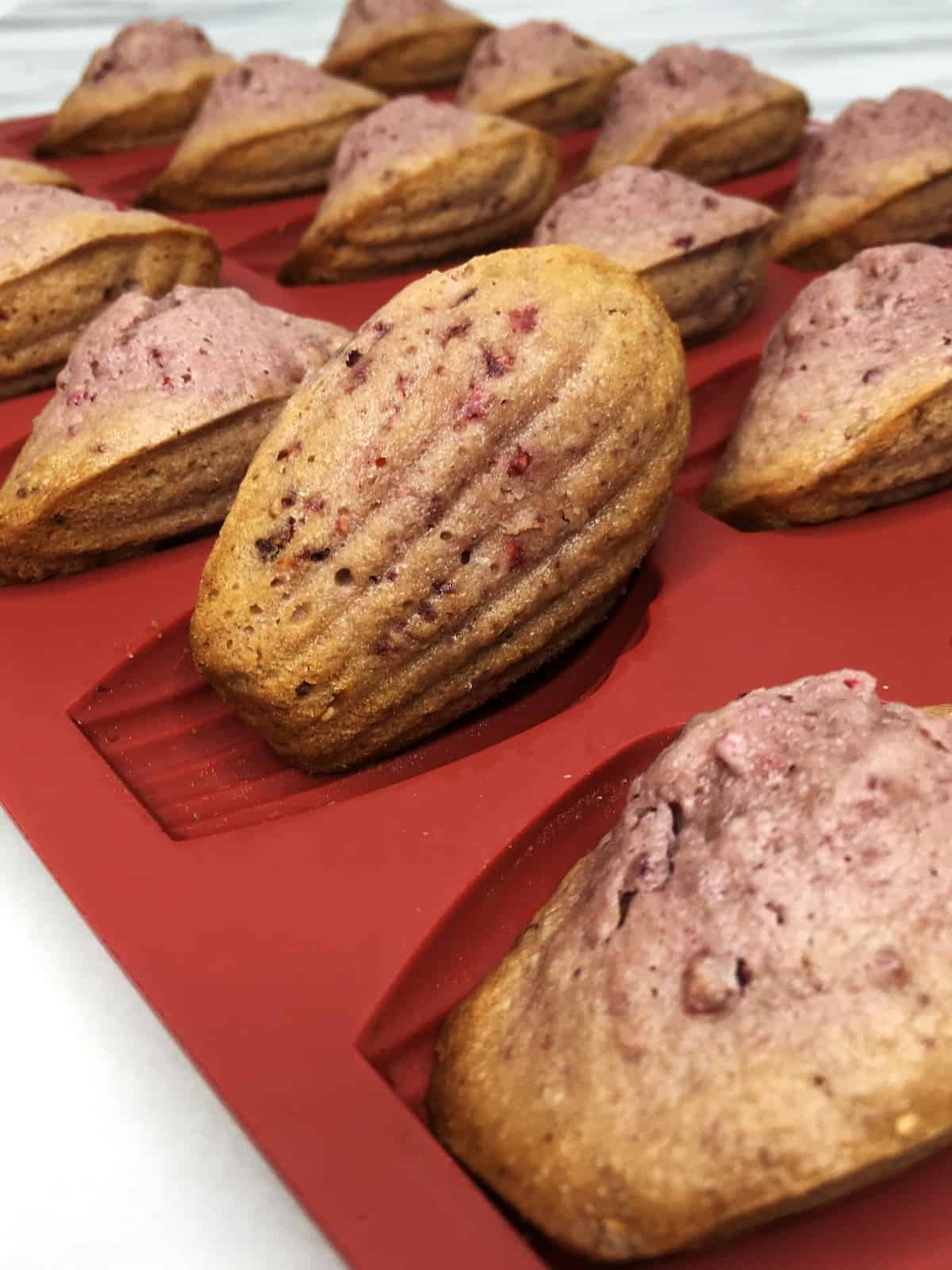
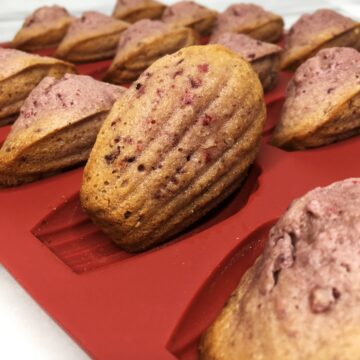
A batch of raspberry madeleines in a red silicone mold.

Quick Summary: These raspberry madeleines are a fruity twist on classic French madeleines, adapted from Pierre Hermé's Ispahan flavor. Freeze-dried raspberries give them a soft pink crumb, while a touch of rosewater adds a delicate floral note. Enjoy them at teatime or as a romantic Valentine's Day dessert, and feel free to swap the raspberries for freeze-dried strawberries or blueberries.

A batch of raspberry madeleines in a red silicone mold.

What are raspberry madeleines?

Raspberry madeleines are classic French madeleines, small, shell-shaped sponge cakes with a signature hump, that are flavored with freeze-dried raspberries.

This particular version is adapted from French pastry chef Pierre Hermé and is known as Ispahan madeleines, after his famous Ispahan pairing of raspberry and rose.

Freeze-dried raspberries are used instead of fresh ones because they add concentrated berry flavor and color without releasing extra moisture that would weigh the batter down.

Ground into a fine powder, they tint the crumb a natural pink, and a small amount of rosewater rounds out the Ispahan flavor with a gentle floral note.

What raspberries to use (and how to make raspberry powder)

These madeleines rely on freeze-dried raspberries, which are ground into a fine powder and blended into the batter, giving it a soft pink color.

You can use store-bought freeze-dried raspberries, or make your own dried raspberries at home: spread 10.5 oz. (300 g) of fresh raspberries on parchment paper, bake at 385°F (195°C) for about 2 hours, stirring every 30 minutes, then let them cool and chop them finely. This yields roughly 2 oz. (60 g) of dried raspberries.

Equipment

You need only a few basic tools to make these raspberry madeleines:

  • Madeleine pan: to give the cookies their shell shape.
  • Food processor: to grind freeze-dried raspberries into powder.
  • Saucepan: to melt the butter.
  • Stand mixer or hand whisk: to whip the batter.
  • Pastry brush: to grease the mold.
  • Small cookie scoop: to portion the batter evenly.
  • Wire rack: to cool the madeleines.
  • Parchment paper: to line surfaces as needed.

Ingredients

For ingredients and detailed instructions, refer to the recipe card below.

  • Raspberries: Use store-bought freeze-dried raspberries or make them yourself (read the recipe tips below). You can replace dried raspberries with freeze-dried strawberries or blueberries (omit rose water).
  • Unsalted butter
  • All-purpose flour
  • Baking powder
  • Large eggs at room temperature.
  • Icing sugar (aka powdered sugar)
  • Rosewater: Omit this ingredient if desired.

How to make raspberry madeleines

Step 1: Place the freeze-dried raspberries in a food processor and pulse until finely crushed.

Step 2: Melt butter in a small saucepan over low heat, then let it cool. Sift the flour with baking powder into a separate bowl, then set aside.

Step 3: Place the eggs and sugar in the bowl of a stand mixer and mix on low speed. Continue mixing, gradually adding the sifted flour mixture and melted butter.

Step 4: Add rosewater and chopped dry raspberries. Cover the bowl with cling film in contact, and refrigerate for 3 hours.

Step 5: Preheat the oven to 425°F (220°C). Use a pastry brush to brush a madeleine mold with the softened butter. Please read about baking with silicone molds.

Step 6: Transfer the madeleine mixture to a piping bag and cut the tip. Fill each indentation of the silicone madeleine tin with the batter to ¾ full, then tap the mold.

Step 7: Bake at 425°F (220°C) for 3 minutes. Then switch off the oven for 7 to 8 minutes. The madeleines will get that famous bump on top. Turn the oven to 320°F (160°C) for the other 3 to 4 minutes.

Step 8: Transfer the madeleine mold to a wire rack to cool for a couple of minutes. Then gently remove the madeleines from the pan and place them on a rack, still in the molds, until completely cool.

Expert Tips

  1. Refer to the French madeleine recipe for tips and tricks.
  2. To make 2 oz. (60 g) of dried raspberries, place 10.5 oz. (300 g) of fresh raspberries on parchment paper and bake them at 385°F/195 °C for 2 hours, stirring every 30 minutes. Let the berries cool, and chop them into small pieces.
  3. Omit the rosewater if you don't like rose flavor.
  4. If you use a metal madeleine mold, butter the cavities, dust with flour, and tap off the excess.
  5. Use a small cookie scoop or a tablespoon to scoop the batter into the madeleine pan if preferred.

How to serve

Serve raspberry madeleines the day they are baked, when the edges are still slightly crisp, alongside a cup of tea or coffee, or present them as a romantic Valentine's Day dessert.

Recipe variations

If you want to change things up, swap the freeze-dried raspberries for freeze-dried strawberries or blueberries (omit the rosewater for these) to create a different berry flavor and color.

For a filled version, pipe a little raspberry jam or coulis into the center of each baked madeleine.

Storing & freezing

Store madeleines in an airtight container at room temperature for up to 2 days.

Freeze them in a Ziploc freezer bag for up to 3 months. To thaw, bring madeleines to room temperature for 1 to 2 hours. Don't reheat them in a microwave.

Recipe FAQ

What are raspberry madeleines?
Raspberry madeleines are classic French madeleines flavored with freeze-dried raspberries. This version, adapted from French pastry chef Pierre Herme, is known as Ispahan madeleines and adds rosewater for a delicate floral note and a soft pink color.

Are these Pierre Herme's raspberry madeleines?
Yes. This recipe is adapted from Pierre Herme and translates his Ispahan flavor combination of raspberry and rose into a madeleine. The freeze-dried raspberry powder and rosewater give it that signature Ispahan taste.

How do you get the pink color and rose flavor?
The pink color comes from freeze-dried raspberries ground into a powder and folded into the batter, while the rose flavor comes from a small amount of rosewater. Together, they create the soft pink crumb and floral aroma.

Can you make raspberry-filled madeleines?
Yes. For a filled version, pipe a little raspberry jam or coulis into the center of each baked madeleine using a small piping tip, or press a thumbprint before baking and add jam. The recipe here flavors the batter rather than the filling.

Can you make the madeleine batter in advance?
Yes, you can make the batter one to two days ahead. Cover it with plastic wrap and refrigerate it. Chilling also helps the madeleines form their signature hump.

How do you store raspberry madeleines?
Store them in an airtight container at room temperature for up to two days. They are best enjoyed the day they are baked, when the edges are still slightly crisp, but they also freeze well.

Love madeleines? Try these next!

  • Classic French Madeleines
  • Madeleine Flavors
  • Christmas Gingerbread Madeleines
  • Lemon Poppy Seed Madeleines

Browse all my cookie recipes for more baking ideas.

Want more delicious and beautiful recipes? Subscribe to my newsletter and follow me on Facebook, Pinterest, and Instagram for my latest updates. If you make this recipe, please leave a star rating on the recipe card and comment below!

Print

Recipe card

Raspberry Madeleines (Ispahan Madeleines)

A batch of raspberry madeleines in a red silicone mold.
Print Recipe
Save Recipe Recipe Saved

5 Stars 4 Stars 3 Stars 2 Stars 1 Star

5 from 10 reviews

This raspberry madeleines recipe is a fruity twist on the classic French tea cake, adapted from Pierre Hermé's Ispahan flavor. Freeze-dried raspberries give the sponge a soft pink crumb, while a touch of rosewater adds a delicate floral note, making these Ispahan madeleines a lovely treat for teatime or a romantic Valentine's Day dessert.

  • Author: Irina Totterman
  • Prep Time: 20 minutes
  • Cook Time: 10 minutes
  • Total Time: 30 minutes
  • Yield: 36 1x
  • Category: Cakes
  • Method: Baking
  • Cuisine: French

Ingredients

Scale
  • 2.1 oz. (60 g) freeze-dried raspberries
  • 8.8 oz. (250 g) unsalted butter 
  • 2 cups + 1 tablespoon (260 g) all-purpose flour
  • 2 teaspoons (10 g) baking powder
  • 1 cup + 1 ½ tablespoon (270 g) eggs (see note #3)
  • 2 cups (250 g) powdered (icing) sugar
  • 1 teaspoon rosewater

Instructions

  1. Place the freeze-dried raspberries in a food processor and pulse until finely crushed. Set aside.
  2. Melt the butter over low heat, then set it aside to cool. Sift the flour and baking powder into a separate bowl, then set aside.
  3. Using the low speed of a stand mixer, mix the eggs (at room temperature) with the sugar. Continue mixing and gradually add the sifted dry ingredients, followed by the melted butter, until combined.
  4. Add the rosewater and the crushed dried raspberries, and mix until evenly incorporated.
  5. Cover the bowl with plastic wrap, pressing it against the surface of the batter, and refrigerate for 3 hours.
  6. Preheat the oven to 425°F (220°C). Brush a madeleine mold with softened butter (if using a metal mold, also dust it with flour and tap off the excess).
  7. Transfer the batter to a piping bag and snip the tip. Fill each cavity three-fourths full, then tap the mold on the counter to settle the batter.
  8. Bake at 425°F (220°C) for 3 minutes. Switch off the oven and leave the madeleines inside for 7 to 8 minutes, until the signature bump forms on top. Turn the oven to 320°F (160°C) and bake for another 3 to 4 minutes.
  9. Transfer the mold to a wire rack and let the madeleines cool for a couple of minutes. Gently remove them from the mold and let them cool completely on the rack.

Notes

  1. Refer to the French madeleines recipe, tips, and tricks.
  2. To make 2 oz. (60 g) dried raspberries, place 10.5 oz. (300 g) fresh raspberries on parchment paper and bake them at 385°F (195°C) for 2 hours, stirring every 30 minutes. Let the berries cool, and chop them into small pieces.
  3. Omit rosewater if you do not like rose flavor.
  4. 270 g eggs, approximately equal to 5 ½ whole large chicken eggs (eggshell removed).
  5. Use a small cookie scoop or a tablespoon to scoop the batter into the madeleine pan if preferred.

Nutrition

  • Serving Size: 1
  • Calories: 120
  • Sugar: 7.6 g
  • Sodium: 51 mg
  • Fat: 6.5 g
  • Saturated Fat: 3.8 g
  • Carbohydrates: 14 g
  • Fiber: 0.7 g
  • Protein: 1.9 g
  • Cholesterol: 43 mg

Thank you for following me on Pinterest, Facebook, and Instagram. Hashtag #bakinglikeachef so I can see your creations.

The nutritional information has been calculated using an online recipe nutrition calculator such as Verywellfit.com and is intended for informational purposes only. These figures should be used as a general guideline and not be construed as a guarantee.

The recipe was adapted from the book "Ispahan" by Pierre Hermé. It was originally published on January 09, 2019. The recipe has been revised to include improved content and photos.

Lemon Poppy Seed Madeleines Recipe

Apr 1, 2024 · 1 Comment

A batch of baked lemon and poppy seed madeleines on a silicone mold.

Quick Summary: Lemon poppy seed madeleines are a delicious twist on traditional French madeleines and a classic combination of flavors and textures. Truly, nothing will ever beat this timeless madeleine recipe, perfect for making every day and on holidays.

A batch of baked lemon and poppy seed madeleines on a silicone mold

What are lemon poppy seed madeleines?

Lemon poppy seed madeleines are a citrus twist on the classic French madeleines, a small, shell-shaped sponge cake with a signature hump. Fresh lemon zest brightens the buttery batter, while poppy seeds add a subtle crunch and their characteristic speckled look.

The result is a light, tender tea cake with a fresh lemon aroma, often finished with a lemon glaze or a dusting of powdered sugar.

And if you love the lemon flavor, check out the recipes for Lemon Curd Cake, Triple Lemon Poppy Seed Loaf, French Lemon Tart, or Lemon Poppy Seed Bars.

Equipment

You need a few basic tools to make lemon poppy seed madeleines:

  • Madeleine pan: a metal madeleine pan gives the cookies their signature shell shape and helps form the hump.
  • Hand whisk to beat the eggs, sugar, and honey until pale and thick.
  • Rubber spatula folds the flour into the batter without deflating it.
  • Pastry brush: for buttering the pan cavities so the madeleines release cleanly.
  • Wire rack to cool the baked madeleines, keeping the edges crisp.

Ingredients

For ingredients and detailed instructions, refer to the recipe card below.

  • Large eggs at room temperature.
  • Granulated sugar
  • Unsalted butter, melted and cooled to 122-140°F (50-60°C). Opt for top-quality butter with 82% fat.
  • All-purpose flour: Avoid substituting with cake flour or self-raising flour, as in Gordon Ramsay's madeleine recipe. This recipe specifically calls for baking powder and omits cornstarch.
  • Golden syrup: You can replace it with glucose syrup or acacia honey.
  • Baking powder helps develop the light texture and hump of the madeleines.
  • Lemon zest
  • Poppy seeds: Use black or blue poppy seeds.
  • Salt: Use fleur de sel if available.

How to make lemon poppy madeleines

Step 1: Melt butter in the microwave in 20-second increments, then let it cool to 122°F (50°C). 

Step 2: Place eggs, sugar, and golden syrup in a mixing bowl and beat with a hand whisk for about 1 minute. Add fresh lemon zest and poppy seeds to the egg mixture and mix. 

Step 3: Sift flour, baking powder, and salt in a large bowl. Add the flour mixture to the principal preparation and mix with a hand whisk. Pour the melted butter in two to three additions, mixing each time to combine.

Step 4: Cover the batter with plastic wrap in contact, and refrigerate overnight, or for up to 24 hours. 

Step 5: The next day, preheat the oven to 425°F (220°C) and let it heat for another 15 minutes.

Step 6: Using a pastry brush and softened butter, butter the cavities of a metal madeleine mold, dust it with flour, and tap any excess; don't grease a silicone mold (see my guide on baking with silicone molds).

Step 7: Transfer the batter to a pastry bag and fill the cavities of the madeleine tin to ¾ full.

Step 8: Bake at 425°F (220°C) for 3 minutes. Then, switch off the oven for 6 to 8 minutes. The madeleines will develop their bump on top. Then, turn the oven to 320°F (160°C) for 2 to 3 minutes longer.

Step 9: Remove madeleines from the oven and cool in the mold for a couple of minutes. While hot, take them out individually and place them on the side in the mold (not on a wire rack) to cool.

A batch of lemon poppy seed madeleines in a mold.

Expert Tips

  1. For helpful tips and tricks, consult the French madeleine recipe. Also, download a free troubleshooting guide.
  2. Chill the batter to get a pretty bump on top of the madeleines: don't skip this step.

Recipe variations

  • Replace lemon zest with orange, mandarin, lime, or grapefruit.
  • Use orange blossom honey gathered from the orange groves.
  • Replace half of the poppy seeds with sesame seeds for a little crunch.
  • Glaze lemon poppy seed madeleines with lemon glaze or fill them with homemade or store-bought lemon curd.
  • Make mini madeleines (les petites madeleines in French), but adjust the baking regimen accordingly. It takes time to get to know your oven.

How to make the lemon glaze

For a bright, tangy finish, whisk together about 1 cup (120 g) of powdered sugar with 2 to 3 tablespoons of fresh lemon juice until smooth. The glaze should be thick but pourable. Add more sugar to thicken it or a few drops of lemon juice to loosen it.

Once the madeleines have cooled, dip the shell side into the glaze or drizzle it over the top, then let it set for a few minutes before serving.

For a different finish, you can skip the glaze and simply dust the madeleines with powdered sugar, or fill them with homemade or store-bought lemon curd.

Storing & freezing

Store madeleines in an airtight container for up to 2 to 4 days. Read more about how to store madeleines.

To freeze, place cooled madeleines in a single layer in a Ziploc freezer bag and freeze for up to 3 months. Bring the cakes to the counter at room temperature for 1 to 2 hours to thaw.

Recipe FAQ

Is this a Gordon Ramsay madeleine recipe?
This lemon poppy seed version is inspired by the classic French method rather than being Gordon Ramsay's exact recipe. Like his popular approach, it uses a simple hand-whisked batter with golden syrup for moisture, then chills before baking to get the signature hump.

Can you make madeleines without a mold?
Yes. If you do not have a madeleine pan, you can bake the batter in a mini-muffin or muffin tin. You lose the shell shape but keep the flavor and soft crumb. See my guide on how to make madeleines without a madeleine mold.

How long should you whip the eggs and sugar for madeleine batter?
Beat the eggs and sugar together for about 1 minute using a hand whisk. You do not need to whisk for 5 minutes or more to reach a whitish, doubled-in-volume mixture.

Is madeleine batter supposed to be thick?
Yes. The batter should be thick enough, similar to the consistency of yogurt cake batter, and silky-looking. Chilling it further firms it up before baking.

How do you keep madeleines from sticking?
Prepare the mold well. A silicone mold needs no greasing, but a metal mold should be brushed with softened butter, dusted with flour, and tapped to remove the excess.

Why don't my madeleines get a hump?
The hump forms from the temperature shock between a well-chilled batter and a hot oven. Chill the batter, ideally overnight, and start baking at a high temperature so the centers rise into the classic bump.

Love madeleines? Try these next

  • Raspberry madeleines
  • Gingerbread madeleines
  • Or read about all the things madeleines

You can follow me on Instagram, Pinterest, and Facebook to see what I am getting up to. Visit my Yummly page and save recipes to your Yummly recipe box.

Print

Recipe card

Lemon Poppy Seed Madeleines

A batch of baked lemon and poppy seed madeleines on a silicone mold.
Print Recipe
Save Recipe Recipe Saved

5 Stars 4 Stars 3 Stars 2 Stars 1 Star

5 from 1 review

Lemon poppy seed madeleines are a twist on classic French sponge cakes with a lemon zest flavor and poppy seeds nutty taste. They are perfect for making every day and on holidays.

  • Author: Irina Totterman
  • Prep Time: 20 minutes
  • Cook Time: 10 minutes
  • Total Time: 30 minutes
  • Yield: 36 1x
  • Category: Cakes
  • Method: Baking
  • Cuisine: French

Ingredients

Scale
  • 5 large eggs (250 g), room temperature
  • 1 ¼ cup (250 g) granulated sugar
  • 8.8 oz. (250 g) unsalted butter, melted and cooled
  • 2 cups (250 g) all-purpose flour, sifted
  • 1 ⅓ teaspoons (12 g) golden syrup
  • 2 teaspoons (10 g) baking powder
  • 1 lemon, zest
  • 1 tablespoon poppy seeds
  • ¼ teaspoon salt

Instructions

  1. Melt the butter and let it cool to 122°F (50°C).  In a large bowl, place eggs, sugar, and golden syrup and beat with a hand whisk for about 1 minute.
  2. Add fresh lemon zest and poppy seeds, and mix. Sift flour, baking powder, and salt using a flour sifter.
  3. Add the dry ingredients to the principal preparation and mix with the hand whisk. Pour the melted, cooled butter in 2 to 3 additions, mixing to combine after each addition.
  4. Cover the batter with plastic wrap (plastic must be in contact with the batter) and refrigerate overnight, better for 24 hours. 
  5. Preheat the oven to 425°F (220°C) and let it heat for another 15 minutes.
  6. Using a pastry brush and softened butter, butter the cavities of a metal madeleine mold, dust it with flour, and tap any excess; don't grease a silicone mold.
  7. Transfer the batter to a pastry bag, and fill the cavities of the madeleine pan up to ¾.
  8. Bake at 425°F (220°C) for 3 minutes. Then switch off the oven for 6 to 8 minutes. The madeleines will develop their bump on top. Then turn the oven to 320°F (160°C) for 2 to 3 minutes longer.
  9. Remove the madeleines from the oven and let them cool in the mold for a couple of minutes. While hot, take them out one by one and place them on the side of the mold (not on a wire rack) to cool.

Notes

  1. Consult the French madeleine recipe for helpful tips and tricks.
  2. Chill the batter to get a pretty bump on top of the madeleines; don't skip this step.

Nutrition

  • Serving Size: 1
  • Calories: 113
  • Sugar: 7.1 g
  • Sodium: 27 mg
  • Fat: 6.5 g
  • Saturated Fat: 3.8 g
  • Carbohydrates: 12.7 g
  • Fiber: 0.2 g
  • Protein: 1.7 g
  • Cholesterol: 41 mg

Thank you for following me on Pinterest, Facebook, and Instagram. Hashtag #bakinglikeachef so I can see your creations.

The nutritional information has been calculated using an online recipe nutrition calculator such as Verywellfit.com and is intended for informational purposes only. These figures should be used as a general guideline and not be construed as a guarantee.
The recipe was originally published on October 25, 2021. It has been revised to include improved content and photos.

Classic French Madeleines Recipe (Madeleine Cookies)

Apr 1, 2024 · 318 Comments

A batch of baked madeleines in a baking mold.

Quick Summary: My favorite classic French madeleines, also called madeleine cookies, have a perfect shell shape, density, texture, and a delicious taste. Here is the best madeleine recipe with all the tips and tricks on how to make homemade madeleines with a hump on top.

This post is a part of my Madeleine series in tribute to this iconic French pastry and all that it means, from fascinating madeleine history, choosing the right ingredients and madeleine pan, all the secrets of authentic madeleine hump, and storage suggestions - you name it!

A batch of baked madeleines in a baking mold.

Perfect madeleine recipe

This madeleine recipe is one of those on the Internet that guarantees perfectly shaped, authentic madeleines with a signature hump on top. It is foolproof, tested, and re-tested by me in my home kitchen and numerous readers.

I have put together all the tips and tricks to guide you. So take notes on the essential steps before you get started, and enjoy.

I highly recommend downloading my troubleshooting guide, where I answer all the questions regarding the madeleine pastry.

What are madeleines: cookies or sponge cakes?

French madeleines are authentic shell-shaped cakes of French origin, perfect for breakfast, afternoon snacks, and lunchbox ideas.

There is much debate over whether madeleines are cookies or cakes. Although many think they are teacake cookies (or sponge-cake-like French madeleine cookies), they are actually mini sponge cakes. But even in France, where the madeleines originated, many chefs still call them madeleine cookies.

Ingredients

For ingredients and detailed instructions, refer to the recipe card below.

  • Large eggs at room temperature
  • Granulated sugar
  • Unsalted butter: I always use European or European-style butter with 82% fat content.
  • Flour: Use all-purpose flour or French T55 flour.
  • Honey: I use chestnut honey, but you can replace it with your favorite honey, golden syrup, or maple syrup. You can use liquid or crystallized honey; its consistency doesn't matter.
  • Baking powder, fresh and aluminum-free.
  • Vanilla bean: Use scraped seeds or replace them with ½ to 1 teaspoon of pure vanilla extract, orange blossom water, or lemon juice.
  • Lemon zest: Use organic lemon to make fresh zest or replace it with orange zest. You can omit this ingredient if desired.

What tools do you need to make madeleines?

The one essential tool is a madeleine mold, which gives these little cakes their signature shell shape. A silicone mold needs no greasing and releases the madeleines easily by pushing each cavity from the bottom.

A metal mold should be brushed with softened butter, dusted with flour, and tapped to remove the excess before each batch.

If you do not have a madeleine pan, you can bake the batter in a mini or regular muffin tin instead (see my recipe for madeleines in a muffin mold). The madeleines will lose their shell shape but keep the same soft, lemony crumb.

Beyond the mold, you only need mixing bowls, a whisk or electric mixer, a fine grater for the lemon zest, and a piping bag or small scoop for filling the cavities.

How to make French madeleines

Step 1: Place large eggs, granulated sugar, honey, and the scraped seeds from half of the vanilla bean in a large bowl, and beat with a hand whisk (not a hand or stand mixer) for 1-2 minutes.

Step 2: Sift flour and baking powder into a separate bowl. Add the dry ingredients to the egg mixture, whisking or using a rubber spatula to combine.

Step 3: Pour the melted butter (it must be cooled to 120°F (50 °C) and whisk again. Add lemon zest and gently mix.

Step 4: Cover the batter with a piece of plastic wrap in contact with the surface and refrigerate overnight, or, even better, for 24 hours. The plastic film must touch the batter's surface, not just cover the bowl.

Step 5: Preheat the oven to 425°F (220°C). Using a pastry brush, butter the cavities of a metal madeleine pan. Then dust it with flour and tap off any excess flour. There is no need to grease a silicone mold. Using a piping bag or a spoon, fill the cavities up to ¾.

Step 6: Bake at 425°F (220°C) for 3 minutes. Then, switch off the oven for 8 to 10 minutes. The madeleines will get that famous bump on top. Next, turn the oven to 320°F (160°C) for the other 3 to 4 minutes.

Step 7: Remove golden brown madeleines from the oven and cool in the mold for 5 minutes. Take them out one by one, simply pushing each cavity from the bottom. Place cakes on the side, still in the mold, so they completely cool (do not use a wire rack to avoid its marks on the surface of the madeleines).

Batch of French madeleines on a white plate.

Expert Tips

  1. Do not overheat butter while melting. To avoid this, use medium heat; then, turn off the heat when half of the butter is melted and mix the butter off the heat.
  2. Preheat the oven to 425°F (220°C) and let it heat for 10 minutes. A well-prepared hot oven is essential for getting the bump on madeleines.
  3. Leave the filled mold in the fridge while preheating/heating the oven.
  4. Respect the temperature regimen to make perfect madeleines. The ideal temperature formula is 3 + 8 + 4, where 3 is 3 minutes of baking at 425°F (220°C), "8" is 8 min with the oven switched off, and "4" is 4 min of baking at 320°F (160°C). You might need to test your oven and adjust this formula, for example, to 3 + 7 + 3 or something different. Adjusting the last few minutes of baking is essential to prevent madeleines from burning.
  5. Bake madeleines on a baking rack in the middle of the oven and not on a baking sheet.
  6. Bake one batch of madeleines (one mold) at a time. After each batch, clean the mold, then bake the rest. Between batches, chill the remaining batter in the fridge.

How to serve madeleines

Serve the madeleines immediately (straight from the oven). The French enjoy them with a cup of Earl Grey, a black tea flavored with bergamot.

To appreciate their taste and release their flavor, madeleines must be dipped in tea, as Marcel Proust did with little cakes. Unfortunately, coffee isn't the same.

Recipe variations

Traditional French madeleines are lemon madeleines flavored with lemon zest, but you can customize them:

  • Add poppy seeds to make Lemon Poppy Seed Madeleines.
  • Spice madeleines with spice blends to make Gingerbread Madeleines.
  • Dip madeleines in melted dark or white chocolate.
  • Create flavored madeleines with a twist on a classic.
  • Experiment with different molds, such as a spherical scalloped mold or a heart-shaped pan from CHEFMADE.
  • Skip all those pesky steps and make a Madeleine Cake.

Storing & freezing

Store madeleines in an airtight container (preferably glass) for up to 4 days. The baked madeleines don't need to be refrigerated; they can be stored at room temperature

Freeze madeleines for up to 3 months, but they may lose some flavor. To thaw, bring them to room temperature for one to two hours. Read more about how to store madeleines.

Recipe FAQ

Are madeleines cookies or cakes?
Despite often being called madeleine cookies, madeleines are actually small French sponge cakes baked in a shell-shaped mold. The name cookie is a popular nickname because of their small, single-serving size, but their light, cakey crumb makes them true little cakes.

How do you get the hump on madeleines?
The signature hump is caused by a temperature shock. Chill the batter well, ideally overnight, then bake it in a hot oven. The cold batter meeting high heat forces the center to rise quickly into the classic bump.

Why do you chill the madeleine batter?
Chilling firms up the butter and relaxes the batter, which is what creates the hump and gives madeleines their fine, even texture. Rest it for at least a few hours, though overnight gives the best results.

How long can you keep madeleine batter?
Refrigerate the batter covered with plastic film in contact, or in a pastry bag, for up to 2 days. Do not freeze the raw batter.

Can you make madeleines without a mold?
Yes. A silicone muffin pan works as a substitute, and you can line the wells with cupcake liners. You can also bake the batter in small rectangular or round molds. You lose the shell shape but keep the flavor and texture.

How do you store baked madeleines?
Store baked madeleines in an airtight container at room temperature for up to 2 days. They are best the day they are baked, when the edges are still slightly crisp, but they also freeze well once cooled.

More madeleine recipes to try

  • A batch of raspberry madeleines in a red silicone mold.
    Raspberry Madeleines (Ispahan Madeleines)
  • A batch of baked lemon and poppy seed madeleines on a silicone mold.
    Lemon Poppy Seed Madeleines Recipe
  • Halved spiced madeleines with the rest of cakes in the background.
    Christmas Gingerbread Madeleines
  • Flavored madeleines on a madeleine pan.
    Madeleine Flavors (10+ Easy Variations)

Want more delicious and beautiful recipes? Subscribe to my newsletter and follow me on Facebook, Pinterest, and Instagram for my latest updates. If you make this recipe, please leave a star rating on the recipe card and comment below!

Print

Recipe card

Classic French Madeleines (Madeleine Cookies)

A batch of baked madeleines in a baking mold.
Print Recipe
Save Recipe Recipe Saved

5 Stars 4 Stars 3 Stars 2 Stars 1 Star

5 from 118 reviews

This guide is the best madeleine recipe for homemade French madeleines. They are perfect in shape, density, and texture, with a delicious taste that can't be matched.

  • Author: Irina Totterman
  • Prep Time: 20 minutes
  • Cook Time: 10 minutes
  • Total Time: 30 minutes
  • Yield: 36 1x
  • Category: Small cakes
  • Method: Baking
  • Cuisine: French

Ingredients

Scale
  • 250 g eggs (5 eggs), room temperature
  • 1 ¼ cups (250 g) granulated sugar
  • 8.8 oz (250 g) unsalted butter, melted and cooled
  • 2 cups (250 g) all-purpose flour
  • 1 ⅓ tsp (12 g) chestnut honey
  • ½ vanilla bean
  • 2 tsp (10 g) baking powder
  • ½ lemon, zest

Instructions

  1. To make the batter, place the eggs, granulated sugar, honey, and the scraped seeds from half of the vanilla bean in a large bowl, and beat with a hand whisk. Sift flour and baking powder together in a separate bowl using a flour sifter. Add the dry ingredients to the egg mixture, whisking or using a rubber spatula to combine. Add melted butter (it has to be cooled to 120°F (50°C) and whisk again. Zest half a lemon with a zester grater, add to the butter mixture, and mix. 
  2. Cover the batter with plastic film on contact and refrigerate overnight, or even better, for 24 hours. The plastic wrap must touch the batter's surface, not just cover the bowl.
  3. Preheat the oven to 425°F (220°C). Using a pastry brush, butter the cavities of the metal madeleine pan, dust it with flour, and tap any excess flour; there is no need to grease a silicone mold. Using a pastry bag, fill the cavities up to ¾.
  4. Bake at 425°F (220°C) for 3 minutes. Then, switch off the oven for 8 to 10 minutes. The madeleines will get that famous bump on top. Turn the oven to 320°F (160°C) for the other 3 to 4 minutes.
  5. Remove the madeleines from the oven and cool in the mold for 5 minutes. Then, take them out one by one, simply pushing each cavity from the bottom. Place the madeleines on the side, still in the mold, so they can completely cool (do not use a wire rack to avoid its marks on the madeleines). 

Notes

  1. Do not overheat butter while melting. To avoid this, turn off the heat when half the butter has melted, then mix the butter off the heat.
  2. Preheat the oven to 425°F (220°C) and let it heat for 10 minutes. A well-prepared hot oven is essential for getting the bump on madeleines.
  3. Leave the filled mold in the fridge while preheating/heating the oven.
  4. Respect the temperature regimen while baking. The ideal temperature formula is 3 + 8 + 4, where 3 is 3 minutes of baking at 425°F (220°C), "8" is 8 minutes with the oven switched off, and "4" is 4 minutes of baking at 320°F/160 °C. You might need to test your oven and adjust this formula, for example, 3 + 7 + 3, or something different. Adjusting the last few minutes of baking is essential to prevent madeleines from burning.
  5. Bake cakes on a baking rack in the middle of the oven and not on a baking sheet.
  6. Bake one batch of madeleines (one mold) at a time. After each batch, clean the mold, then bake the rest. Keep the rest of the batter in the fridge between batches.

Nutrition

  • Serving Size: 1
  • Calories: 112
  • Sugar: 7.3 g
  • Sodium: 27 mg
  • Fat: 6.4 g
  • Saturated Fat: 3.8 g
  • Carbohydrates: 12.7 g
  • Fiber: 0.2 g
  • Protein: 1.7 g
  • Cholesterol: 41 mg

Thank you for following me on Pinterest, Facebook, and Instagram. Hashtag #bakinglikeachef so I can see your creations.

The nutritional information has been calculated using an online recipe nutrition calculator such as Verywellfit.com and is intended for informational purposes only. These figures should be used as a general guideline and not be construed as a guarantee.

The recipe was adapted from http://www.niksya.ru. It was originally published in February 2018. The recipe has been revised to include improved content and photos.

Cantucci Toscani (Italian Almond Biscuits)

May 29, 2023 · Leave a Comment

Cantucci Toscani on a plate with nuts and halved Italian almond biscuits around.

Quick Summary: Cantucci Toscani are classic twice-baked Italian almond biscuits, crisp and crunchy, traditionally dunked in Vin Santo dessert wine. This authentic recipe uses just five core ingredients and lets you make regular cantucci or their mini version, cantuccini.

Cantucci Toscani on a plate with nuts and halved Italian almond biscuits around

What are cantucci?

Cantucci (also spelled cantuccini in their smaller form) are Italian almond biscuits from Tuscany, specifically the city of Prato, which is why they are also called cantucci Toscani or biscotti di Prato.

The name comes from the Latin cantellus, meaning a small slice or piece. They are shaped into logs, baked, sliced diagonally, and baked a second time to achieve their signature dry, crunchy bite.

In the 19th century, bakers began adding almonds, butter, and leavening agents to enhance their shelf life.

If you travel to Italy, don't miss the chance to try traditional cantucci Toscani at a family-run shop, Fratelli Lunardi.

Cantucci vs biscotti

Interestingly, most non-Italians think that the term "Italian biscotti" refers exclusively to a specific type of cookie.

Biscotti is a broad generic term for all kinds of Italian cookies and biscuits, with cantucci being just one variant of biscotti. So it makes sense when cantucci biscuits are called biscotti cantuccini or biscotti a cantucci.

The word biscotti is derived from the Latin bis (twice) and cottum (cooked), meaning twice-baked. Therefore, when referring to a single one, biscotto is the correct term.

Cantucci vs cantuccini

The singular cantuccio comes from the Latin word cantellus, meaning a "piece or slice." Cantuccini is the plural of cantuccio and means little cantucci. In short, cantucci are regular-sized biscotti, and cantuccini are their miniature version.

Italian almond biscuits on parchment paper with a tea towel and nuts

Why you'll love this recipe

  • Just five ingredients. This authentic cantucci recipe (cantucci ricetta) needs only five basic ingredients, with flavorings entirely optional.
  • Perfect with coffee or tea. These Tuscan biscotti, also called Prato biscuits, make an ideal breakfast treat or an afternoon cookie for coffee and tea.
  • Easy and fully customizable. The recipe is simple to make and easy to adapt: change the flavorings or shape the dough smaller to make cantuccini.
  • Long shelf life. Thanks to being twice-baked, homemade cantucci stay crisp for weeks, making them perfect for a holiday cookie box or edible gift.
  • Naturally crunchy and dunkable. Their signature crisp texture is made for dunking in Vin Santo, coffee, or tea, just like in Tuscany.

Ingredients

Cantucci Toscani ingredients in pictures

For ingredients and detailed instructions, refer to the recipe card below.

  • Flour: The authentic cantucci recipe calls for Italian 00 flour, but you can easily use all-purpose flour. Replace regular flour with wholemeal flour for a more rustic cantucci flavor. For gluten-free cantucci, swap all-purpose flour for a 1:1 gluten-free baking blend or mix 3.5 oz (100 g) rice flour and 2.7 oz (75 g) chestnut flour.
  • Sugar: Use white sugar, granulated, or caster sugar interchangeably.
  • Eggs: Use 2 large eggs at room temperature.
  • Almonds: The recipe calls for whole roasted almonds with skin on. To toast almonds yourself, bake raw almonds at 300°F (150°C) for 15 minutes.
  • Baking powder is used as a leavening agent. However, in the authentic cantucci recipe, a specific ingredient, ammoniaca per dolci, meaning "ammonia for sweets," gives the cookies a distinctive crunchiness and an extended shelf life.
  • Flavoring is optional. This recipe uses vanilla extract, orange, and lemon zest. You can replace vanilla extract with Tuscan dessert wine Vin Santo (or Vino Santo), rum, Grand Marnier, orange flower water, or a few drops of almond extract.
A few cantucci di Prato on a serving platter with a cup of tea and almonds

Equipment

You need only a few basic tools to make these cantucci:

  • Mixing bowls
  • Electric mixer or whisk
  • Fine-mesh sieve
  • Baking sheet
  • Parchment paper
  • Serrated knife
  • Wire cooling rack

How to make cantucci

Step 1: Preheat the oven to 355°F (180°C). Line a baking sheet with parchment. In a large bowl, whisk together eggs, sugar, citrus zest, salt, and vanilla extract with a fork (photo 1).

Step 2: Add sifted dry ingredients (flour and baking powder) and mix with the fork, then with your hands. Add whole almonds and knead well (photo 2).

Photo 1: Eggs and sugar mixture in a bowl Photo: Cancucci dough in a bowl
PHOTO 1 PHOTO 2

Step 3: Transfer the dough to a lightly floured work surface and divide it into two equal parts. Add a little extra flour if the dough sticks to your hands.

Pro tip: Avoid adding too much flour; use damp hands instead.

Step 4: Shape two dough logs by rolling them by hand on a flat surface (photo 3). Then gently flatten the logs to approximately 1.5 inches (4 cm) wide. Transfer the logs to the prepared baking sheet (photo 4).

Pro tip: Space two biscotti logs apart on a baking tray, as they tend to spread during the baking.

Photo: Shaped dough log on a floured surface Photo 4: Two dough logs on parchment
PHOTO 3 PHOTO 4

Step 5: Bake the logs on the middle rack for 18-20 minutes. Remove from the oven, let cool for 5 minutes, and transfer to a cutting board.

Step 6: Cut the hot logs into ½-inch (1 to 1.5 cm) thick slices with a serrated knife slightly diagonally. Place the slices, cut-side up, on the parchment-lined baking sheet in a single layer (photo 5).

Pro tip: Use any sharp knife to cut cookies with a sawing motion.

Step 7: Bake for 4 minutes on one side, then flip and bake for another 4 minutes. Finally, remove the cantucci from the oven and let them cool on a wire rack (photo 6).

Photo 5: Cantucci cookies in on a baking tray Photo 6: Cantucci on a wire rack
PHOTO 5 PHOTO 6

Expert tips

  1. This recipe yields soft cantucci, but if you prefer a crunchier, crispier texture, extend the baking time during the second bake by 10-12 minutes. You don't need to flip the cookies over during this process.
  2. Brush the dough log with the beaten egg yolk if desired.
  3. To make bite-sized cantuccini, shape three or four long logs. You might need to adjust the baking time.

Recipe variations

Because the original recipe for cantucci is shrouded in mystery, many variations of these classic Italian cookies exist.

  • Butter: Some add a small amount of butter to the recipe, but it is believed that authentic Toscani cantucci with almonds (cantucci alle mandorle) doesn't contain butter.
  • Flavorings are not added to the original cantucci recipe either, but you are free to explore different flavor combinations:
  1. Cantucci with hazelnuts: Use different nuts instead of almonds, such as hazelnuts, pistachios, and pumpkin seeds.
  2. Cantucci with dried fruit: Enhance the cantucci taste by adding candied citrus, raisins, cranberries, cherries, etc., and anise seeds.
  3. Chocolate cantucci, known as cantucci Benedetta Rossi, use mini chocolate chips.

How to serve cantucci

In Tuscany, cantucci are traditionally served at the end of a meal, dunked into a small glass of Vin Santo, a sweet dessert wine. The crisp biscuit softens just enough to soak up the wine while keeping its crunch.

They are just as good with coffee, espresso, or tea for breakfast or an afternoon snack. You can also crumble them over ice cream or serve them alongside a creamy dessert for extra texture.

Storing & freezing

Store cantucci in a tightly closed tin box, cookie jar, or other sealed container, away from humidity, for up to 30 days. Avoid using a plastic bag, as it may cause the cookies to soften.

Can you freeze cantucci? You can freeze the raw-shaped logs wrapped in plastic film and aluminum foil for up to 1 month. Then, when ready to serve, thaw in the refrigerator overnight and bake. You can freeze the baked, cooled cookies in a freezer-safe bag for up to 3 months.

Recipe FAQ

What are cantucci made of?
Traditional cantucci are made with just a few simple ingredients: flour, sugar, eggs, whole almonds, and a leavening agent. The authentic Tuscan version contains no butter, and flavorings such as vanilla or citrus zest are optional.

How do you pronounce cantucci?
Cantucci is pronounced kan-TOO-chee.

Is cantucci the same as biscotti?
Cantucci is a type of biscotti. Biscotti is a general term for all Italian twice-baked cookies and biscuits, and cantucci are the classic almond variety from Tuscany.

What is the difference between cantucci and cantuccini?
Cantucci are regular-sized biscotti, while cantuccini are their smaller, bite-sized version. The recipe is the same; you shape thinner, shorter logs for cantuccini.

Can you make biscotti without almonds?
Yes. You can replace the almonds with pistachios, hazelnuts, walnuts, dried fruit, candied citrus, or chocolate chips.

What do you serve cantucci with?
Traditionally, cantucci are served after dinner, dunked in a glass of Vin Santo, Passito, or Marsala, or paired with sparkling wine or liqueur. They are also enjoyed at breakfast, dipped in coffee, tea, or milk.

What is the difference between amaretti and cantucci?
Amaretti are small, round, chewy or crisp cookies made from almond flour or paste, sugar, and egg whites, with no wheat flour and only one bake. Cantucci are wheat-flour cookies studded with whole almonds and baked twice, which gives them their firm, dunkable crunch.

How long do cantucci last?
Stored in a tightly sealed tin or jar away from humidity, cantucci keep well for up to 30 days. Avoid plastic bags, which can soften them.

How many calories are in cantucci?
One cantuccio has about 53 calories.

Love cookies? Try these next!

If you like this Italian almond biscotti recipe, you may like other cookie recipes on the website:

  • Italian Shortbread Cookies
  • Sweetened Condensed Milk Cookies
  • Cornstarch Cookies
  • Coconut Macaroons

Want more delicious and beautiful recipes? Subscribe to my newsletter and follow me on Facebook, Pinterest, and Instagram for my latest updates. If you make this recipe, please leave a star rating on the recipe card and comment below!

Print

Recipe card

Cantucci Recipe (Italian Almond Biscotti)

Cantucci Toscani on a plate with nuts and halved Italian almond biscuits around.
Print Recipe
Save Recipe Recipe Saved

5 Stars 4 Stars 3 Stars 2 Stars 1 Star

No reviews

Cantucci Toscani are classic Italian almond biscuits from Tuscany, twice-baked with whole roasted almonds for a crisp, dunkable crunch. Made from five simple ingredients and optionally flavored with vanilla and citrus zest, they are perfect with morning coffee or afternoon tea.

  • Author: Irina Totterman
  • Prep Time: 27 minutes
  • Cook Time: 28 minutes
  • Total Time: 55 minutes
  • Yield: 40 1x
  • Category: Cookies
  • Method: Baking
  • Cuisine: Italian

Ingredients

Scale
  • 2 large eggs, room temperature
  • ¾ cup (150 g) granulated sugar
  • 1 pinch of salt
  • 1 ⅓ cup + 1 ½ tablespoons (180 g) all-purpose flour
  • 1 teaspoon baking powder
  • 4.4 oz. (125 g) roasted unpeeled almonds
  • 1 teaspoon orange zest (optional)
  • 1 teaspoon lemon zest (optional)
  • 1 teaspoon vanilla extract (optional)

Instructions

  1. Preheat the oven to 355°F (180°C). Line a baking sheet with parchment. In a large bowl, whisk together eggs, sugar, citrus zest, salt, and vanilla extract with a fork. Add sifted dry ingredients (flour and baking powder) and mix with the fork, then with your hands. Add whole almonds and knead well.
  2. Transfer the dough to a lightly floured work surface and divide it into two equal parts. You may add a little extra flour if the dough sticks to your hands, but avoid adding too much flour. Shape two dough logs by rolling them with your hands on a flat surface. Then gently flatten the logs to approximately 1.5 inches (4 cm) wide. Transfer the logs to the prepared baking sheet. Space two biscotti logs apart on a baking tray, as they tend to spread during the baking.
  3. Bake the logs in the middle rack of the oven for 18-20 minutes. Remove them from the oven, let them cool for 5 minutes, and transfer them to a cutting board. Cut the hot logs into ½ inch (1 to 1.5 cm) thick slices with a serrated knife slightly diagonally. Place the slices, cut-side up, on the baking sheet lined with parchment in a single layer.
  4. Bake them for 4 minutes on one side, then flip them over and bake for another 4 minutes. Finally, remove the cantucci from the oven and let them cool on a wire rack. 

Notes

  1. This recipe yields soft cantucci, but if you prefer a crunchier, crispier texture, extend the baking time of the sliced cookies during the second baking for 10-12 minutes. It is not necessary to flip the cookies over during this process.
  2. Brush the dough log with the beaten egg yolk if desired.
  3. To make bite-sized cantuccini, shape three or four long logs. You might need to adjust the baking time.

Nutrition

  • Serving Size: 1 cookie
  • Calories: 53
  • Sugar: 3.9 g
  • Sodium: 4 mg
  • Fat: 1.9 g
  • Saturated Fat: 0.2 g
  • Carbohydrates: 7.9 g
  • Fiber: 0. 5g
  • Protein: 1.4 g
  • Cholesterol: 9 mg

Thank you for following me on Pinterest, Facebook, and Instagram. Hashtag #bakinglikeachef so I can see your creations.

The nutritional information has been calculated using an online recipe nutrition calculator such as Verywellfit.com and is intended for informational purposes only. These figures should be used as a general guideline and not be construed as a guarantee.

Sweetened Condensed Milk Cookies (5 Ingredients)

Apr 5, 2023 · Leave a Comment

Sweetened condensed milk cookies on a marble board.

Quick Summary: Sweetened condensed milk cookies are cut-out cookies made with just 5 ingredients: condensed milk, butter, flour, cornstarch, and baking powder. They take about 25 minutes of hands-on time, bake in under 10 minutes, and hold their shape well, so you can cut them into any theme you like.

Sweetened condensed milk cookies on a marble board

What are sweetened condensed milk cookies?

They have a tender, buttery texture and a mild, milky sweetness from condensed milk rather than granulated sugar. This dough is firm enough to roll and cut cleanly, which is why they sit in the family of cut-out cookies.

The classic version uses regular sweetened condensed milk, but it is easy to adapt for dairy allergies, and the dough scales up or down without any trouble.

These cookies have a slightly different flavor than traditional cornstarch-based Brazilian biscoito de maizena. Instead of flour, the Brazilian cookies use cornstarch, a gluten-free alternative. But they differ from thumbprint cookies; they resemble shortbread cookies.

Why you'll love this recipe

  • Just 5 ingredients. You only need condensed milk, butter, flour, cornstarch, and baking powder, all pantry staples.
  • Perfect for shapes. The dough holds crisp edges, so it works well for cut-out cookie-cutter cookies in any theme.
  • No eggs needed. The condensed milk binds the dough, so these cookies are naturally egg-free.
  • Easy to adapt. Scale the batch up or down, or make them dairy-free, much like these Brazilian cornstarch cookies.
  • Great for gifting. They keep well and pair nicely with other treats like coconut macaroons on a cookie platter.
Sweetened condensed milk cookies on a white dessert plate

Ingredients

For ingredients and detailed instructions, refer to the recipe card below.

  • All-purpose flour: I haven't tried this recipe with any other type of flour.
  • Baking powder: Use fresh aluminum-free baking powder.
  • Butter: Use unsalted butter right from the fridge. It should be chilled, not softened butter. You can replace butter with margarine or vegan butter.
  • Condensed milk: Use homemade condensed milk or store-bought sweetened condensed milk, such as Nestle or MilkMaid. Don't confuse this with evaporated milk. For the vegan version, use Nature's Charm vegan condensed milk.
  • Salt: A pinch is optional but helps enhance the cookies' flavor. Omit the salt if you use salted butter.

Equipment

You need only a few basic tools to make these condensed milk cookies:

  • Mixing bowl or food processor: to combine the dough.
  • Flour sifter: to sift the flour and baking powder.
  • Rolling pin: to roll out the dough.
  • Baking sheets: to bake the cookies.
  • Parchment paper: to line the sheets.
  • Wire rack: to cool the cookies.
  • Digital scale: to measure ingredients accurately.

How to make condensed milk cookies

Step 1: In a large mixing bowl, mix all-purpose flour, cornstarch, baking powder, and salt, and sift using a flour sifter.

Step 2: Add cold butter and cut it into small pieces. Crush and rub the butter into the dry ingredients with your fingers until the mixture resembles coarse sand (photo 1).

Step 3: Add sweetened condensed milk and mix until it forms a cookie dough ball. Add 1 or 2 tablespoons of water if the dough seems too dry. 

Step 4: Wrap the dough in plastic film and chill in the refrigerator for 30-45 minutes.

Step 5: Preheat the oven to 390°F (200°C). Using a rolling pin, roll the dough between two sheets of parchment paper to a thickness of 3-4 mm (photo 2). 

Condensed milk cookies dough with sandy texture.

PHOTO 1

Rolled cookie dough between parchment paper.

PHOTO 2

Step 6: Cut out the cookies using your favorite cookie cutter, such as a round-fluted cutter (photo 3). If the dough becomes too soft to handle, refrigerate it for a few minutes.

Step 7: Arrange the cutouts on a baking tray covered with parchment. Optionally, add a few flaked almonds to create a flower pattern. Then, press them down slightly (photo 4). 

Pro tip: For the second batch, re-roll the leftover dough, chill it if necessary, and cut cookies out until the cookie dough has been used.

Cookie dough cut with a fluted cookie cutter.

PHOTO 3

Shaped condensed milk cookies with almonds on top.

PHOTO 4

Step 8: Bake cookies in the preheated oven for 8 to 10 minutes until the edges are lightly golden brown. Don't overbake your cookies: they tend to color quickly!

Step 9: Remove cookies from the oven and let them cool down on the baking sheet for 5 to 10 minutes, then transfer them to a wire rack. Dust with a little bit of icing sugar.

Baked condensed milk cookies on a serving platter

Expert Tips

  1. Measure flour correctly with a digital scale or the scoop-and-level method.
  2. Don't skip the chilling time; it is essential to make these cookies.
  3. Use an adjustable rolling pin to get a perfectly even dough thickness.
  4. Use cookie sheets interchangeably with baking sheets if you own both.
  5. Don't overbake cookies; they tend to burn very quickly. 8-10 minutes is enough to bake them fully.

Recipe variations

  • Replace cornstarch with white flour when baking cookies.
  • Swap cornflour for chestnut flour if you want to make chestnut-based cookies.
  • Use cooked condensed milk instead of regular milk to give your cookies a caramel flavor.
  • Play around with different cookie cutters, but stay within the optimal range of 1.5 inches (3.5-4 cm) for excellent results.

No cookie cutters? You don't even need them! Use a sharp knife to cut diamond shapes.

Once baked and cooled, dust the cookies with icing sugar, drizzle them with melted chocolate, or sandwich them with the filling of your choice.

Storing & freezing

Store cookies at room temperature in an airtight container for one week.

Freeze plain (undecorated) cookies for up to 3 months. First, let them cool completely. Then place them in a freezer-safe container or freezer bag in flat layers, separated by parchment paper, so they don't stick together. To thaw, let cookies stay at room temperature for a few hours.

The best thing is to freeze the cookie dough so you can bake cookies later. Shape it into a log, wrap it with plastic film, and store it in the freezer for up to 3 months.

Recipe FAQ

Can you use evaporated milk instead of condensed milk?
Condensed milk is thicker and sweeter, so it works as a sweetener and binding agent in the recipe. Unfortunately, you can't replace condensed milk with evaporated milk, as they aren't the same.

Can you make these cookies with a food processor?
You can make the cookie dough in a food processor at low speed, but be sure not to overmix. Pulse the ingredients just until they come together.

Do you have to chill the dough?
Yes! Chill the dough for 30-45 minutes. This step makes it easier to cut cookies from the dough and helps prevent them from spreading in the oven.

Can you make these cookies dairy-free?
Just replace regular condensed milk with coconut condensed milk and butter with vegan butter.

What are milkmaid cookies?
Milkmaid cookies are simply condensed milk cookies. Milkmaid is a popular brand of sweetened condensed milk, so many bakers call any cookie made with it milkmaid cookies.

What does condensed milk do in cookies?
Sweetened condensed milk adds sweetness and moisture and acts as a binder, so you do not need eggs to bring the dough together.

Love cookies? Try these next!

  • Cookie-cutter cookies
  • Italian shortbread cookies
  • Chocolate chunk cookies
  • Coconut macaroons
  • Or browse all the cookie recipes

Want more delicious and beautiful recipes? Subscribe to my newsletter and follow me on Facebook, Pinterest, and Instagram for my latest updates. If you make this recipe, please leave a star rating on the recipe card and comment below!

Print

Recipe card

Sweetened Condensed Milk Cookies

Sweetened condensed milk cookies on a marble board.
Print Recipe
Save Recipe Recipe Saved

5 Stars 4 Stars 3 Stars 2 Stars 1 Star

No reviews

Sweetened condensed milk cookies are easy 5-ingredient cut-out cookies with crisp edges, ready in about 25 minutes of hands-on time.

  • Author: Irina Totterman
  • Prep Time: 25 minutes
  • Cook Time: 10 minutes
  • Total Time: 35 minutes (plus chilling)
  • Yield: 30 cookies 1x
  • Category: Cookies
  • Method: Baking
  • Cuisine: American

Ingredients

Scale
  • 1 ½ cups plus 1 ½ tablespoons (200 g) all-purpose flour
  • ⅓ cup (50 g) cornstarch
  • 1 teaspoon baking powder
  • 2.8 oz. (80 g) cold unsalted butter
  • 6.2 oz. (175 g) sweetened condensed milk
  • 1 pinch of salt (optional)
  • flaked almonds (optional)
  • icing sugar (optional)

Instructions

  1. In a large mixing bowl, mix all-purpose flour, cornstarch, baking powder, and salt, then sift using a flour sifter (see my guide to sifting flour).
  2. Add cold butter and cut into small pieces. Crush and rub the butter into the dry ingredients with your fingers until the mixture resembles coarse sand. Add sweetened condensed milk and mix until it forms a cookie dough ball. If the dough seems too dry, add 1 or 2 tablespoons of water.
  3. Wrap the dough in plastic film and chill in the refrigerator for 30-45 minutes.
  4. Preheat the oven to 390°F (200°C). Using a rolling pin, roll out the dough between two sheets of parchment paper to a thickness of 3-4 mm.
  5. Cut out the cookies using your favorite cookie cutter, for example, a round-fluted cutter. If the dough gets too soft to handle, place it back in the fridge for a few minutes.
  6. Arrange the cutouts on a baking tray covered with parchment. Optionally, add a few flaked or slivered almonds to create a flower pattern. Then, just press them down slightly. For the second batch, re-roll the leftover dough, chill it if necessary, and cut out cookies until the dough is used.
  7. Bake cookies in the preheated oven for 8 to 10 minutes, until the edges are lightly golden brown. Don't overbake your cookies: they tend to color quickly.
  8. Remove cookies from the oven and let them cool down on the baking sheet for 5 to 10 minutes, then transfer them to a cooling rack. Dust with icing sugar.

Notes

  1. Measure flour correctly with a digital scale or the scoop-and-level method.
  2. Don't skip the chilling time; it is essential to make these cookies.
  3. Use an adjustable rolling pin to get a perfectly even dough thickness.
  4. Use cookie sheets interchangeably with baking sheets if you own both.
  5. Don't overbake cookies; they tend to burn very quickly. 8-10 minutes is enough for them to be fully baked.

Nutrition

  • Serving Size: 1 cookie
  • Calories: 69
  • Sugar: 3.2 g
  • Sodium: 8 mg
  • Fat: 2.8 g
  • Saturated Fat: 1.7 g
  • Carbohydrates: 9.9 g
  • Fiber: 0.2 g
  • Protein: 1.2 g
  • Cholesterol: 8 mg

Thank you for following me on Pinterest, Facebook, and Instagram. Hashtag #bakinglikeachef so I can see your creations.

The nutritional information has been calculated using an online recipe nutrition calculator such as Verywellfit.com and is intended for informational purposes only. These figures should be used as a general guideline and not be construed as a guarantee.
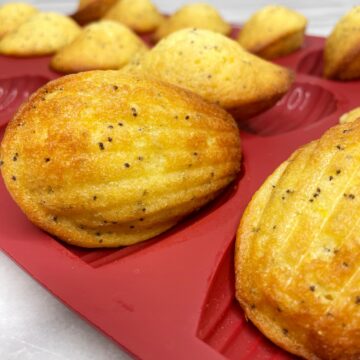
Biscoito de Maizena (Brazilian Cornstarch Cookies)

Sep 4, 2022 · Leave a Comment

Cornstarch cookies in a glass jar.

Quick Summary: Biscoito de maizena, which means cornstarch cookies in English, are light, tender Brazilian cookies also known as sequilhos. This easy recipe uses just three ingredients, such as cornstarch, butter, and sweetened condensed milk, and is naturally gluten-free. The dough needs no chilling, and the cookies bake in about 10 minutes.

Cornstarch cookies in a glass jar

What are biscoito de maizena?

Biscoito de maizena (also written biscoitos de maizena or bolacha de maizena) is the Portuguese name for Brazilian cornstarch cookies. In English, the name means cornstarch cookies, since "maizena" is a common brand of cornstarch in Brazil.

They are a nostalgic treat found in most Brazilian homes, with a light, tender crumb that softens as you bite. When the same dough is piped or rolled into small pieces, the cookies are often called sequilhos.

Halved cornstarch cookies on a white board

Why you'll love this recipe

  • Nostalgic flavor: a staple in Brazilian homes, with the childhood taste many Brazilians grew up on.
  • Just three ingredients: an easy recipe that comes together quickly.
  • Naturally gluten-free: made with cornstarch instead of wheat flour.
  • Fun with kids: the buttery dough is easy to shape by hand.
  • One bowl, easy cleanup: minimal dishes to wash afterward.
  • Great for gifting: a perfect addition to a holiday cookie box.

Ingredients

Cornstarch cookies ingredients

For ingredients and detailed instructions, refer to the recipe card below.

  • Butter: The traditional recipe uses margarine, but unsalted butter gives the cookies a richer, more intense buttery flavor. For a dairy-free version, use vegan butter. If using margarine, choose a mild-flavored variety, as a strong flavor can affect the taste of the sequilhos. Bring the butter or margarine to room temperature about 1 hour before baking.
  • Cornflour: This is the main ingredient that gives these cookies their signature light, tender texture. Use cornflour rather than potato or tapioca starch, as they will not produce the same result.
  • Sweetened condensed milk: It sweetens and binds the cookie dough. You can make it at home with this homemade condensed milk recipe. For convenience, canned options such as Nestlé Carnation, Eagle Brand, and Longevity work well.

Equipment

You need only a few basic tools to make these cornstarch cookies:

  • Electric mixer
  • Mixing bowl
  • Wooden spoon
  • Baking sheet
  • Parchment paper
  • Piping bag
  • Wire cooling rack

How to make biscoito de maizena

Step 1. Preheat the oven to 355°F (180°C). Prepare two baking sheets lined with parchment paper and set them aside.

Step 2. In a large bowl, beat the softened butter and condensed milk with an electric mixer (photo 1).

Step 3. Slowly add the cornstarch, a little at a time, mixing with a wooden spoon, then continue mixing by hand (photo 2). Knead the cookie dough well until smooth and homogeneous.

Photo 1: Butter and condensed milk mixture Photo 2: Ready cookies dough
PHOTO 1 PHOTO 2

Step 4. Using your hands, roll the dough into small 1-inch (2.5 cm) balls.

Step 5. Place the balls on the prepared baking sheet, leaving about 1 inch (2.5 cm) between the cookies. Flatten the top of each ball with a fork (photo 3).

Pro tip: Transfer the dough to a pastry bag fitted with a pastry tip and pipe the rose-looking cookies. Experiment with different tips and shapes, but you will probably need some skill since the dough is quite hard.

Step 6. Bake the cookies on the top rack of your oven for 10 minutes (bottom heat only) (photo 4).

Photo 3: Unbaked cookies on parchment Photo 4: Baked cookies
PHOTO 3 PHOTO 4

Step 7. They are ready when the bottoms of the cookies turn slightly golden. Let the sweet treats cool on a wire rack, then serve.

Biscoito de maizena cookies in a jar

Expert tips

  1. Measure cornstarch correctly using a kitchen scale or measuring cups with a scoop-and-level method, the same as measuring the flour.
  2. The best way to make the dough is with a hand mixer; however, you can mix it without one too. Just use a rubber spatula instead.
  3. To make your cookies identical, use a teaspoon or melon baller to spoon the dough. 
  4. If you make cookies on a hot day, bring the cookies to the fridge while preheating the oven. Keep the second batch of cookies in the refrigerator while baking the first batch.
  5. If desired, you can bake cookies on greased cookie sheets (use butter or margarine).
  6. Don't overbake the sequilhos: they should look quite pale. Remove them from the oven once their bottoms begin to turn golden.

Recipe variations

This biscoito de maizena recipe is easy to adapt, so you can change the flavor, shape, and finish to suit any occasion:

  • Flavor add-ins: stir in half a teaspoon of lemon zest, a few drops of lemon or almond extract, or ¼ teaspoon of ground cinnamon.
  • Coconut: add three tablespoons of shredded coconut for extra texture.
  • Chocolate chips: fold chocolate chips into the dough.
  • Guava (casadinho): pair the dough with guava paste to make sequilhos de goiabada.
  • Chocolate finish: dip the baked cookies in melted chocolate, or add cocoa powder to the dough for chocolate cornstarch cookies.
  • Shapes and patterns: press the classic fork pattern, flatten and mark an X, or roll and braid the dough.
  • Holiday shapes: cut hearts for Valentine's Day or other festive shapes.
  • Sandwich cookies: pipe buttercream between two cookies.

Storing & freezing

Store maizena cookies in an airtight container in a dry, cool place for seven days.

Can you freeze cornstarch cookies? Don't freeze them. They taste dry and have a crumbly texture when thawed. The best option is to freeze the cookie dough in batches or freeze raw cookies for up to 3 months so you can use them later.

Recipe FAQ

What are biscoito de maizena?
They are Brazilian cornstarch cookies, a light and tender treat made with cornstarch, butter, and sweetened condensed milk. The name means cornstarch cookies in English.

What is the difference between biscoito de maizena and sequilhos?
They are essentially the same cookie. When the dough is piped or rolled into small shapes, the cookies are usually called sequilhos.

Are these cookies gluten-free?
Yes. Because they use cornstarch instead of wheat flour, biscoito de maizena is naturally gluten-free.

Do you have to chill the dough?
No. You can bake the cookies right away without chilling the dough.

Why did my cornstarch cookies spread?
Spreading usually means too much butter or condensed milk, or not enough cornstarch. Briefly chilling the shaped cookies also helps them hold their shape.

How do you store biscoito de maizena?
Keep them in an airtight container at room temperature, or freeze them for longer storage. See the section above for details.

How many calories are in biscoito de maizena?
Each cookie has about 66 calories. See the recipe card for full nutrition details.

Love cookies? Try these next!

  • Cucidati (Italian fig cookies)
  • Cantucci Toscani (Italian almond biscuits)
  • Zimtsterne (German cinnamon stars)
  • Bredele (Alsatian Christmas cookies)
  • Browse all the cookie recipes on the blog.

Want more delicious and beautiful recipes? Subscribe to my newsletter and follow me on Facebook, Pinterest, and Instagram for my latest updates. If you make this recipe, please leave a star rating on the recipe card and comment below!

Print

Recipe card

Cornstarch cookies (Biscoito de Maizena)

Cornstarch cookies in a glass jar.
Print Recipe
Save Recipe Recipe Saved

5 Stars 4 Stars 3 Stars 2 Stars 1 Star

No reviews

Biscoito de maizena (Brazilian cornstarch cookies, also called sequilhos) are 3-ingredient, naturally gluten-free cookies with a light, tender, crumbly texture. Made with cornstarch, butter, and sweetened condensed milk, they need no chilling and bake in about 10 minutes.

  • Author: Irina Totterman
  • Prep Time: 15 minutes
  • Cook Time: 10 minutes
  • Total Time: 25 minutes
  • Yield: 35 cookies 1x
  • Category: Cookies
  • Method: Baking
  • Cuisine: Brazilian
  • Diet: Gluten Free

Ingredients

Scale
  • ½ can (197 g) sweetened condensed milk
  • 2 cups + 1 ½ tablespoons (250 g) cornstarch
  • 3.5 oz. (100 g) unsalted butter, softened

Instructions

  1. Preheat the oven to 355°F (180°C). Prepare two baking sheets lined with parchment paper and set them aside.
  2. In a large bowl, beat the softened butter and condensed milk with an electric mixer. Slowly add cornstarch, a little bit at a time, mixing with a wooden spoon, then continue mixing with your hands. Knead the cookie dough well until smooth and homogeneous.
  3. Using your hands, roll the dough into small 1-inch (2.5 cm) balls. Place the balls on the prepared baking sheet, leaving about 1 inch (2.5 cm) between the cookies. Flatten the top of each ball with a fork. Extra tip: If desired, transfer the dough to a pastry bag fitted with a pastry tip and pipe the rose-looking cookies. Experiment with different tips and shapes, but you will probably need some skill since the dough is quite hard.
  4. Bake the cookies on the top rack of your oven for 10 minutes (bottom heat only). They are ready when the bottoms of the cookies turn slightly golden. Let the sweet treats cool on a wire rack, then serve.

Notes

  1. Measure cornstarch correctly using a kitchen scale or measuring cups with a scoop-and-level method, the same as measuring the flour.
  2. The best way to make the dough is with a hand mixer; however, you can mix it without one too. Just use a rubber spatula instead.
  3. To make your cookies identical, use a teaspoon or melon baller to spoon the dough. 
  4. If you make cookies on a hot day, bring the cookies to the fridge while preheating the oven. Keep the second batch of cookies in the refrigerator while baking the first batch.
  5. If desired, you can bake cookies on greased cookie sheets (use butter or margarine).
  6. Don't overbake cookies: they should look quite pale. Remove them from the oven once their bottoms begin to turn golden.

Nutrition

  • Serving Size: 1 cookie
  • Calories: 66
  • Sugar: 3.1 g
  • Sodium: 8 mg
  • Fat: 2.8 g
  • Saturated Fat: 1.8 g
  • Carbohydrates: 9.6 g
  • Fiber: 0.1 g
  • Protein: 0.5 g
  • Cholesterol: 8 mg

Thank you for following me on Pinterest, Facebook, and Instagram. Hashtag #bakinglikeachef so I can see your creations.

The nutritional information has been calculated using an online recipe nutrition calculator such as Verywellfit.com and is intended for informational purposes only. These figures should be used as a general guideline and not be construed as a guarantee.

Mini Gingerbread Men Cookies

Dec 20, 2021 · 11 Comments

Mini gingerbread men in a cookies tin.

Quick Summary: Mini gingerbread men cookies are bite-sized, warmly spiced gingerbread cutouts made from one easy dough. Roll it thin, cut with a mini gingerbread man cutter, and bake for 5 to 7 minutes for crisp, one-bite cookies you can leave plain or decorate.

A batch of tiny gingerbread men on a pink dessert plate

What are mini gingerbread men cookies?

Mini gingerbread men cookies are small-scale versions of the classic gingerbread man, cut with a miniature cookie cutter so each one is about one bite.

They are made from a spiced dough of flour, honey or molasses, butter, and warm spices like ginger, cinnamon, and cloves, then baked until just set. Their small size makes them quick to bake and easy to add to a cookie box or hang on a tree.

Small gingerbread men cookies tied with a baker's twine

Why you'll love this recipe

  • Easy and fun. This gingerbread cookie recipe is simple and enjoyable to bake, even with kids.
  • One dough, many cookies. The basic dough works for other Christmas cookies too, like a small gingerbread house, gingerbread sandwich cookies, and gingerbread house mug toppers.
  • Make-ahead friendly. The dough keeps in the fridge for up to five days. When ready, roll, cut, and bake.
  • No decorating required. The dough is flavorful enough to skip the icing, though you can decorate if you like.
  • Perfect one-bite size. Each cookie is a poppable, one-bite treat.
  • Loved by all ages. Kids and adults alike enjoy these small gingerbread man cookies.

Ingredients

Mini gingerbread men ingredients

For ingredients and detailed instructions, refer to the recipe card below.

  • Flour: Use all-purpose flour to make the cookies. You can replace it with pastry flour or all-purpose gluten-free flour with perfect results.
  • Baking soda (aka sodium bicarbonate) is a leavening agent that helps cookies rise. Please don't confuse it with baking powder.
  • Spices: Warm spices such as ground ginger, ground cinnamon, and ground nutmeg add festive flavor to cookies.
  • Butter: The recipe calls for unsalted butter. Make sure that the butter is softened at room temperature.
  • Sugar: Use granulated sugar or caster sugar. Replace it with brown sugar if desired.
  • Large egg: Make sure it is at room temperature for the best baking results. 
  • Honey: Use any liquid honey. Strong-flavored buckwheat honey is best for making gingerbread cookies.

Equipment

You need only a few basic tools to make these mini gingerbread men:

  • Mixing bowls
  • Electric mixer or whisk
  • Rolling pin
  • Mini gingerbread man cookie cutter
  • Parchment paper
  • Baking sheet
  • Wire cooling rack

How to make mini gingerbread men

Step 1. To make the cookie dough, mix flour, baking soda, and all the spices in a mixing bowl.

Step 2. In a separate large bowl, beat butter with sugar with an electric mixer for about 2 to 3 minutes (photo 1).

Step 3. Add the egg and warm liquid honey (warm it in the microwave for a few seconds) and whisk with a mixer (photo 2).

Butter mixture in a metal bowl

PHOTO 1

Butter and honey mixture in a bowl

PHOTO 2

Step 4. Pour the flour mixture into the principal preparation and mix with a rubber spatula (photo 3).

Step 5. Transfer the dough to a work surface lined with plastic wrap, cover it well with plastic, and refrigerate for 2 hours. 

Step 6. Preheat oven to 355°F (180°C). Line a baking or cookie sheet with parchment.

Step 7. Using a rolling pin, roll the dough between two sheets of parchment paper to almost ⅕ inch thickness (4 mm).

Step 8. Dip a mini gingerbread man cookie cutter (from mini cookie cutter set) into flour, and cut out shapes (photo 4).

Ready gingerbread cookie dough in a bowl

PHOTO 3

Rolled cookie dough with cut shapes and a cookie cutter

PHOTO 4

Step 9. Peel off excess cookie dough from around the miniature gingerbread men. Use a cookie spatula or a palette knife to carefully lift the cookies without ruining their shapes and place them on the prepared baking sheet (photo 5).

Pro tip: Collect the remaining dough and dough scraps, re-roll them, and cut more cookies until you have used up all the dough.

Step 10. Place the cut-out cookie shapes in the freezer for a few minutes to make them easier to transfer to the baking sheet.

Step 11. Bake for 5 to 7 minutes. Watch the mini cookies during baking: they can burn quickly (photo 6).

Cookie shapes on parchment paper

PHOTO 5

Baked cookies on parchment

PHOTO 6

Step 12. Remove from the oven and let cool on a wire rack.

A couple of mini gingerbread men cookies with a cookie tin in the background

Expert tips

  1. If the cookie dough becomes soft and sticky during the roll/cutting process, stop and refrigerate it for a few minutes to make it easier to work with. Cover the dough with plastic wrap or parchment paper.
  2. For softer cookies, roll the dough out as mentioned. For crispy cookies, roll the cookie dough thinner, but adjust the baking time. It may be less than 5-7 minutes.
  3. Add a few seconds to the baking time for a deeper golden color, but don't burn the cookies.
  4. Bake one tray at a time for the best baking results. While you bake one tray, you fill another baking sheet with cookies.
  5. Make-ahead option: Make the cookie dough and chill it overnight, then bake the cookies the next day. You can refrigerate the dough well wrapped for up to 5 days.

Recipe variations

True gingerbread cookies should be packed with festive flavors due to warm spices. While you can play with adding spices according to your taste, it is not recommended to use more than 3 to 4 kinds of spices.

  • Change the amounts of the standard spices listed in the mini gingerbread cookies recipe. Add ½ teaspoon of ground cloves. Cloves give a nice touch of spice and warmth to the dough.
  • Use any miniature cookie cutter (Santa, Christmas tree, candy canes, snowflakes, etc.) to make variable mini gingerbread cookies. Then follow the guide on making a cookie box from one dough and enjoy.
  • Leave small gingerbread men cookies undecorated or dip them in melted chocolate.
  • Decorate mini gingerbread man cookies. Use white cookie icing or homemade royal icing with a piping bag fitted with Ateco pastry tip 00 or 1, or design your cookies.

Pipe a smiley face, dress him up with decorative shorts, and simply put buttons or a zig-zag across the arms and legs. Let the finished cookies stay at room temperature for at least 2 hours; overnight is better for the icing to set.

  • Another simple way to add a finishing touch is to top the cookies with icing sugar (confectioners' sugar).

What to do with mini gingerbread men

Besides serving them with a cup of tea, coffee, or French hot chocolate, here are a few other ideas:

  • Decorate the baked goods: Place a couple of cute mini gingerbread men on top of Gingerbread Pavlova.
  • Make verrine desserts: Crush the cookies into cookie crumbles and make 15-minute Banoffee pie cups.

Storing & freezing

Store your miniature gingerbread man cookies between layers of parchment paper in an airtight container in a dry place for up to 1 week.

You can freeze undecorated cookies in a Ziploc freezer bag for up to 3 months. To thaw, let them stay at room temperature.

Recipe FAQ

Do you have to chill gingerbread dough?
Yes. The dough is soft and sticky right after mixing but firms up in the fridge, which makes it easy to roll out and cut cleanly. Chilling also helps the cookies hold their shape and prevents spreading.

How do you know when mini gingerbread cookies are done?
They are done when the tops look slightly darker, and the edges are set. Because they are small, watch them closely and pull them at 5 to 7 minutes; they crisp up more as they cool.

How do you keep mini gingerbread men from spreading?
Roll the dough evenly, chill the cut shapes briefly before baking, and avoid overworking or over-flouring the dough. A cooler dough holds crisp edges.

Can you decorate mini gingerbread men?
Yes. They are flavorful enough to enjoy plain, but you can pipe on royal icing faces and buttons or add small candies if you like.

How long do mini gingerbread cookies last?
They keep for up to 1 week in an airtight container at room temperature. You can freeze undecorated cookies for up to 3 months.

How many calories are in a mini gingerbread man cookie?
One mini gingerbread man cookie has about 40 calories.

Love gingerbread recipes? Try these next!

  • French gingerbread loaf
  • Gingerbread madeleines
  • Christmas cookie ornaments
  • Or browse all the Christmas recipes

Want more delicious and beautiful recipes? Subscribe to my newsletter and follow me on Facebook, Pinterest, and Instagram for my latest updates. If you make this recipe, please leave a star rating on the recipe card and comment below!

Print

Recipe card

Mini Gingerbread Men Cookies

Mini gingerbread men in a cookies tin.
Print Recipe
Save Recipe Recipe Saved

5 Stars 4 Stars 3 Stars 2 Stars 1 Star

5 from 6 reviews

Mini gingerbread men cookies are cute, bite-sized gingerbread cutouts made from one easy, warmly spiced dough. They are best enjoyed with a glass of cold or warm milk and are great to bake with kids.

  • Author: Irina Totterman
  • Prep Time: 38 minutes
  • Cook Time: 7 minutes
  • Total Time: 45 minutes (plus chilling time)
  • Yield: 50 1x
  • Category: Cookies
  • Method: Baking
  • Cuisine: American

Ingredients

Scale
  • 1 ½ cup + 1 ½ tablespoons (200 g) all-purpose flour
  • 1 ½ teaspoon baking soda
  • 2 teaspoons ground ginger
  • 1 teaspoon ground cinnamon
  • ¼ teaspoon ground nutmeg
  • 3.5 oz. (100 g) softened unsalted butter
  • ½ cup (110 g) granulated sugar
  • 1 large egg, room temperature
  • 3 teaspoons liquid honey

*If needed, please refer to Baking Conversion Charts.

Instructions

  1. To make the cookie dough, mix flour, baking soda, and all the spices in a mixing bowl.
  2. In a separate large bowl, beat butter with sugar with an electric mixer for about 2 to 3 minutes.
  3. Add the egg and warm liquid honey (warm it in the microwave for a few seconds) and whisk with a mixer.
  4. Pour the dry ingredients into the principal preparation and mix with a rubber spatula.
  5. Transfer the dough to a working surface lined with plastic wrap, cover it well with plastic, and refrigerate for 2 hours.
  6. Preheat the oven to 355°F (180°C). Line a baking sheet with parchment. Using a rolling pin, roll the dough between two sheets of parchment paper to about ⅕ inch (4 mm) thick.
  7. Dip a mini gingerbread man cookie cutter (from the mini cookie cutter set) into flour, and cut out shapes.
  8. Peel off excess cookie dough from around the miniature gingerbread men. Use a cookie spatula or a palette knife to carefully lift the cookies without ruining their shapes and place them on the prepared baking sheet.
  9. Collect the dough scraps, re-roll them, and cut more cookies until you have used up all the dough. Then, freeze the cookie shapes for a few minutes before transferring them to the baking sheet.
  10. Bake for 5 to 7 minutes. Watch the mini cookies during baking: they can burn quickly. Take them from the oven and let them cool on a wire rack.

Notes

  1. If the cookie dough becomes soft and sticky during the roll/cutting process, stop and refrigerate it for a few minutes to make it easier to work with. Cover the dough with plastic wrap or place the cookie shapes on parchment paper.
  2. If you want softer cookies, roll the dough out as mentioned. Roll the dough thinner, but adjust the baking time for crispy cookies. It may be less than 5 to 7 minutes.
  3. Add a few seconds to the baking time for a deeper golden color. Don't burn the cookies!
  4. Bake one tray at a time for the best baking results. While it bakes, fill another baking sheet with cookies.
  5. Make-ahead option: Make the cookie dough, chill it overnight, and then bake the cookies the next day. You can refrigerate the dough well wrapped for up to 5 days.

Nutrition

  • Serving Size: 1 cookie
  • Calories: 40
  • Sugar: 2.6 g
  • Sodium: 40 mg
  • Fat: 1.8 g
  • Saturated Fat: 1.1 g
  • Carbohydrates: 5.7 g
  • Fiber: 0.2 g
  • Protein: 0.6 g
  • Cholesterol: 8 mg

Thank you for following me on Pinterest, Facebook, and Instagram. Hashtag #bakinglikeachef so I can see your creations.

The nutritional information has been calculated using an online recipe nutrition calculator such as Verywellfit.com and is intended for informational purposes only. These figures should be used as a general guideline and not be construed as a guarantee.

How to Make a Christmas Cookie Box (DIY Gift Guide)

Dec 13, 2021 · 8 Comments

Christmas cookie box full of decorated spritz cookies.

Quick Summary: To make a Christmas cookie box, bake one versatile cookie dough in several shapes, decorate them a few ways, then arrange the cooled cookies snugly in a lined box or tin. Plan your baking over two days, pack the box tightly so nothing shifts, and add a ribbon or tag. It is an easy, budget-friendly homemade gift you can even ship.

This is the complete DIY holiday cookie box guide on creating a stress-free Christmas gift box using just one cookie recipe. It is packed full of traditional Alsatian cookies that will surely please everyone.

Christmas cookie box full of decorated spritz cookies

What cookies to put in a Christmas cookie box

My first tip? Keep it as simple as possible. You don't need a dozen different cookies. You may need about five or six total, in different shapes, sizes, and flavors. 

Or better yet, stick with one cookie recipe and make ten or more cookie variations.

The thought of working 9 to 5 five days a week, or being the one staying at home and taking care of small kids, can feel overwhelming.

It seems impossible that you will ever find time to bake five types of cookies with all your responsibilities!

But what if I offer you a recipe for generic cookie dough (yes, just ONE cookie dough) and show you how to customize your cookies?

This year, I chose the easiest cookies to make: spritz bredele. The cookie dough comes out in 10 to 15 minutes; no chilling is required.

With a manual cookie maker or an old-fashioned meat grinder and cookie attachment, you can make a huge batch of cookies in under an hour.

It takes 10 to 13 minutes for one baking sheet of cookies to bake. So while you bake one batch of cookies, you can pipe out the second one, ready and waiting its turn!

How many cookies you need

It really depends upon how many and what kind of cookies you want to make.

One batch of spritz cookies consists of 70 small cookies. So, I multiplied the recipe by 1.5 and ended up with about 100 cookies.

It was enough to arrange cookies in a white frame box by Celebrate It™ (10" x 12" x 2" or 25 x 30 x 5 cm) or fill two 8-inch (20 cm) metal cookie tins.

So, now you know how many cookies to make. Double or triple the recipe and enjoy one cookie dough.

If you decide to make light and chocolate spritz cookies, you must mix the dough twice.

Spritz cookies arranged in a festive cookie box: Close up

How to plan your cookie box baking schedule

You can make and decorate your cookies in a day. Or you can spread your cookie-making out over two days.

Here is your schedule.

If you want to spread the work out, here is a simple three-day plan you can shorten to two days:

  1. Day 1, dough day. Make the dough (or a double batch if you want a plain and a chocolate version), wrap it, and chill it overnight. This is a short, low-effort day.
  2. Day 2, baking day. Shape and bake all the cookies, then cool them completely. Store the plain, undecorated cookies in an airtight container so they stay fresh for decorating.
  3. Day 3, decorating and assembly day. Dip or decorate the cookies, let them set, then line your box and pack it. Add the ribbon or gift tag last.

Short on time? Combine days 1 and 2: make the dough in the morning, chill it for an hour, then bake the same afternoon, and decorate the next day.

Day #1: a cookie baking day.

On the first day, make the "mother" spritz dough, pipe the cookies of different shapes, and bake them all.

If you decide to make chocolate cookies, take the second batch of dough (the chocolate one) and finish it on the same day.

Day #2: a cookie decorating day.

That day, decorate your baked cookies and assemble the cookie boxes later.

Decorating cookies is a fun activity, so gather the family or kids to help. Licking the melted chocolate is guaranteed!

And please read the spritz bredele cookie recipe before you start.

Please make sure you fully understand the steps involved and how long it takes to make the cookies.

Make ahead and freeze: Most plain cookies freeze well for up to two months. Freeze them undecorated in an airtight container, then thaw at room temperature before you dip or decorate. Cookies already coated in chocolate do not freeze well, so decorate those closer to gifting day.

What you need to make a cookie box

Making cookies may seem like you need a lot of "stuff," but it's not bad at all.

Here's a list of what equipment you will need to make the cookies:

  • kitchen scale,
  • or measuring cups and spoons
  • stand mixer
  • rubber spatula
  • mixing bowls
  • flour sifter
  • parchment paper
  • rimmed baking sheet
  • wire rack
  • manual cookie maker, or
  • meat grinder with a cookie attachment, or
  • reusable pastry bag and open star pastry tip
  • oven mitts

Just a few words about a kitchen scale. Baking is a science, and to achieve the best results, I highly recommend investing in a kitchen scale. This Escali digital kitchen scale is the one I use.

Just think about it: what one person scoops into a measuring cup is different from what someone else scoops!

Here is a list of what you will need to decorate the cookies:

  • white chocolate
  • dark chocolate
  • slivered almonds, chopped
  • raw pistachios, chopped
  • shredded coconut
  • freeze-dried raspberries
  • sprinkles
  • chocolate vermicelli sprinkles

Of course, you can shorten and lengthen this list in the way you desire. These are just examples of ingredients to decorate your cookies.

The more decorating ideas you have, the more variable your cookies will be.

For example, you can add milk chocolate and ruby chocolate. Or add poppy seeds and chopped pecans.

Spritz bredele cookies covered with chocolate in a Christmas cookie box

How to decorate the cookies

I highly recommend writing your decorating ideas down; otherwise, you will be thinking about what to pick up next while holding a bowl of melted chocolate.

Let's make a list of possible decorating options for spritz bredele cookies.

  1. Drizzle melted white chocolate over cookies.
  2. Drizzle melted dark chocolate over cookies.
  3. Drizzle both dark and white chocolate.
  4. Dip cookies in melted white chocolate.
  5. Dip cookies in white chocolate and sprinkle them with chopped almonds.
  6. Dip cookies in white chocolate and sprinkle them with chopped pistachios.
  7. Dip cookies in white chocolate and sprinkle them with shredded coconut.
  8. Dip cookies in dark chocolate and sprinkle them with chopped almonds.
  9. Dip cookies in dark chocolate and sprinkle them with chopped pistachios.
  10. Dip cookies in dark chocolate and sprinkle them with shredded coconut.

Here are ten spritz cookie variations. If you make chocolate cookies, repeat the same decoration ideas, and you will end up with 20 different cookies in total!

Be sure to let the chocolate set completely before you pack your holiday cookies.

Expert tips in bulk:

  • Leave some cookies plain: they have a nice texture, too.
  • Line your baking sheets with parchment paper before working with chocolate.
  • Place all the cookies you want to drizzle on a baking sheet and proceed. You only need to change the chocolate or use both for the double drizzle.
  • Keep some cookies dipped in chocolate, and sprinkle others with chopped nuts and shredded coconut.
  • Arrange all the cookies to be sprinkled with chopped almonds on a separate baking sheet. All you need is to sprinkle that batch of cookies with one kind of nuts. Repeat the same with cookies sprinkled with chopped pistachios and shredded coconut.

How to choose a cookie box or tin

A metal cookie tin is best because it's reusable and keeps cookies fresh.

A cardboard gift box from your local craft store will work well too. But I would suggest keeping your cookies in metal tins or airtight containers until you want to give cookies as a gift.

Basically, you want a large, shallow enough box or tray. For the box itself, I went to Michael's and found a white frame box that fit 1.5 batches of cookies perfectly.

Alternatively, you can use a glass jar, a festive cookie box, a divided treat gift box, a treat bag with a plastic window, or a holiday cellophane bag.

Not sure what size to buy? Here is a rough guide to how many small cookies fit common boxes and tins:

Box or tin sizeApproximate cookiesGood for
Small tin, 6 inches (15 cm)12 to 18A single friend or coworker
Medium box, 8 inches (20 cm)24 to 30A small family gift
Large box, 10 x 12 inches (25 x 30 cm)40 to 60A generous family or office box
Two stacked tins50 to 70Shipping a big assortment

These are estimates for small spritz-style cookies. Larger or thicker cookies fill a box faster, so pack a test layer before you commit to a size.

A batch of Christmas cookies arranged in a beautiful holiday cookies box

How to arrange and style your cookie box

How far in advance could you bake your cookies? Ideally, two weeks in advance.

Make plain spritz cookies, keep them in metal tins or an airtight container until ready to decorate, or freeze cookies and decorate them later.

If you want to present the freshest cookies, bake and decorate them on the day you want to pack.

The most fun part is putting all the cookies together and assembling your cookie box. Of course, it has to look pretty and neat.

That means that you need to section off the box by using holiday cookie tins, bakery boxes, crumpled wax paper, Tupperware boxes, cupcake liners, pieces of kraft cardstock, whatever you have on hand.

Line the box's bottom with tissue paper, parchment paper, napkins, paper shred filler, raffia paper ribbon, and stack cookies in different ways.

I started decorating my cookie box by placing ring cookies in the center, then moved to the corners and around the edges.

You can even add in little store-bought treats such as dried fruit, nuts, and candies to visually break up the space.

There is no right or wrong way to create your cookie box, so bring your creativity.

Here are some tips to help you:

  • Arrange the cookies in various ways by alternating cookies of different shapes, sizes, and colors. Try to avoid a big section of cookies that look similar.
  • Place a few cookies standing up. You can tie them with a ribbon or burlap twine.
  • Place some cookies on their side. Use kraft cardstock to section off areas of the box.
  • Use white cupcake liners to add visual appeal under some cookies.
  • Add a few candy canes or peppermint-colored jingle bells, baker's twine, a festive ribbon, or even a couple of envelopes of hot cocoa mix to make your cookie box more festive and fun.

Finally, cover your cookie box with a lid, tie it with a pink satin ribbon or raffia paper ribbon, add artificial pine picks, and include a pretty greeting card I created for you.

Season's Greetings Card Mockup

Download The Printable Season's Greetings Card >>

And to make the pleasure last, why not add a minimalist recipe card for these delicious cookies? Indeed, a gourmet and personalized gift!

Spritz Bredele Recipe Card Mockup

Download The Printable Spritz Bredele Recipe Card >>

Print it on 8.5 x 11 white or kraft cardstock, cut it out, punch a hole in the corner, and tie a ribbon bow.

If you don't want to share the whole recipe, write down what to expect in the box. Just remember that some people have allergies.

Also, feel free to download and print out "Baked with love" printable tags in the recipe for Vanilla Bean Cookies to decorate your cookie packaging.

Label allergens: If you are gifting to someone outside your home, add a small note listing the main allergens, such as wheat, eggs, dairy, and nuts. This thoughtful touch helps anyone with a food allergy or a sensitive child know what is safe to eat.

How to pack and ship a cookie box

So, here is your first-created or maybe one of the nicest Christmas cookie boxes you have ever made. It is perfect for presenting to family and friends.

But what if you need to ship your cookies? What are the best tips for sending picture-perfect cookies that will remain fresh? There are a few to follow.

Step 1. Fill the bottom of the box or cookie tin with the shredded paper, then place a long piece of the parchment paper on top of the filler.

Step 2. Arrange your cookies; separate cookies with small parchment squares if you need to stack them.

Step 3. Cover cookies with the sides of parchment and seal with a sticker. Tie the box with burlap twine to secure it.

Step 4. Please fill the bottom of the larger box with plenty of packing material (for example, bubble wrap), place your gift cookie box or tin inside, and surround it with packing material. Finally, seal it with festive tape.

Step 5. Try shaking your box to make sure the gift box inside doesn't move! And don't forget to write FRAGILE on top!

Yes, you are ready to ship your cookies. But please ship using Priority Mail (USPS Priority if you live in the States).

Happy cookie box-making!

Recipe FAQ

How many kinds of cookies should you include in a cookie box?
The straight answer is from one to three, but the maximum is five or six.

How to store cookies until ready to pack
Store plain, undecorated cookies in metal tins or airtight containers, or freeze cookies if possible.

Is it better to mix different cookies in a box or keep them separate?
You can do both. Mixing several kinds in one box looks generous and festive, but keep strongly flavored or sticky cookies (like anything with citrus or a chocolate coating) separate with parchment, or in their own layer so flavors and moisture don't transfer.

How far in advance can you make a Christmas cookie box?
Bake most cookies 1 to 2 weeks ahead and store them airtight, or freeze undecorated cookies up to a couple of months. Decorate and assemble the box 1 to 2 days before giving or shipping it.

What can you use for a Christmas cookie box?
A sturdy gift box, a metal cookie tin, or a bakery box all work. Line it with parchment or tissue, and choose a size that lets you pack the cookies tightly so they don't rattle.

How do you ship a cookie box so cookies do not break?
Pack cookies snugly in a tin or box with no space, cushion the container inside a larger shipping box with padding, and ship sturdy cookies rather than fragile ones. Frozen cookies can travel and arrive thawed.

How long do the cookies in a cookie box last?
Most plain, undecorated cookies keep 2 to 3 weeks stored airtight at room temperature. Chocolate-dipped cookies are best within about 2 weeks.

Love cookies? Try these next!

  • Spritz Bredele
  • Bredele: Alsatian Christmas Cookies
  • Mini Gingerbread Men Cookies
  • Christmas Cookie Ornaments

Browse all of my recipes for more baking ideas.

Spritz Bredele

Dec 11, 2021 · 1 Comment

Dipped spritz cookies in a cup with the rest of the cookies in the background.

Quick Summary: Spritz bredele are buttery Alsatian Christmas cookies piped into fluted sticks, rings, and S shapes, then baked until lightly golden and often dipped in chocolate. This spritzbredele recipe uses a simple butter-and-almond dough shaped with a cookie press, meat grinder, or pastry bag and stores for weeks, making it ideal for holiday gift boxes.

Spritz bredele cookies decorated with chocolate on parchment paper

What is spritz bredele?

Bredele are traditional Christmas cookies from the Alsace region of France, also baked in Lorraine and across the border in Germany.

Spritz bredele (also spelled spritzbredele or spritzbredle) are known as Christmas spritz (spritz de Noël in French) or shortbread Viennese. The word spritz means "socket" and refers to the cookies' fluted, ridged shape; the literal translation of spritz bredele is "cakes socket."

Alsatians start baking spritz bredele early in the season, sometimes as soon as November, because the cookies keep for weeks and make ideal gourmet gifts. You can even hang them on the Christmas tree with a ribbon. Traditionally, they are piped into sticks, the letters S and U, rings, candy canes, and figure eights, among countless other shapes.

Variable spritz bredele cookies in a cup with cookies around

Manual meat grinder vs. pastry bag

The shape is what makes spritz bredele, so the tool you use matters. You can press or pipe the dough with any of these:

  • Manual cookie maker. For a big holiday batch, a manual cookie maker (also called a manual meat grinder) is my top pick. It comes with an attachment that shapes cookies four ways, including a dedicated spritz nozzle.
  • Old-fashioned meat grinder. A meat grinder clamped to the table works with a cookie attachment fitted on the front.
  • Stand mixer. A stand mixer with a meat grinder attachment and a cookie attachment shapes cookies quickly.
  • Cookie press. An affordable cookie press or a top-quality Italian cookie press presses the dough into neat shapes.
  • Pastry bag. No press? The dough is thick, so piping is possible but harder. Add a little milk to loosen it, use a reusable pastry bag made of thick cotton felt, and fit an open star pastry tip for the classic rigid look.
  • Cookie cutter. Roll the dough between two sheets of parchment and cut shapes with your favorite cutters. You keep the authentic taste, just not the traditional piped shape, and they are still called brédelés in French.

Why you'll love this recipe

  • Perfect for gifting. This easy cookie recipe makes an excellent stocking stuffer or holiday gift for anyone on your shopping list.
  • Long shelf life. You can make spritz cookies far in advance during the holiday season.
  • Big batch, little time. You can make a huge batch of cookies in a fairly short period.
  • Endless customization. Different flavors, shapes, and toppings make them a fun edible Christmas gift.

Ingredients

For ingredients and detailed instructions, refer to the recipe card below.

  • Butter: the spritz bredele recipe calls for unsalted butter, softened at room temperature.
  • Sugar: use granulated or caster sugar.
  • Vanilla sugar (sucre vanillé in French): it brings a light vanilla flavor to spritz cookies.
  • Egg: use a large egg at room temperature.
  • Flour: the recipe calls for all-purpose flour.
  • Almond flour: use blanched almond flour (poudre d'amandes in French), not ground almonds made at home, or replace it with hazelnut flour/meal (poudre de noisettes) or coconut flour.
  • Baking powder: use fresh aluminum-free baking powder (levure chimique in French).

Equipment

You need only a few basic tools to make these spritz bredele cookies:

  • Stand mixer
  • Flour sifter
  • Cookie press or manual cookie maker
  • Pastry bag with an open star pastry tip
  • Baking sheets
  • Parchment paper
  • Wire rack

How to make spritz bredele

Step 1. Preheat oven to 355°F (180°C). Line baking sheets with parchment paper.

Step 2. Using a flour sifter, sift the all-purpose flour with the baking powder and set aside.

Step 3. To make the cookie dough, place the butter, granulated sugar, and vanilla sugar in the bowl of a stand mixer and whisk until creamy (photo 1). Add the egg, mixing well.

Add the sifted flour mixture and almond flour to the mixture and work well to obtain a homogeneous, smooth dough (photo 2).

Photo 1: Beaten butter in a bowl Photo 2: Ready cookie dough in a bowl
PHOTO 1 PHOTO 2

Step 4. Transfer the dough to a manual cookie maker fitted with a cookie attachment (photo 3) and pass it through to form sticks about 3 inches (7 cm) long (photo 4). 

Step 5. Make longer sticks to shape into an S or U, a ring, or a candy cane, and place them on a baking sheet lined with baking paper.

Photo 3: Cookie maker with an attachment Photo 4: Dough sticks on parchment
PHOTO 3 PHOTO 4

Step 6. Bake spritz cookies for 10 to 13 minutes, watching the baking (photo 5). The spritzbredele should be lightly browned. Cool cookies on a wire rack.

Step 7. To decorate spritz cookies, melt chocolate in a double boiler or a microwave.

Step 8. Drizzle cookies with melted chocolate (photo 6) or dip ⅓ of each cooled cookie into melted chocolate. Place on parchment paper until chocolate is set.

Photo 5: Baked spritz cookies on parchment Photo 6: Cookies drizzled with chocolate on baking paper
PHOTO 5 PHOTO 6

Step 9. If desired, sprinkle cookies with chopped nuts, shredded coconut, or chopped freeze-dried raspberries.

Expert tips

  1. Replace 2 ½ tablespoons (20 g) all-purpose flour with the same amount of cocoa powder to make a chocolate version of spritz cookies.
  2. Bake your cookies one baking sheet at a time for even baking.
  3. Keep the piped cookies on a baking sheet in the refrigerator while waiting to bring them into the oven.

Recipe variations

  • Different flours. Swap almond flour for hazelnut flour, hazelnut meal, or coconut flour to change the taste.
  • Chocolate spritz. Replace 2 ½ tablespoons (20 g) of all-purpose flour with the same amount of cocoa powder for chocolate cookies.
  • Warm spices. Add a pinch of ground cinnamon, a little lemon zest, or scraped vanilla seeds to the dough.
  • Two-colored cookies. Pipe plain dough and chocolate dough side by side: place each in its own pastry bag, cut 1 cm off the tips, then slide both into a larger bag fitted with an open star tip.
  • Toppings before baking. Sprinkle piped cookies with chopped nuts or flaked almonds before they go in the oven.
  • Chocolate dip. Dip baked cookies in melted milk, dark, white, or ruby chocolate.
  • Finishing touches. Cover cookies with chopped almonds, pistachios, freeze-dried raspberries, shredded coconut, poppy seeds, festive sprinkles, or chocolate vermicelli. They make a pretty Christmas cookie box for the holidays.

Storing & freezing

These spritz cookies have a long shelf life. You can easily keep them in a metal cookie tin for two weeks or longer.

You can also freeze baked (undecorated) spritz bredele for several months. To thaw, let the cookies come to room temperature.

Remember that it is not recommended to freeze cookies dipped in chocolate.

If you want to ship your frozen spritz cookies to loved ones, you can bring them to the post office while frozen. They will arrive defrosted and ready to eat.

Recipe FAQ

Can you make spritz cookies with margarine?
Yes, you can replace butter with margarine, but make sure to bring it to room temperature 1 to 2 hours before you start.

How to pipe spritz cookies?
To pipe spritz cookies using a pastry bag, fill the tip with the dough, hold the piping bag perpendicular to the cookie sheet, then shape your cookies.

How to make spritz cookies without a cookie press?
To make spritz cookies without a press, use either a meat grinder with a cookie attachment or a piping bag (preferably a reusable pastry bag) with a star-shaped tip.

Why do my spritz cookies lose their shape?
Spritz dough should be soft but not warm. If cookies spread, chill the piped dough on the baking sheet for 15 to 20 minutes before baking, and bake one sheet at a time so the oven stays hot.

Do you need to chill spritz bredele dough?
It is not required, but chilling the piped cookies briefly helps them hold their fluted shape and prevents spreading, especially in a warm kitchen.

What is the difference between spritz bredele and German spritz cookies?
They are very close. Spritz bredele are the Alsatian version and often include almond flour and vanilla sugar, while German Spritzgebäck uses a similar butter dough shaped the same way. Both come from the same piped-cookie tradition.

How long do spritz bredele keep?
Stored airtight at room temperature, undecorated spritz cookies keep for about 3 to 4 weeks. Chocolate-dipped ones are best within 2 weeks.

How many calories are in spritz bredele?
Each spritz bredele cookie has about 45 calories, though this varies with size and decoration.

Love cookies? Try these next!

  • Bredele: Alsatian Christmas Cookies
  • Mini Gingerbread Men Cookies
  • French Vanilla Cookies
  • Christmas Cookie Ornaments

Browse all of my recipes for more baking ideas.

Want more delicious and beautiful recipes? Subscribe to my newsletter and follow me on Facebook, Pinterest, and Instagram for my latest updates. If you make this recipe, please leave a star rating on the recipe card and comment below!

Print

Recipe card

Spritz Bredele

Dipped spritz cookies in a cup with the rest of the cookies in the background.
Print Recipe
Save Recipe Recipe Saved

5 Stars 4 Stars 3 Stars 2 Stars 1 Star

5 from 1 review

Spritz bredele are buttery Alsatian Christmas cookies piped into fluted sticks, rings, and S shapes. This easy spritzbredele recipe uses a butter-and-almond dough, bakes in minutes, and stores for weeks. Dip the cookies in chocolate for a crumbly, festive treat.

  • Author: Irina Totterman
  • Prep Time: 30 minutes
  • Cook Time: 10 minutes
  • Total Time: 40 minutes
  • Yield: 70 cookies 1x
  • Category: Cookies
  • Method: Baking
  • Cuisine: French

Ingredients

Scale

For the cookie dough:

  • ⅔ cups (150 g) unsalted butter softened
  • 1 cup + 2 ½ teaspoons (125 g) granulated sugar
  • 1 sachet (9 g) vanilla sugar
  • 1 large egg, room temperature
  • 2 cups (250 g) all-purpose flour
  • 1 cup + 2 teaspoons (100 g) almond flour
  • 1 teaspoon baking powder

For decoration:

  • white chocolate
  • dark chocolate
  • chopped almonds
  • chopped pistachios
  • shredded coconut
  • freeze-dried raspberries

*If needed, please refer to Baking Conversion Charts.

Instructions

  1. Preheat oven to 355°F (180°C). Line baking sheets with parchment paper. Using a flour sifter, sift the all-purpose flour with the baking powder and set aside.
  2. To make the cookie dough, place the butter, granulated sugar, and vanilla sugar in the bowl of a stand mixer and whisk until the mixture is creamy.  Add the egg, mixing well. Add the sifted flour mixture and almond flour to the mixture and work well to obtain a homogeneous, smooth dough.
  3. Transfer the dough to a manual cookie maker fitted with a cookie attachment and pass it through to form sticks about 3 inches (7 cm) long.  Make longer sticks to shape an S or a ring, and place them on a baking sheet lined with baking paper. Bake spritz cookies for 10 to 13 minutes, watching the baking. The spritzbredele should be lightly browned. Cool cookies on a wire rack.
  4. To decorate spritz cookies, melt the chocolate in a double boiler or in the microwave. Dip ⅓ of each cooled cookie into melted chocolate. Place on parchment paper until chocolate is set. If desired, sprinkle cookies with chopped nuts, shredded coconut, or chopped freeze-dried raspberries.

Notes

  1. Replace 2 ½ tablespoons (20 g) all-purpose flour with the same amount of cocoa powder to make a chocolate version of spritz cookies.
  2. Bake your cookies one baking sheet at a time for even baking.
  3. Keep the piped cookies on a baking sheet in the refrigerator while waiting to bring them into the oven.
  4. Store cookies in a metal cookie tin for 2 weeks and even longer.
  5. Nutritional information has been calculated for plain cookies without any decoration.

Nutrition

  • Serving Size: 1 cookie
  • Calories: 45
  • Sugar: 2 g
  • Sodium: 1 mg
  • Fat: 2.6 g
  • Saturated Fat: 1.2 g
  • Carbohydrates: 5 g
  • Fiber: 0.3 g
  • Protein: 0.8 g
  • Cholesterol: 7 mg

Thank you for following me on Pinterest, Facebook, and Instagram. Hashtag #bakinglikeachef so I can see your creations.

The nutritional information has been calculated using an online recipe nutrition calculator such as Verywellfit.com and is intended for informational purposes only. These figures should be used as a general guideline and not be construed as a guarantee.

French Vanilla Cookies (Vanilla Bean Cookies)

Dec 4, 2021 · 1 Comment

Stacked vanilla bean cookies tied with a baker's twine.

Quick Summary: French vanilla cookies, also called vanilla bean cookies, are rich, buttery cut-out cookies flavored with real vanilla bean and vanilla bean powder. This one-bowl recipe needs no dough chilling and bakes in about 10 minutes, making pale, tender cookies perfect for gifting.

Vanilla been cookies tied with a baker's twine on parchment paper

What are French vanilla cookies?

French vanilla cookies are rich, buttery cut-out cookies in the style of French sablés (French butter cookies), flavored with real vanilla rather than a single "French vanilla" ingredient. The name points to the vanilla-forward flavor and the classic French butter-cookie method: a simple dough of flour, butter, sugar, egg, and vanilla, rolled and cut into shapes.

Here, the flavor comes from both scraped vanilla bean and vanilla bean powder, which leaves tiny dark specks across the pale, tender cookies. They sit somewhere between a soft sugar cookie and a crisp shortbread.

Why you'll love this recipe

  • Full of vanilla flavor: real vanilla bean and vanilla bean powder give a sweet, vanilla-forward taste for any time of day.
  • Simple and quick: a one-bowl recipe with no need for an electric mixer, stand mixer, or even a hand whisk.
  • No chilling: the dough needs no chill time, saving you the wait that many cut-out cookie recipes require.
  • Forgiving dough: it is easy to work with, so you can roll and re-roll the scraps a few times.
  • Great for the holidays: cut-out cookies are an easy choice for Christmas and any time of the year.
  • No fancy decorating: sprinkle the cookies with a sugar-and vanilla-bean powder mix, with no pastry bag or piping skills needed.

Ingredients

French vanilla cookies ingredients

For ingredients and detailed instructions, refer to the recipe card below.

  • Flour: The recipe calls for wheat flour, unbleached all-purpose flour sifted after being measured.
  • Baking powder, as a leavening agent, adds lightness to cookies.
  • Icing sugar: Make it at home with a coffee grinder or use store-bought icing sugar.
  • Vanilla sugar intensifies the vanilla flavor of cookies.
  • Vanilla bean: The real vanilla bean is the star of these cookies. I wouldn't suggest replacing it, but if you have difficulty finding it, substitute 3 to 4 drops of pure vanilla extract or vanilla bean paste.
  • Vanilla bean powder is another star of this cookie recipe. Please don't confuse it with vanilla powder. Vanilla bean powder brings the natural flavor, and its specks resemble vanilla seeds on top of cookies. Look for it at the grocery store or purchase on Amazon.
  • Eggs: Use 1 large egg at room temperature to make the cookie dough and 1 egg yolk for gilding (read about gilding in the FAQ section).
  • Butter: The recipe calls for unsalted butter. Bring the cold butter to the counter 1 to 2 hours before starting. Use high-fat European-style butter for a richer flavor in making vanilla bean butter cookies.
  • Milk: Use whole milk to make the egg wash.
  • Brown sugar is used to sprinkle the cookies; replace it with white or cane sugar if desired.
Halved vanilla cookie with stacked cookies in the background

Equipment

You need only a few basic tools to make these French vanilla cookies:

  • mixing bowl
  • rolling pin
  • cookie cutters
  • parchment paper
  • pastry brush
  • baking sheet
  • wire rack

How to make French vanilla cookies

Step 1. Heat oven to 355°F (180°C). Line cookie sheets (or a baking tray) with parchment paper.

Step 2. To extract the seeds from a vanilla bean, cut it in half lengthwise. Run a knife across the inside of the bean and scrape the seed pulp onto the blade.

Step 3. Mix the flour with the baking powder in a large mixing bowl, then sift the mixture using a flour sifter.

Step 4. Dig a well in the dry ingredients and place granulated sugar, vanilla sugar, scraped vanilla bean seeds, and the whole egg in the center. Mix with a rubber spatula (photo 1).

Step 5. Add the softened butter, cut into pieces, and mix the cookie dough by hand (photo 2). Shape a ball of dough.

Photo 1: Butter mixture in a bowl Photo 2: Cookie dough in a bowl
PHOTO 1 PHOTO 2

Step 6. Transfer dough to a lightly floured surface. Using a rolling pin, roll the dough between two sheets of parchment paper to ¼-5/16" (0.6-0.8 cm) thick.

Step 7. Dip your favorite cookie cutters (for example, a flower cookie cutter) into flour and cut out shapes. Place cookies on the prepared baking sheets. 

Pro tip: Collect the scraps, re-roll the cookie dough, and continue cutting cookies until you have used up all the dough.

Step 8. In a small bowl, whisk the egg yolk with the milk. Brush each cookie with the egg mixture.

Step 9. Sift the brown sugar and vanilla bean powder into a separate bowl and sprinkle evenly over the cookies (photo 3).

Step 10. Bake cookies for 10 minutes. They will remain pale or slightly golden brown. Let the baked cookies cool on the sheets for at least 8-10 minutes (photo 4); then, transfer them to a wire rack.

Photo 3: Cookies brushed with egg wash, sprinkled with vanilla bean powder Photo 4:Baked cookies
PHOTO 3 PHOTO 4

Expert Tips

  1. Use a stand mixer with a paddle attachment to make the cookie dough if desired.
  2. When experimenting with different cookie cutters, make sure your cookies are of the same shape and size. It is essential for even baking.
  3. Don't discard the empty vanilla bean pod. Instead, add it to a container with granulated sugar, cover it, and store it at room temperature. Enjoy your vanilla-infused sugar in yogurt or tea.

Recipe variations

There are a few easy ways to make these French vanilla cookies your own:

  • No vanilla extract needed: this classic French recipe relies on real vanilla bean and vanilla bean powder, so you get pure vanilla flavor without extract.
  • Vanilla swaps: replace the scraped vanilla bean seeds with vanilla extract or vanilla bean paste if that is what you have.
  • Topping: vanilla bean powder is the star of these vanilla bean cookies, but if you cannot find it, sprinkle the cookies with brown sugar for extra texture.
  • Sandwich cookies: spread a little mascarpone frosting on one cookie and top it with another to make a sandwich.

Storing & freezing

Store vanilla butter cookies in an airtight container for up to 5 days at room temperature.

To freeze the baked cookies, place them in a plastic or glass container and freeze them for three months. Bring the cookies to the counter for about 1 to 2 hours to thaw.

To freeze the cookie dough, cover it with plastic wrap and freeze for up to 2 months. To defrost, bring to room temperature until soft. Roll dough, cut out, and bake as desired.

Recipe FAQ

What's the difference between vanilla bean powder and vanilla powder?
Vanilla bean powder (also called ground vanilla powder) is vanilla beans ground to a fine powder. It hardly dissolves in liquids and is used with sugar as a sweetener. Vanilla powder is a sucrose- or dextrose-based vanilla extract mix that dissolves easily in beverages and is widely used in hot chocolate mixes, packaged cakes, or pancake mixes.

What is gilding in baking?
Gilding (la dorure in French) is a technique for applying a thin layer of egg wash (a mixture of eggs or egg yolks with milk or water) to the surface of a pastry. It adds shine and protects the pastry from burning.

Can I use vanilla extract instead of vanilla bean?
Yes. If you cannot find a vanilla bean, replace the scraped seeds with 3 to 4 drops of pure vanilla extract or a little vanilla bean paste. The flavor is still good, though you lose the tiny vanilla specks.

Are French vanilla cookies soft or crisp?
They bake up pale and tender, sitting between a soft sugar cookie and a crisp shortbread. For crisper edges, bake a minute or two longer, but keep the tops from browning.

Can you make French vanilla cookies ahead of time?
Yes. You can freeze the dough for up to 2 months or the baked cookies for up to 3 months. Thaw the dough until soft, then roll, cut, and bake as usual.

How many calories are in a French vanilla cookie?
Each cookie has about 118 calories.

Love cookies? Try these next!

  • Classic French madeleines
  • Cantucci (Italian almond biscotti)
  • Cucidati (Italian fig cookies)
  • Sweetened condensed milk cookies
  • Christmas gingerbread madeleines

Want more delicious and beautiful recipes? Subscribe to my newsletter and follow me on Facebook, Pinterest, and Instagram for my latest updates. If you make this recipe, please leave a star rating on the recipe card and comment below!

Print

Recipe card

French Vanilla Cookies

Stacked vanilla bean cookies tied with a baker's twine.
Print Recipe
Save Recipe Recipe Saved

5 Stars 4 Stars 3 Stars 2 Stars 1 Star

5 from 1 review

These French vanilla cookies, also known as vanilla bean cookies, are rich, buttery cut-out cookies flavored with real vanilla bean and vanilla bean powder. They make a thoughtful holiday gift and a nice treat with a cup of tea or coffee, and no dough chilling is required.

  • Author: Irina Totterman
  • Prep Time: 30 minutes
  • Cook Time: 10 minutes
  • Total Time: 40 minutes
  • Yield: 20 cookies 1x
  • Category: Cookies
  • Method: Baking
  • Cuisine: French

Ingredients

Scale

For the cookie dough:

  • 2 cups (250 g) all-purpose flour, sifted
  • 1 teaspoon baking powder
  • ⅔ cup (80 g) icing sugar
  • 1 sachet (9 g) vanilla sugar
  • 1 vanilla bean
  • 1 large egg
  • 4.4 oz. (125 g) unsalted butter, softened

For gilding:

  • 1 egg yolk
  • 1 tablespoon milk
  • 1 ½ tablespoon (20 g) brown sugar
  • ½ teaspoon vanilla bean powder

*If needed, please refer to Baking Conversion Charts.

Instructions

  1. Heat oven to 355°F (180°C). Line cookie sheets (or a baking sheet) with parchment paper.
  2. To extract the seeds from a vanilla bean, cut it in half lengthwise. Then run a knife across the inside of the bean as you go, scraping the seed pulp onto the edge of the blade.
  3. To make the cookie dough, mix the flour and baking powder in a large bowl, then sift the mixture using a flour sifter.
  4. Dig a well in the dry ingredients and place granulated sugar, vanilla sugar, scraped vanilla bean seeds, and the egg in the center. Mix with a rubber spatula.
  5. Add the softened butter, cut into pieces, and quickly mix the cookie dough by hand. Shape dough into a ball.
  6. Transfer dough to a lightly floured surface. Using a rolling pin, roll the dough between two sheets of parchment paper to ¼ to 5/16 inch (0.6 to 0.8 cm) thick.
  7. Dip your favorite cookie cutters (for example, a flower cookie cutter) into flour and cut out shapes. Place cookies on the parchment of the cookie sheet. Collect the scraps, re-roll the dough, and continue cutting cookies until you use up all the dough.
  8. In a small bowl, whisk the egg yolk with the milk. Brush each cookie with the egg wash. Sift the brown sugar and vanilla bean powder into a separate bowl and sprinkle evenly over the cookies.
  9. Bake cookies for 10 minutes. Let the baked cookies cool on the sheets for at least 10 minutes; then, transfer to a wire rack.

Notes

  1. Use different cookie cutters to ensure your cookies are the same shape and size. It is essential for even baking.
  2. Don't discard the empty vanilla bean pod. Instead, add it to a container with granulated sugar, cover it, and store it at room temperature. Enjoy your vanilla-infused sugar in yogurt or tea.

Nutrition

  • Serving Size: 1 cookie
  • Calories: 118
  • Sugar: 5.4 g
  • Sodium: 6 mg
  • Fat: 5.7 g
  • Saturated Fat: 3.4 g
  • Carbohydrates: 15.2 g
  • Fiber: 0.4 g
  • Protein: 1.8 g
  • Cholesterol: 33 mg

Thank you for following me on Pinterest, Facebook, and Instagram. Hashtag #bakinglikeachef so I can see your creations.

The nutritional information has been calculated using an online recipe nutrition calculator such as Verywellfit.com and is intended for informational purposes only. These figures should be used as a general guideline and not be construed as a guarantee.
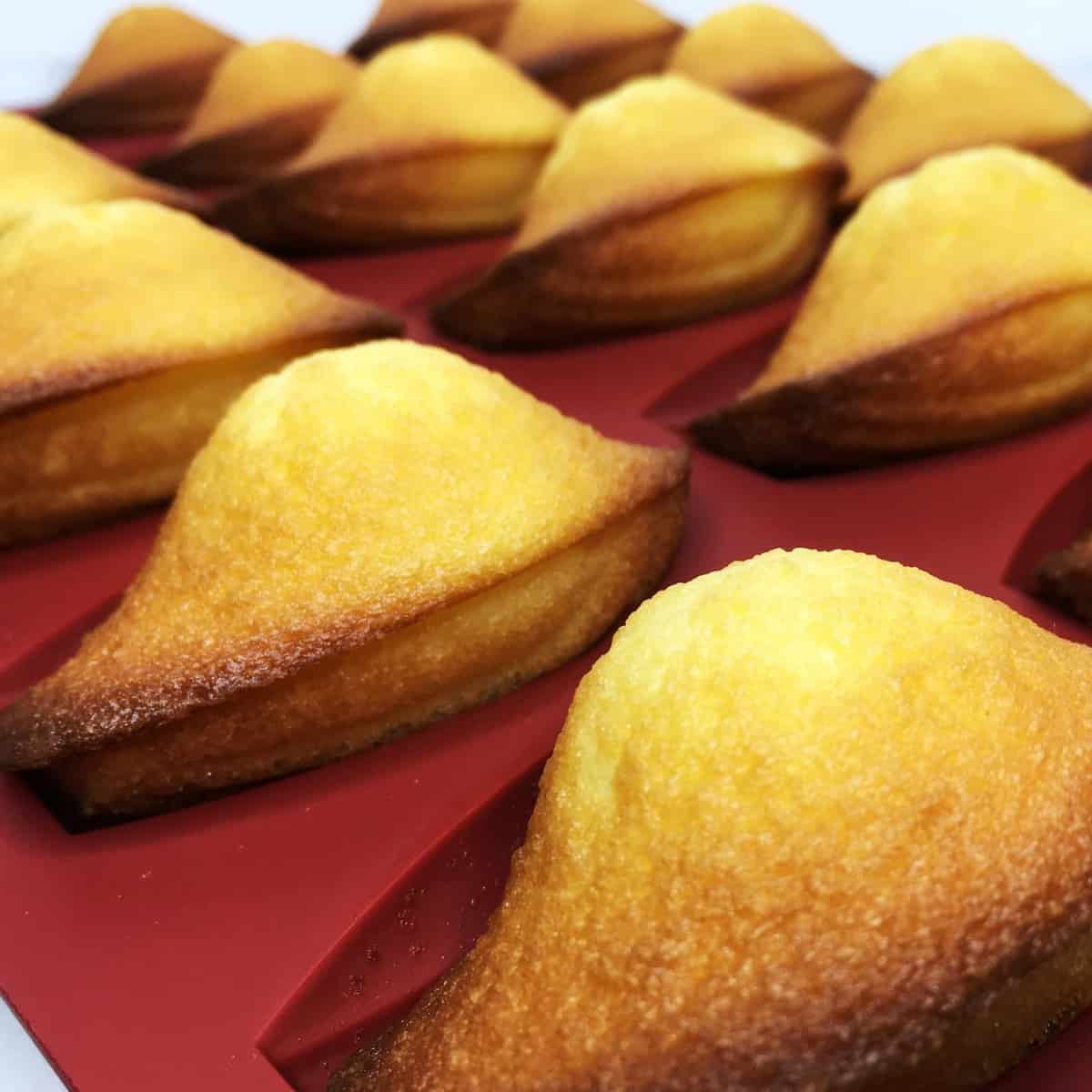
Meringue Domes (Meringue Balls or Spheres)

Oct 14, 2021 · 24 Comments

Meringue spheres served on a black slate board with a dessert plate and flowers aside.

Quick Summary: These meringue domes, also called meringue balls or spheres, are crisp half-sphere meringues baked in silicone molds and filled with chestnut whipped cream. They resemble snowballs and make a fun Christmas dessert you can serve year-round.

A single meringue ball served on a white plate with flowers aside

What is a meringue dome?

A meringue dome is a crisp, hollow half-sphere of baked French meringue, piped into a silicone half-sphere mold and dried slowly in a low oven. Two half-spheres are filled with cream and joined to form a ball, which is why the dessert is also called meringue balls or spheres. Unlike a Pavlova, the meringue here is crisp all the way through, with no soft marshmallow center.

Eight tips to make the perfect meringue

Follow these eight tips to make the perfect meringue:

  1. Use a clean, grease-free bowl: a copper bowl works best because it helps the egg whites hold their volume, but a stainless steel or glass bowl works too.
  2. Separate the eggs cleanly: crack cold eggs into an egg separator, and don't let any yolk get into the whites.
  3. Bring whites to room temperature: let egg whites sit out for 1 to 2 hours first, so they whip up quicker and easier.
  4. Use caster or superfine sugar: it dissolves faster; you can make your own by processing granulated sugar in a food processor.
  5. Add sugar gradually: let each addition dissolve before adding more; rub a bit of meringue between your fingers and feel no grains.
  6. Start slow, then speed up: beat at low speed at first and increase to medium-high as you go.
  7. Whisk to stiff peaks: the meringue should curve into a "bec d'oiseau" (bird's beak) and stay put even when you turn the bowl upside down.
  8. Use it right away: pipe the meringue immediately, as it starts to break down if it sits.
Meringue spheres on a black platter with flowers and a plate with dessert on the background

Why you'll love this recipe

  1. This meringue dessert has one of the best presentations ever and is made in silicone molds.
  2. Meringue balls make a unique Christmas dessert: scatter them on your holiday table as edible decor or serve them individually.
  3. The three-ingredient French meringue recipe is easy to make.
  4. Using different types of cream to assemble meringue balls opens endless possibilities.
  5. Serving meringue half-spheres instead of spheres makes 12 individually served desserts.
A meringue sphere sprinkled with lime zest on a plate with flowers aside

Ingredients

For ingredients and detailed instructions, refer to the recipe card below.

  • Egg whites: the recipe calls for large egg whites. Using chilled eggs and an egg separator makes it easier to separate egg whites from the yolks.
  • Sugar: use caster sugar or make your own superfine sugar. Place the required amount of granulated white sugar in a food processor and grind for about 1 to 2 minutes, until the sugar looks like fine sand.
  • Icing sugar: make it yourself using a coffee grinder or use store-bought powdered sugar.
  • Chestnut cream: this French classic makes the whipped cream sweet and nutty. If you have never tried chestnut cream, you will be surprised to find it is a great topping for crepes and waffles, or for making sandwiched cookies.
  • Whipping cream: Use your favorite brand of whipping cream with at least 35% milk fat.
  • Rum: Use dark rum or brandy. If you have kids, please omit rum.
  • Lime: Use organic, untreated lime and make the zest with a zester grater. Replace it with the zest of kaffir lime (combawa) or lemon.

Equipment

You need only a few basic tools to make these meringue domes:

  • Silicone half-sphere molds: to shape and bake the meringue domes.
  • Stand mixer or electric mixer: to whip the egg whites into meringue.
  • Pastry bag with Ateco plain pastry tip 806: to pipe the meringue into the molds.
  • Rubber spatula: to fold in the icing sugar and the chestnut cream.
  • Egg separator: to separate the whites from the yolks cleanly.

How to make meringue domes

Step 1. Preheat oven to 185°F (85°C).

Step 2. To make the meringue, beat the egg whites in a stand mixer or with an electric mixer until they are mounted.

Step 3. Gradually add caster (or superfine) sugar and whisk to get the glossy meringue (photo 1).

Step 4. Stir in the icing (powdered) sugar with a rubber spatula. Place the meringue in a pastry bag with the cut end or Ateco plain pastry tip 806 and push it into the cavities of half-sphere molds.

Step 5. Smooth the meringue over the whole half-sphere with the back of a teaspoon (photo 2), place the silicone molds on the oven rack, and bake for two hours.

Photo 1: Meringue in the bowl of a stand mixer Photo 2: Meringue into silicone molds
PHOTO 1 PHOTO 2

Step 6. Take the meringues out of the oven and let them cool down. Then carefully remove the meringue half-spheres from the molds (photo 3).

Step 7. To make chestnut whipped cream, whip the whipping cream until whipped.

Step 8. Stir in the chestnut cream and dark rum using a rubber spatula (photo 4).

Photo 3: Baked hemispheres on a brown board Photo 2: Chestnut cream in a bowl
PHOTO 3 PHOTO 4

Step 9. To assemble meringue spheres, make a small dot of chestnut whipped cream on a serving platter and place a meringue hemisphere on it.

Step 10. Garnish this hemisphere and another one with cream (photo 5), then place one on top of the other to form a ball.

Step 11. Sprinkle the meringue dessert with icing (powdered) sugar and lime zest (photo 6). Assemble the remaining baked hemispheres the same way.

Photo 5: Baked hemispheres piped with cream Photo 6: Dessert served on a white plate
PHOTO 5 PHOTO 6

Expert tips

  1. Please read the eight tips to make French meringue above in the post.
  2. Bake the meringue half-spheres on oven racks, not on a baking sheet.
  3. To even the base of the baked meringue half-spheres, use a cheese or zester grater. This way, the meringue hemispheres will match perfectly when assembling the dessert.
  4. Make meringue half-spheres in advance and fill them with cream on the day of serving.

Recipe variations

  • Chestnut cream: this French classic makes the whipped cream sweet and nutty. If you cannot find it, replace chestnut cream with an equal amount of sweetened chestnut puree, or use smooth almond or hazelnut praline paste for a similar sweet, nutty flavor.
  • Orange flower cream: scent the whipped cream with orange flower water, like in the Banoffee Pie Cups recipe.
  • Coffee cream: coffee lovers can use the coffee whipped cream from the Meringue Cake Merveilleux.
  • Chocolate cream: fill the domes with white chocolate whipped cream from the Brownie Cake, or milk chocolate cream from the Banana Cupcakes.
  • Half-sphere dessert: serve single domes garnished with whipped cream, fresh fruit, and a dusting of icing sugar for a summertime treat.
  • Colored meringue: tint the meringue with food coloring powder (not liquid or gel, which changes the consistency), then mix it with icing sugar for nice patterns.
Baked meringue domes garnished with cream and fresh fruit on a white platter: Close up

Storing & freezing

Store the assembled dessert in the fridge for up to 24 hours. I don't recommend freezing it.

Recipe FAQ

Can you make meringue domes in advance?
Yes. Bake the meringue half-spheres a few days ahead and store them uncovered on the counter, away from humidity. Fill and assemble them with cream only when you are ready to serve.

Why did my meringue burn or rise in the oven?
The oven was most likely too hot. Meringue domes bake low and slow at 185°F (85°C); if yours browned or puffed up, check your oven with an oven thermometer, since the real temperature is often higher than the display.

My meringues weren't done after 2 hours and wept sugar. What went wrong?
This usually comes down to oven temperature and how the molds sit in the oven. Verify the real temperature with a thermometer, and place the silicone molds directly on the oven rack rather than on a baking sheet, which slows drying and can cause the sugar to weep.

How do I get the meringue domes smooth?
Rough or empty spots come from tiny air bubbles in the meringue. Tap the filled mold gently on the counter before baking to release the bubbles, and smooth the surface with the back of a teaspoon.

What size mold do you use?
The half-sphere mold cavity is 2.7 inches (7 cm), which makes one full sphere when you join two halves.

How many calories are in one meringue dome?
One assembled meringue sphere has about 255 calories.

Love meringue desserts? Try these next

  • Pavlova Roll (Meringue Roulade)
  • Ottolenghi's Eton Mess
  • Cipriani Cake (Vanilla Meringue Cake)
  • Merveilleux (French Meringue Dessert)
  • Lotus Biscoff Cake
  • Meringue Mushrooms
  • Large Meringue
  • Browse all the gluten-free desserts

Want more delicious and beautiful recipes? Subscribe to my newsletter and follow me on Facebook, Pinterest, and Instagram for my latest updates. If you make this recipe, please leave a star rating on the recipe card and comment below!

Print

Recipe card

Meringue Domes (Meringue Balls or Spheres)

Meringue spheres served on a black slate board with a dessert plate and flowers aside.
Print Recipe
Save Recipe Recipe Saved

5 Stars 4 Stars 3 Stars 2 Stars 1 Star

5 from 7 reviews

Meringue domes, also called meringue balls or spheres, are crisp half-sphere meringues baked in silicone molds and filled with chestnut whipped cream. Resembling snowballs, they make a fun Christmas dessert you can serve all year round.

  • Author: Irina Totterman
  • Prep Time: 1 hour
  • Cook Time: 2 hours
  • Total Time: 3 hours
  • Yield: 6 1x
  • Category: Cookies
  • Method: Baking
  • Cuisine: French

Ingredients

Scale

For the meringue:

  • 3 egg whites
  • ⅓ cup + 5 ½ teaspoons (100 g) granulated sugar (see note #1)
  • ⅔ cup + 2 tablespoons (100 g) icing (powdered) sugar

For the chestnut whipped cream:

  • 2.6 oz (75 g) chestnut cream
  • ⅔ cup (150 g) whipping cream
  • 1 ½ teaspoons dark rum

For the decoration:

  • 1 tablespoon icing (powdered) sugar
  • 1 lime, zest

* If needed, please refer to Baking Conversion Charts.

Instructions

  1. Preheat oven to 185°F (85°C). To make the meringue, beat egg whites in a stand mixer or using an electric mixer till they are mounted. Gradually add caster (granulated) sugar and whisk until glossy. Stir in the icing (powdered) sugar with a rubber spatula. Place the meringue in a pastry bag with the cut end or Ateco plain pastry tip 806 and push it into the cavities of half-sphere molds. Smooth the meringue on the whole half-sphere with the back of a teaspoon, place silicone molds on the oven rack, and bake for two hours. Take the meringues out of the oven and let them cool down. Then carefully remove the meringue half-spheres from the molds.
  2. To make chestnut whipped cream, whip the whipping cream. Stir in the chestnut cream and dark rum using a rubber spatula. 
  3. To assemble the meringue spheres, make a small dot of chestnut whipped cream on a serving platter and place a meringue hemisphere on it. Garnish with cream and another hemisphere, then place one on top of the other to form a ball. Sprinkle the meringue dessert with icing (powdered) sugar and lime zest. Assemble the remaining baked hemispheres the same way.

Notes

  1. Process granulated white sugar in a food processor for 1 to 2 minutes to make it superfine. 
  2. Read the eight tips for making French meringue in the post.
  3. Bake the meringue half-spheres on oven racks, not on a baking sheet.
  4. To even the base of meringue half-spheres, use a zester grater. This way, the meringue hemispheres will match perfectly when assembling the dessert.
  5. Make meringue half-spheres in advance and fill them with cream on the day of serving. 

Nutrition

  • Calories: 255
  • Sugar: 40.7 g
  • Sodium: 25 mg
  • Fat: 7.8 g
  • Saturated Fat: 4.8 g
  • Carbohydrates: 44.1 g
  • Fiber: 0 g
  • Protein: 2.3 g
  • Cholesterol: 28 mg

Thank you for following me on Pinterest, Facebook, and Instagram. Hashtag #bakinglikeachef so I can see your creations.

The nutritional information has been calculated using an online recipe nutrition calculator such as Verywellfit.com and is intended for informational purposes only. These figures should be used as a general guideline and not be construed as a guarantee.
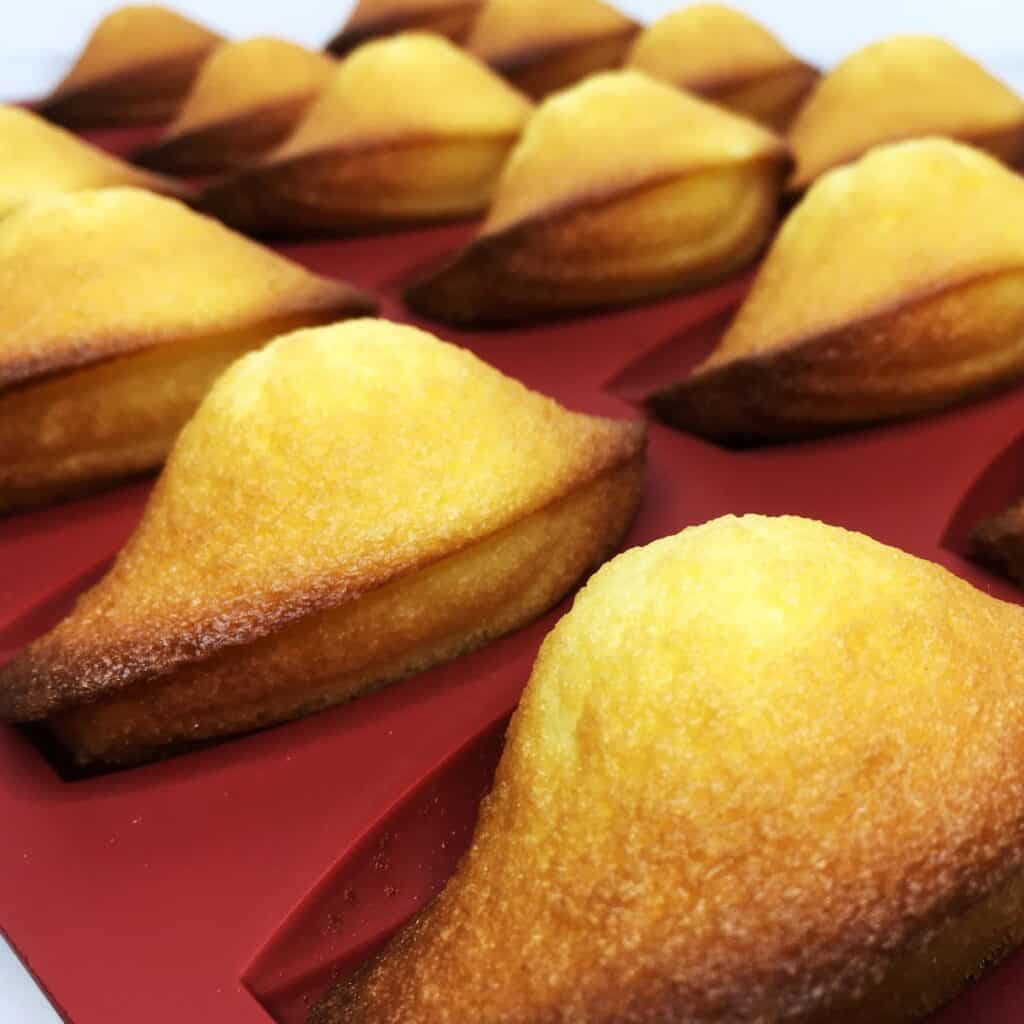
The recipe was adapted from http://www.femmeactuelle.fr/. It was originally published on November 27, 2018. The recipe has been revised to include improved content and photos.

Zimtsterne (German Cinnamon Stars)

Oct 10, 2021 · 55 Comments

A batch of German cinnamon star cookies in a jar on a wooden board.

Quick Summary: Zimtsterne are German cinnamon stars, gluten-free star cookies made with ground almonds and hazelnuts, spiced with cinnamon, and topped with white royal icing. They have a soft, chewy center and are a classic German Christmas cookie.

A batch of German cinnamon star cookies in a jar on a wooden board

What are Zimtsterne?

Zimtsterne, or German cinnamon star cookies, are spiced, iced star cookies made with ground nuts or nut flour, flavored with cinnamon, and topped with white royal icing. They have a soft, chewy center.

Zimtsterne translates as "cinnamon stars," where "zimt" means cinnamon and "sterne" means stars in German. If you are wondering about Zimtsterne's pronunciation, it sounds like "tseemt-shtair-nuh."

An authentic Zimtsterne recipe uses almonds, occasionally with ground hazelnuts. These cookies are naturally gluten-free, but different recipes are available today.

In Germany, the Christmas season isn't the same without good cinnamon stars, counted as one of the classic German Christmas cookies. Betty Brossi says, "A biscuit bag without cinnamon stars is like Advent without Santa Claus."

Traditional Zimtsterne vs. this recipe

Classic German Zimtsterne are flourless: the dough is just ground almonds, egg white, powdered sugar, and cinnamon, and the same meringue is spread on top before baking. That version is chewier and fully gluten-free but stickier to roll and cut.

This recipe is an easier, butter-and-flour take on the classic. The added flour and butter make the dough simpler to roll, chill, and cut into clean stars, while the ground almonds and hazelnuts keep the cinnamon-almond flavor of the original.

Why you'll love this recipe

  • Holiday favorite: a hit at Christmas cookie exchanges and gatherings with family and friends.
  • Warm cinnamon aroma: they fill your home with a festive, spiced smell as they bake.
  • Great edible gift: packed in a cookie box, they make a thoughtful present.
  • Naturally gluten-free: made with ground nuts instead of flour in the traditional version.
  • Easy to customize: swap the ground nuts and spices for other flavors you like.

Ingredients

Zimtsterne ingredients

For ingredients and detailed instructions, refer to the recipe card below.

  • Butter: Use unsalted softened butter. Take it out of the fridge 1-2 hours before you start.
  • Sugar: Use granulated or caster sugar.
  • Ground cinnamon is a star ingredient in cookies. Don't substitute it with another spice.
  • Egg: Use one large whole egg and one egg white from a medium-sized chicken egg.
  • Hazelnut meal: Use store-bought hazelnut meal or flour, or make ground nuts in a food processor. Use toasted whole nuts with their skins on for better color and flavor. But be careful: don't over-grind hazelnuts; otherwise, you will get nut butter.
  • Almond meal: Use a coarse almond meal or blanched, finely ground almond flour. You can also use ground almonds. Make sure to spoon almond powder gently from a container into a measuring cup to keep measurements precise.
  • Flour: The recipe calls for all-purpose flour.
  • Icing sugar: Make it with a coffee grinder or use store-bought powdered or confectioner's sugar.
  • Lemon juice is added to stabilize the royal icing.

Equipment

You need only a few basic tools to make these cinnamon stars:

  • stand mixer
  • rolling pin
  • parchment paper
  • offset spatula
  • star cookie cutter (six- or five-point star cookie cutter)
  • baking sheet
  • wire rack

How to make Zimtsterne / cinnamon star cookies

Step 1. To make the cookie dough, place softened butter, granulated sugar, and ground cinnamon in the bowl of a stand mixer and mix (photo 1).

Step 2. Add the egg, hazelnut meal, and almond meal and mix again. Finally, add sifted all-purpose flour and mix to combine (photo 2).

Photo 1: Cinnamon mixture in a bowl Photo 2: Cookie dough in a bowl
PHOTO 1 PHOTO 2

Step 3. Transfer the cookie dough to a work surface and form into a ball.

Step 4. Sprinkle a sheet of paper with a small amount of icing (powdered) sugar. Place the dough on the paper and cover it with the top sheet of paper.

Step 5. Using a rolling pin, roll the dough out between parchment to a thickness of 0.4 inch (1 cm). Refrigerate for 1 hour (photo 3).

Step 6. To make the white royal icing, place the egg white, icing sugar, and 3 to 4 drops of lemon juice in a clean bowl. Using an electric mixer, whisk the white mixture at high speed. (photo 4).

Photo 3: Rolled Zimtsterne dough Photo 4: White royal icing in a glass bowl
PHOTO 3 PHOTO 4

Step 7. Take the cookie dough from the fridge and spread a thin layer of royal icing with a bent spatula (photo 5).

Step 8. Chill the dough in the fridge for 30 minutes or in the freezer for 15 minutes.

Step 9. Heat oven to 300°F (150°C). Line two baking sheets with parchment paper.

Step 10. Cut out cookie stars with an authentic Zimtsterne cookie cutter or a 2-inch (5 cm) six- or five-point star cookie cutter.

Pro tip: Dip a cookie cutter in hot water and dry it between cutouts to facilitate the release of the cookie from the cutter.

Step 11. Remove cookies by pushing them underneath, and arrange them on the prepared baking sheets (photo 6).

Photo 5: Royal icing on top of the cookie dough Photo 6: Cutout stars on parchment
PHOTO 5 PHOTO 6

Step 12. Bake the cookies and dough scraps in the middle of the preheated oven (not the rack) for 12 to 15 minutes (photo 7). Bake until set, but do not color the royal icing.

Step 13. Remove cookies from the oven and let them cool down on a wire rack (photo 8).

Photo 7: Cookie scraps on parchment Photo 8: Baked star cookies on parchment paper
PHOTO 7 PHOTO 8

Expert Tips

  1. Use a six- or five-star shaped cutter interchangeably.
  2. Instead of star shapes, make cookies diamond- or triangle-shaped. Feel free to use your favorite but simple cookie cutter.
  3. If the Zimtsterne dough is too soft, return it to the fridge for a few minutes and continue.
  4. For the sharp points of the star cookies, cut them after applying the meringue glaze. Then, gently push underneath to remove them.
  5. If you are using this technique, cut out the cookies first, then use a small spoon, brush, butter knife, small offset spatula, or even a toothpick to spread a thin layer of meringue on top of each cookie, then bake.
  6. Test and adjust your oven. Do not overbake the cookies; otherwise, the royal icing turns brown. Aim for a meringue top as white as possible, but a slight brown tint is fine.
  7. The remaining cookie scraps (offcuts) aren't as pretty as cinnamon stars, but you can bake them too. They are delicious.

Recipe variations

  • Flavorings: Add authentic Vanillezucker (vanilla sugar in English), orange or lemon zest, or a tablespoon of instant espresso powder to bring vanilla, citrus, or coffee flavor to the recipe.
  • Kirsch or rum: Stir a teaspoon of Kirsch (cherry brandy) or dark rum into the dough for the traditional German and Swiss touch and a deeper holiday flavor.
  • Shaping: Instead of original German star cookies made as 6-pointed stars, use a five-star cookie cutter. Also, experiment with festive motifs like Christmas trees, Santa Clauses, angels, etc., or create non-traditional shapes: triangles, diamonds, or rounds.
  • Decoration: Decorate cookies with coarsely crushed espresso beans, chopped walnuts, or chopped dried cranberries after brushing them with egg whites.  

Storing & freezing

Store cinnamon star cookies in a dry, airtight container, a sealed container, or a cookie tin for up to a month in a cool place. But keep different types of cookies separate for a longer shelf life.

The longer you store Zimtsterne cookies, the chewier they become. But if you place a piece of an apple in a cookie jar, the star cookies will stay soft and retain their flavor. Please replace the apple wedge every two days.

Can you freeze Zimtsterne? You can freeze unglazed cinnamon stars. To thaw, let the cookies rest for 1 to 2 hours at room temperature.

As for freezing glazed cookies, some authors recommend freezing; others don't. According to Bettina Bernhardsgrütter-Preisig, culinary advisor of Betty Bossi, you can freeze star cookies if you spread the egg white glaze onto the baked stars after baking.

Recipe FAQ

What's the difference between cassia cinnamon and Ceylon cinnamon?
Cassia cinnamon has a stronger flavor and is cheaper than Ceylon cinnamon. So, it is the most commonly used cinnamon around the world. On the other hand, Ceylon cinnamon has a higher quality than cassia cinnamon and is quite expensive.

Can you make the Zimtsterne dough in advance?
You can make the cookie dough ahead of time. Roll the dough out between two sheets of parchment paper and freeze for up to 2 weeks.

How to serve German cinnamon stars
Serve cookies with a cup of tea, coffee, German Glühwein, or mulled wine.

How to pack Zimtsterne
Let cookies stand for 24 hours after baking; then you can stack them, ensuring the meringue is dry. Still, take extra care because the star points are fragile.

Are Zimtsterne gluten-free?
The traditional recipe is naturally gluten-free because it uses ground nuts instead of flour. This version adds a little all-purpose flour, so use a gluten-free blend if you need them fully gluten-free.

Why is my Zimtsterne dough sticky?
Ground nuts release oil, which makes the dough soft and sticky. Chill it well, roll it between two sheets of parchment dusted with icing sugar, and return it to the fridge for a few minutes whenever it gets too soft to cut.

Do you have to chill the dough?
Yes. Chilling firms up the butter and nut oils so you can roll the dough evenly and cut clean star points. Skipping the chill makes the dough spread and lose its shape.

Why did my royal icing turn brown or crack?
The icing browns when the oven is too hot, or the cookies bake too long, so keep the temperature at 300°F (150°C) and pull them once set. Cracks usually mean the icing was spread too thick or dried out before baking, so spread a thin, even layer.

How many calories are in a Zimtsterne cookie?
Each cinnamon star has about 208 calories.

Love Christmas cookies? Try these next!

  • Bredele Christmas cookies
  • Mini gingerbread men cookies
  • Chocolate banana pecan cookies
  • Christmas cookie ornaments
  • Or browse all the Christmas recipes
Print

Recipe card

Zimtsterne (German Cinnamon Stars)

A batch of German cinnamon star cookies in a jar on a wooden board.
Print Recipe
Save Recipe Recipe Saved

5 Stars 4 Stars 3 Stars 2 Stars 1 Star

4.9 from 23 reviews

These zimtsterne, or German cinnamon stars, are gluten-free cookies made with ground almonds and hazelnuts, warm cinnamon, and a smooth white royal icing top. They have a soft, chewy center and a bright citrus note from lemon zest, a classic German Christmas cookie.

  • Author: Irina Totterman
  • Prep Time: 1 hour 15 minutes
  • Cook Time: 15 minutes
  • Total Time: 1 hour, 30 minutes (plus chilling time)
  • Yield: 20 1x
  • Category: Cookies
  • Method: Baking
  • Cuisine: German

Ingredients

Scale

For the cookie dough:

  • 6.2 oz (175 g) unsalted butter, softened
  • ½ cup + 2 ½ teaspoons (125 g) granulated sugar
  • 3 tablespoons (25 g) ground cinnamon
  • 1 large egg, room temperature
  • ⅓ cup + 1 ½ tablespoon (50 g) hazelnut meal 
  • ½ cup +1 teaspoon (50 g) almond meal
  • 2 cups (250 g) all-purpose flour

For the white royal icing:

  • 1 ½ cups + 5 teaspoons (200 g) icing (powdered) sugar
  • 2 tablespoons (30 g) egg whites, room temperature (see note #1)
  • several drops of lemon juice

* If needed, please refer to Baking Conversion Charts.

Instructions

  1. To make the cookie dough, place softened butter, granulated sugar, and ground cinnamon in the bowl of a stand mixer and mix. Add egg, hazelnut meal, and almond meal and mix again.
  2. Add the sifted all-purpose flour and mix to combine. Remove the cookie dough from the bowl and form a ball.
  3. Roll the dough out with a rolling pin between two sheets of parchment paper (sprinkled with icing sugar) to a thickness of 0.4 inch (1 cm) and refrigerate for 1 hour.
  4. To make the white royal icing, whisk the egg white with icing sugar and 3 to 4 drops of lemon juice using an electric mixer.
  5. Take the cookie dough out of the fridge and spread a thin layer of royal icing with a bent spatula. Chill the dough in the refrigerator for 30 minutes or in the freezer for 15 minutes.
  6. Preheat oven to 300°F (150°C). Cut out cookie stars with a 2-inch (5 cm) star-shaped cookie cutter, dipping it in hot water and drying it between cutouts. Remove cookies by pushing them underneath, and arrange them on a parchment-lined baking sheet.
  7. Bake cookies in the middle of the preheated oven for 12 to 15 minutes. Bake until set, but do not color the royal icing. Remove cookies from the oven and let them cool down on a wire rack.

Notes

  1. 30 g of egg whites are approximately equal to 1 fresh egg white from a medium-sized chicken egg. 
  2. Use a six- or five-star cookie cutter interchangeably. If you don't have a star-shaped cookie cutter, use a diamond- or triangle-shaped one. Feel free to use your favorite but simple cookie cutter.
  3. If the cookie dough is too soft while cutting, return it to the fridge for a few minutes, then continue.
  4. For a neat appearance, cut the star cookies after spreading the royal icing, pushing them underneath to remove them.
  5. If you are short on time, cut out the cookies first, then use a small spoon, a pastry brush, a butter knife, a small offset spatula, or even a toothpick to spread the meringue icing on top of the cookies.
  6. Test and adjust your oven. Do not overbake cookies; otherwise, the royal icing turns brown. Aim for icing as white as possible, but a slight brown tint is fine.
  7. The remaining cookie scraps (offcuts) aren't as pretty as cinnamon stars, but you can bake them as well. They are delicious.
  8. Store cookies in an airtight container in a cold place for a month.

Nutrition

  • Serving Size: 1 cookie
  • Calories: 208
  • Sugar: 16.3 g
  • Sodium: 55 mg
  • Fat: 10.2 g
  • Saturated Fat: 4.8 g
  • Carbohydrates: 27.8 g
  • Fiber: 1.5 g
  • Protein: 2.7 g
  • Cholesterol: 27 mg

Thank you for following me on Pinterest, Facebook, and Instagram. Hashtag #bakinglikeachef so I can see your creations.

The nutritional information has been calculated using an online recipe nutrition calculator such as Verywellfit.com and is intended for informational purposes only. These figures should be used as a general guideline and not be construed as a guarantee.
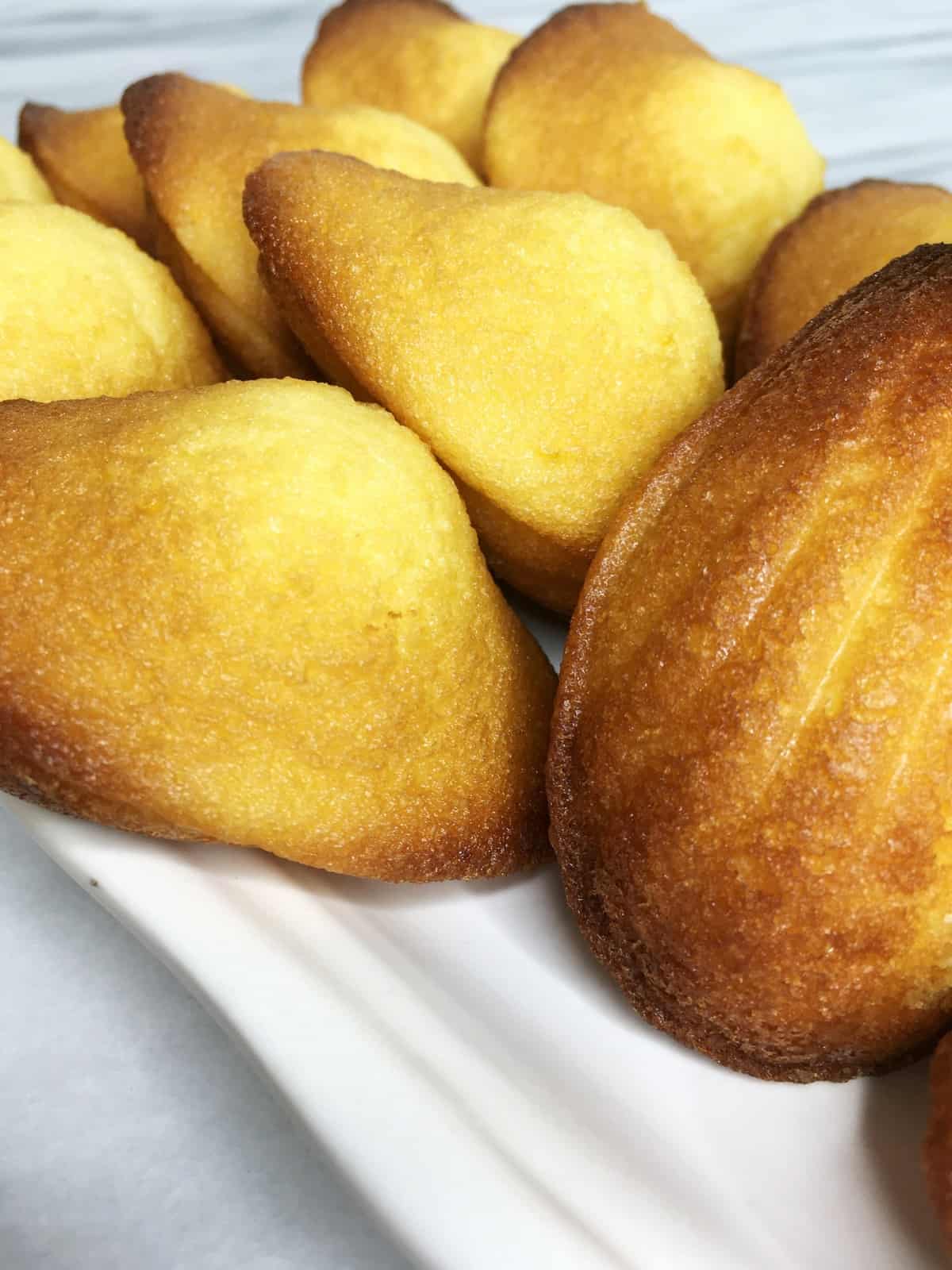
The recipe was adapted from the French ELLE. It was originally published on December 28, 2018. The recipe has been revised to include improved content and photos.

Congolais (French Coconut Macaroons / Rochers Coco)

Sep 13, 2021 · 40 Comments

A baked batch of macaroons on a baking sheet lined with parchment paper.

Quick Summary: Congolais are French coconut macaroons, also called rochers coco. Made with shredded coconut, sugar, and egg whites, they bake in about 30 minutes and turn out chewy inside with a crisp, golden outside.

Three baked macaroons on parchment paper

What are congolais?

Congolais are French coconut macaroons made with shredded coconut, sugar, and egg whites. The name means "Congolese" in French, a nod to the Democratic Republic of the Congo, a former French colony. In France, they are also called rochers coco or rochers noix de coco, meaning "coconut rocks."

They are a classic of French home baking, and the original recipe does not use sweetened condensed milk. After testing dozens of versions, I settled on this one for coconut macaroons without condensed milk, chewy on the inside and golden on the outside.

A small batch of French coconut macaroons on a marble table

Coconut macaroons vs. macarons

Macaroons and macarons are both cookies, but they are different. A macaroon ("mac-uh-ROON") is a coconut-based cookie, crisp on the outside and chewy inside. A macaron ("mac-uh-RON") is a meringue-based sandwich cookie made with almond flour.

French macarons can take hours and a lot of patience, while these coconut macaroons come together in less than 30 minutes.

Coconut macaroon cookies or rochers coco on a wooden board

Why you'll love this recipe

  • Quick and simple: they take just minutes and use a few pantry ingredients.
  • Great for leftover egg whites: a perfect way to use up whites from other recipes.
  • Naturally gluten-free: a good option for people avoiding gluten.
  • Fun to bake with kids: even small children can help shape the mounds.
  • Easy to scale: make more or fewer depending on how many you need.
  • Great for gifting: pack them in a box or jar tied with a ribbon.

Ingredients

For ingredients and detailed instructions, refer to the recipe card below.

  • Shredded coconut: use unsweetened shredded coconut, not large coconut flakes. You can also use fine desiccated coconut, but it will produce more compact cookies. Store opened coconut in an airtight container in the refrigerator or freezer.
  • Sugar: use granulated sugar or caster sugar to make these cookies, congolais.
  • Egg whites: the recipe calls for large egg whites. Separate them from egg yolks while the eggs are chilled. Use an egg separator if desired.
  • Applesauce: use unsweetened store-bought applesauce.

Equipment

You need only a few basic tools to make these coconut macaroons:

  • large mixing bowl
  • rubber spatula
  • wooden spoon
  • medium cookie scoop
  • baking sheet
  • wire rack

How to make congolais

Step 1. Heat oven to 430°F (220°C). Line a baking sheet with parchment paper.

Step 2. Place coconut and sugar in a large bowl. Add the egg whites and applesauce, and mix with a large rubber spatula, then by hand (photo 1).

Step 3. Heat the mixture in a bain-marie (water bath) until it reaches 122°F (50°C), stirring with a wooden spoon (photo 2).

Photo 1: Coconut mixture in a bowl Photo 2: Mixture in a bowl over water bath
PHOTO 1 PHOTO 2

Step 4. Using a medium cookie scoop, a small ice cream scoop, or two spoons, scoop the coconut mixture into the prepared baking sheets.

Step 5. Space the little mounds about 2 inches (5 cm) apart (photo 3). Bake the macaroons for 6 to 7 minutes until golden brown.

Step 6. Rotate the cookie sheet front to back halfway through baking to ensure even baking.

Step 7. Remove cookies from the oven and let cool on the baking sheet for about 5 minutes (photo 4).

Step 8. Then transfer them to the cooling rack to cool them completely.

Photo 3: Scooped mixture on the parchment paper Photo 4: Baked cookies on the parchment
PHOTO 3 PHOTO 4

Recipe variations

  • Chocolate-dipped: drizzle or dip the coconut macaroons in melted dark, milk, or white chocolate, shake off the excess, and refrigerate for a few minutes to set.
  • Extra flavor: add a little vanilla, almond, or coconut extract to the mixture to boost the coconut taste.
  • Sprinkle-loaded: Stir in 1 tablespoon of sprinkles for a festive look.
  • Jam-filled: Press a thin layer of coconut mixture into the mold, add a little jam, then cover with more mixture, patting it into any gaps.
  • With or without condensed milk: This recipe skips the sweetened condensed milk, but you can add it for a softer, sweeter cookie.

Storing & freezing

Store coconut macaroons in an airtight container at room temperature for 3 to 4 days, or in the refrigerator for up to a week.

You can freeze them two ways. Before baking, freeze the shaped mounds in an airtight container with parchment between the layers, then bake straight from frozen, adding 2 to 4 minutes. Or after baking, freeze the cooled cookies until solid, transfer to a container for up to 3 months, and thaw at room temperature for 2 to 3 hours.

Expert tips

  1. 40 g of egg whites is approximately equal to 1 raw fresh egg white from an extra-large chicken egg.
  2. For more compact macaroons, use a food processor to break down the shredded coconut. In this case, measure coconut after it has been pulsed.
  3. Do not overbake your cookies, as they can dry out easily.

Recipe FAQ

What is the meaning of macaroons?
Macaroons are a type of cookie made with egg whites, sugar, and ground almonds or coconut for their signature texture.

What is the origin of coconut macaroons?
The macaroons' history points to Venetian monks in the 8th or 9th century who made almond cookies for Catherine de' Medici. She brought the monks' cookies to France in the 16th century. According to another legend, two French nuns paid for their lodging in Nancy, France, by making pastry and selling their macaroons.

Are these cookies gluten-free?
Coconut macaroons are naturally gluten-free since the recipe doesn't include any flour.

Can you use fresh coconut to make coconut macaroons?
The authentic recipe uses dry coconut. If you have fresh coconut, it is best to use it in another recipe because it will behave differently when baked.

How do you say coconut in French?
Coconut in French is noix de coco, pronounced as /nwa d(ə) ko.ko/.

How to make a bain-marie/water bath?
To make a bain-marie/water bath, fill a saucepan with about 2 to 3 inches (5 to 7 cm) of water and bring it to a boil. Place the ingredients you need into a smaller saucepan or bowl and set it on top of the first saucepan (make sure there is some space between the water and the smaller container). Heat the mixture: when you need to remove the container from a bain-marie, watch out for hot steam!

How many calories are in a coconut macaroon?
Each macaroon has about 72 calories.

Love coconut recipes? Try these next!

  • Flan de Coco (Coconut Flan)
  • Coconut Dacquoise (Dacquoise de Coco)
  • Ottolenghi Louise Cake with Plum and Coconut

Want more delicious and beautiful recipes? Subscribe to my newsletter and follow me on Facebook, Pinterest, and Instagram for my latest updates. If you make this recipe, please leave a star rating on the recipe card and comment below!

Print

Recipe card

Congolais (French Coconut Macaroons / Rochers Coco)

A baked batch of macaroons on a baking sheet lined with parchment paper.
Print Recipe
Save Recipe Recipe Saved

5 Stars 4 Stars 3 Stars 2 Stars 1 Star

5 from 15 reviews

This congolais recipe makes French coconut macaroons (rochers coco) with just 4 ingredients in 30 minutes. They are chewy on the inside and golden on the outside.

  • Author: Irina Totterman
  • Prep Time: 23 minutes
  • Cook Time: 7 minutes
  • Total Time: 30 minutes
  • Yield: 10 macaroons 1x
  • Category: Cookies
  • Method: Baking
  • Cuisine: French
  • Diet: Gluten Free

Ingredients

Scale
  • 3.5 oz (100 g) shredded coconut
  • ⅓ cup + 1 tablespoon (90 g) granulated sugar
  • 2.5 tbsp (40 g) egg whites (see note #1)
  • ⅔ tbsp (10 g) unsweetened applesauce

** If needed, please refer to Baking Conversion Charts.

Instructions

  1. Preheat oven to 430°F (220°C). Line a baking sheet with parchment paper. Place coconut and sugar in a large bowl. Add the egg whites and applesauce, and mix with a rubber spatula, then by hand. Heat the mixture in a bain-marie/water bath until it reaches 122°F (50°C), stirring with a wooden spoon.
  2. Using a medium cookie scoop, a small ice cream scoop, or two spoons, scoop the mixture onto a baking sheet, spacing them 2 inches (5 cm) apart. Bake the macaroons for 6 to 7 minutes until golden brown. Rotate the baking sheet from front to back halfway through the baking time to ensure even baking. Remove cookies from the oven and let them cool on the baking sheet for about 5 minutes. Then transfer them to a wire rack to cool completely.

Notes

  1. 40 g of egg whites is approximately equal to 1 raw fresh egg white from an extra-large chicken egg.
  2. For more compact macaroons, use a food processor to break down the shredded coconut. In this case, measure coconut after it has been pulsed.
  3. Do not overbake your cookies, as they can dry out easily.
  4. Store coconut macaroons in an airtight container at room temperature for 3 to 4 days.

Nutrition

  • Serving Size: 1 macaroon
  • Calories: 72
  • Sugar: 9.8 g
  • Sodium: 6 mg
  • Fat: 3.4 g
  • Saturated Fat: 3 g
  • Carbohydrates: 10.7 g
  • Fiber: 0.9 g
  • Protein: 0.8 g
  • Cholesterol: 0 mg

Thank you for following me on Pinterest, Facebook, and Instagram. Hashtag #bakinglikeachef so I can see your creations.

The nutritional information has been calculated using an online recipe nutrition calculator such as Verywellfit.com and is intended for informational purposes only. These figures should be used as a general guideline and not be construed as a guarantee.

The recipe was adapted from Christophe Felder at www.camille-patisserie.com. It was originally published on March 03, 2019. The recipe has been revised to include improved content and photos.

Flødeboller - Danish Cream Buns

Jan 20, 2021 · 42 Comments

A batch of Danish cream buns - Flødeboller - topped with meringue on a wire rack.

Enjoy this twist on traditional Danish cream buns/puffs - Flødeboller - made with shortbread cookies, glazed with chocolate, and topped with a "mountain" of airy meringue with a hidden raspberry inside. Pure indulgence!

Sliced cookie with raspberry inside and meringue outside with the rest of the Danish cream puffs

You. Will. Love. It. Well, Valentine's Day is approaching, and it brings pink, red, and white desserts to the table.

I thought of making some individually served sweet treats with a beautiful combination of flavors and a gorgeous presentation.

The presentation of desserts is essential. I wanted to create something that could get mouth-watering, just looking at the dessert.

I read a lot about Copenhagen's Flødeboller, famous in Denmark as French Merveilleux is famous in Paris.

I decided to make a twist on a classic Danish sweet treat - Flødeboller. I omitted chocolate coating, added a fresh raspberry inside, and topped with a swirl of meringue.

As a final touch, I burned the meringue and sprinkled it with ground pistachios and crushed freeze-dried raspberries.

As for flavors, this cute dessert has a well-known raspberry/ chocolate/ pistachio combination. And I strongly believe this combo is unbeatable!

BAKING ESSENTIALS CHECKLIST

Sign up and get a list of the necessary baking tools and ingredients

FREE DOWNLOAD

Three Flødeboller - cookies topped with meringue - on a marble board
[feast_advanced_jump_to]

What is Flødeboller?

Flødeboller, meaning cream buns in English, are traditional Danish chocolate-coated marshmallow treats.

They are originally made with a biscuit base such as a plain wafer or homemade shortbread, or marzipan.

The dessert is then topped with marshmallow-like filling: cream in the past and egg whites-based filling nowadays.

The traditional Flødeboller stuffing is often called cream buns foam and is made with egg whites, water, sugar, and glucose syrup.

Then the dessert (also called Danish cream puffs) is coated in a hard shell of chocolate. The coating varies from white chocolate to dark chocolate, with sprinkles or chopped nuts. 

Why you should try this recipe

  1. This twisted Flødeboller recipe is easy and fun to make: kids love to participate.
  2. The dessert has a magical and romantic touch due to red raspberries hidden in the meringue.
  3. Making shortbread cookies in advance and glazing them with chocolate saves time on the day of serving. Top the glazed cookies with berries, pipe, and burn the meringue before serving.
  4. Using this shortbread cookie recipe and different cookie cutters open up possibilities to create your own cookie recipes.
Danish cookie-based sweets topped with meringue on a wire rack

Ingredients

For ingredients and detailed instructions, refer to the recipe card below.

Butter: use unsalted softened butter. Take it out of the fridge 1 to 2 hours before you start.

Flour: the recipe calls to all-purpose flour.

Icing sugar: make it at home with a coffee grinder or use powdered sugar.

Granulated sugar: to make the meringue, process granulated sugar with a food processor for a few seconds. It makes the sugar superfine. Or use caster sugar instead.

Baking powder: it is added as a leavening agent to the cookie dough. The best to use is aluminum-free baking powder.

Dark chocolate: use bittersweet chocolate or dark chocolate 70 to 80% cacao.

Grapeseed oil: it is the most neutral and flavorless oil to make a chocolate glaze.

Egg whites: separate egg whites from the yolks while the eggs are chilled. Then bring the whites to room temperature before making the meringue.

Fresh raspberries: these tangy berries balance the sweetness of the meringue. Replace fresh raspberries with fresh blackberries if preferred.

Freeze-dried raspberries and ground pistachios: you can omit these ingredients if desired.

How to make Flødeboller

To make shortbread cookies, place powdered (icing) sugar, butter, flour, and baking powder in the bowl of a stand mixer and mix (photo 1).

Add water and knead the dough until smooth (photo 2). Refrigerate the dough for 30 minutes.

Photo 1: Butter mixture in a bowl Photo 2: Cookie dough in a bowl
PHOTO 1 PHOTO 2

Preheat oven to 375 F/190 C. Take the cookie dough out of the fridge and roll it out between two parchment paper sheets until the thickness is about 3 mm.

Refrigerate for a few minutes again. Using a fluted cookie cutter, cut out dough circles, approximately 2.5 inch/7 cm in diameter (photo 3).

Arrange cut pieces on a baking sheet covered with parchment or a silicone bread baking mat (photo 4)...

Photo 3: Rolled dough, a cookie-cutter on parchment  Photo 4: Cookies on a baking mat
PHOTO 3 PHOTO 4

 and bake for about 15 minutes (photos 5-6).

Photos 5-6: Baked cookies on a silicone baking mat
PHOTOS 5-6

To make the chocolate glaze, toast pistachios in the oven for 15 minutes at 300 F/150 C.

Break the dark chocolate into small pieces and melt it in the microwave in 30-second intervals, stirring each time it stops.

Add grapeseed oil and chopped pistachios (photo 7).

Wait for a few minutes for the glaze to cool. Dip each cookie into the chocolate, arrange it on a wire rack and place a raspberry on each cookie over the glaze (photo 8). Let the chocolate set.

Photo 7: Chocolate glaze in a bowl Photo 8: Cookies with raspberries on a wire rack
PHOTO 7 PHOTO 8

To make the meringue, beat egg whites at room temperature, using an electric or a stand mixer.

Add granulated sugar three times and continue to whisk until the meringue is glossy (photo 9).

Gently add the sifted powdered (icing) sugar and mix with a rubber spatula. Place the ready meringue in a pastry bag with an open star pastry tip - Wilton 1M.

To decorate, pipe the meringue over each raspberry (photo 10) and burn it with a blow torch. 

Sprinkle the top of the meringue with ground pistachios and crushed freeze-dried raspberries (photo 11).

Photo 9: Meringue in a bowl Photo 10: Cookies topped with meringue Photo 11: Decorated dessert
PHOTOS 9-11

Attention: Due to the use of raw egg whites, the dessert is not advisable for pregnant women, babies, and small kids.

Expert tips

  1. To make ground pistachios, place nuts in a food processor and pulse a few times to achieve the fine grind.
  2. Crush freeze-dried raspberries using a food processor. Transfer crushes berries to a mini-strainer and make the powder if you prefer. This step is optional.  
  3. To get a beautiful texture on the outer side of cookies, bake them on a silicone bread baking mat. Bake cookies on parchment if you do not have the mat.
  4. Top the glazed cookies with raspberries right after the application of chocolate or later; this step is up to you.
  5. If you are short on time, omit glazing cookies with chocolate. Leave cookies plain.
  6. Replace fresh raspberries with fresh blackberries, if you prefer.

Love Valentine's Day treats? Try these next!

  • Pink Praline (French Pink Pralines)
  • Heart-Shaped Puzzle Cookies
  • Raspberry Oreo Cheesecake
  • Browse all Valentine's Day Recipes

Want more delicious and beautiful recipes? Subscribe to my newsletter and follow me on Facebook, Pinterest, and Instagram for my latest updates. If you make this recipe, please leave a star rating on the recipe card and comment below!

Print

Recipe card

Flødeboller - Danish Cream Buns

A batch of Danish cream buns - Flødeboller - topped with meringue on a wire rack.
Print Recipe
Save Recipe Recipe Saved

5 Stars 4 Stars 3 Stars 2 Stars 1 Star

5 from 18 reviews

Enjoy this twist on traditional Danish cream buns/puffs - Flødeboller - made with shortbread cookies, glazed with chocolate, and topped with a "mountain" of airy meringue with a hidden raspberry inside. Pure indulgence!

  • Author: Irina Totterman
  • Total Time: 2 hours, 15 minutes
  • Yield: 20 1x
  • Category: Cookies
  • Method: Baking
  • Cuisine: Danish

Ingredients

Scale

For the cookies:

  • 5.3 oz (150 g) butter, softened
  • 2 cups (250 g) flour
  • ½ cup + 1 tablespoon (70 g)  powdered (icing) sugar
  • 1 teaspoon baking powder
  • 1.7 fl. oz. (50 ml) water

For the chocolate glaze:

  • 3.5 oz. (100 g) dark chocolate
  • 5 ½ teaspoons (25 g) grapeseed oil
  • 1 oz. (30 g) pistachios

For the meringue:

  • 6 large egg whites (180 g) 
  • ⅔ cup + 2 tablespoons (180 g) granulated sugar
  • 1 ⅓ cup + 2 tablespoons (180 g) powdered (icing) sugar

For the decoration:

  • fresh raspberries
  • freeze-dried raspberries
  • ground pistachios

* If needed, please refer to Baking Conversion Charts.

Instructions

  1. To make shortbread cookies, place powdered (icing) sugar, butter, flour, and baking powder in the bowl of a stand mixer and mix. Add water and knead the dough until smooth. Refrigerate the dough for 30 minutes.

  2. Preheat oven to 375 F/190 C. Take the cookie dough out of the fridge and roll it out between two sheets of parchment paper until the thickness is about 3 mm. Refrigerate for a few minutes again. Using a fluted cookie cutter, cut out circles of dough, approximately 2.5 inch/7 cm in diameter. Arrange cut pieces on a baking sheet covered with parchment or a silicone bread baking mat and bake for about 15 minutes.

  3. To make the chocolate glaze, toast pistachios in the oven for 15 minutes at 300 F/150 C. Break dark chocolate in small pieces and melt it in the microwave in 30-second intervals, stirring each time it stops. Add grapeseed oil and chopped pistachios. Wait for a few minutes for the glaze to cool. Dip each cookie into the chocolate, arrange on a wire rack and place a raspberry on each cookie over the glaze. Let the chocolate set.

  4. To make the meringue, beat egg whites at room temperature, using an electric or a stand mixer. Add granulated sugar in three times and continue to whisk until the meringue is glossy. Gently add the sifted powdered (icing) sugar and mix with a rubber spatula. Place the ready meringue in a pastry bag with an open star pastry tip - Wilton 1M.

  5. To decorate, pipe the meringue over each raspberry and burn it with a blow torch. Sprinkle top of the meringue with ground pistachios and crushed freeze dried raspberries 

Notes

  1. To make ground pistachios, place nuts in a food processor and pulse a few times to achieve the fine grind.
  2. Crush freeze-dried raspberries using a food processor. Transfer crushes berries to a mini-strainer and make the powder if you prefer. This step is optional.  
  3. To get a beautiful texture on the outer side of cookies, bake them on a silicone bread baking mat. Bake cookies on the parchment if you do not have the mat.
  4. Top the glazed cookies with raspberries right after the application of chocolate or later; this step is up to you.
  5. If you are short on time, omit glazing cookies with chocolate. Leave cookies plain.
  6. Replace fresh raspberries with fresh blackberries, if you prefer.

Nutrition

  • Serving Size: 1 Flødeboller
  • Calories: 205
  • Sugar: 22.7 g
  • Sodium: 59 mg
  • Fat: 7.4 g
  • Saturated Fat: 4.4 g
  • Carbohydrates: 32.9 g
  • Fiber: 0.5 g
  • Protein: 2.7 g
  • Cholesterol: 17 mg

Thank you for following me on Pinterest, Facebook, and Instagram. Hashtag #bakinglikeachef so I can see your creations.

The nutritional information has been calculated using an online recipe nutrition calculator such as Verywellfit.com and is intended for informational purposes only. These figures should be used as a general guideline and not be construed as a guarantee.

The recipe was adapted from https://www.femina.dk/. It was originally published on January 14, 2020. The recipe has been revised to include improved content and photos. All pictures are mine.

Heart-Shaped Puzzle Cookies

Jan 15, 2021 · 20 Comments

Stacked and tied royal icing Valentine's heart cookies with a rose in the background.

Quick Summary: These raspberry heart-shaped puzzle cookies are naturally colored and flavored with freeze-dried raspberries, iced with pink royal icing, and cut into interlocking heart pieces. They are a fun Valentine's Day treat you assemble like a puzzle, and you can make them with kids.

Whole heart-shaped and puzzled cookies with a rose on the parchment

What are puzzle cookies?

Puzzle cookies are roll-out cookies cut into interlocking pieces that fit together like a jigsaw puzzle. This version is shaped into hearts: some cut with a plain heart cookie cutter and some with a puzzle heart cookie cutter, so the pieces link together. They are iced with pink royal icing before baking, which sets the color and pattern right into the cookie.

Just have a look at the pictures: there is a love story in how they're arranged in different combinations.

Stacked and tied royal icing Valentine's heart cookies with a rose in the background

How to make raspberry powder

The easiest way to make the raspberry powder is to crush freeze-dried raspberries in a food processor. Then pass the powder through a fine-mesh sieve/mini strainer.

How to make dried raspberries

To make dried raspberries from fresh berries, preheat the oven to 195°F (90°C). Place 1.8 oz (50 g) fresh raspberries on parchment paper and bake.

Let berries dry for 2 hours, stirring every 30 minutes. Let them cool, then crush into raspberry powder (you will get about 0.4 oz (10 g).

Iced heart-shaped puzzle cookies on parchment paper

Why you'll love this recipe

  1. They make a sweet gift for your loved one (or yourself!). Just wrap them up and seal with a kiss.
  2. Their pink color represents one of the main Valentine's Day colors.
  3. Adding dried raspberries brings an additional berry flavor.
  4. These iced heart cookies do not require any decorating skills: royal icing is applied before baking.
  5. They are fun to make with kids.

Equipment

You need only a few basic tools to make these puzzle cookies:

  • Puzzle heart cookie cutter: to cut the interlocking heart pieces.
  • Heart cookie cutter: to cut a few whole heart cookies.
  • Stand mixer or hand mixer: to make the dough and whisk the royal icing.
  • Food processor: to crush the freeze-dried raspberries into powder.
  • Fine-mesh sieve: to sift the raspberry powder and the flour.
  • Rolling pin: to roll out the cookie dough.
  • Angled spatula: to spread the royal icing over the dough.
  • Baking sheet with parchment paper: to bake the cookies.

How to make heart-shaped puzzle cookies

Step 1. To make the raspberry powder, place freeze-dried raspberries in the bowl of a food processor and crush dried berries. Pass the dust through a fine-mesh sieve/mini strainer.

Step 2. To make the cookie dough, place butter, sugar, and raspberry powder in the bowl of a stand mixer and mix (photo 1).

Step 3. Add the whole egg, hazelnut, and almond flour, and continue mixing. Add the sifted flour and mix to combine (photo 2).

Photo 1: Pink cookie mixture in a bowl Photo 2: Cookie dough in a bowl
PHOTO 1 PHOTO 2

Step 4. Take the cookie dough out of the bowl and shape it into a ball. Using a rolling pin, roll the dough between two sheets of parchment paper sprinkled with powdered (icing) sugar.

Step 5. The dough should be about ⅖ inch (1 cm) thick. Refrigerate for one hour (photo 3).

Step 6. To make the pink royal icing, whisk the egg white with powdered (icing) sugar and 3 to 4 drops of red food color (the intensity is up to you) with an electric mixer.

Step 7. Take the cookie dough out of the fridge and spread a thin layer of royal icing with a bent spatula (photo 4).

Photo 3: Rolled dough on the parchment Photo 4: Royal icing spread over the dough
PHOTO 3 PHOTO 4

Step 8. Preheat oven to 300°F (150°C). Cut out cookie hearts with a heart cookie cutter and a puzzle heart cookie cutter (photo 5) and place them on a baking sheet covered with parchment (photo 6).

Photo 5: Cookie falls and puzzle cookie cutter on parchment Photo 6: Cookies on the parchment
PHOTO 5 PHOTO 6

Step 9. The dough is quite hard; cutting the cookies is a little tricky. Remove them from the cookie-cutter by pushing them from underneath (photo 7).

Step 10. Bake for 12 to 15 minutes. Remove cookies from the oven and let them cool (photo 8).

Photo 7: Cookies on parchment ready for baking Photo 8: Baked cookies on the parchment paper
PHOTO 7 PHOTO 8

Expert tips

  1. Leave the royal icing white or make half of the icing white and the other half pink. Mix colors and spread the icing over the cookie dough with a bent spatula, if desired.
  2. The remaining cookie scraps aren't as pretty as heart-shaped cookies, but you can bake them as well.

Recipe variations

  • Different shapes: swap the heart puzzle cutter for another puzzle cookie cutter to make round or square puzzle cookies for any occasion.
  • Icing colors: leave the royal icing white, or divide it and tint one half pink and the other white, then swirl the two together over the dough.
  • Berry swap: use freeze-dried strawberries or raspberries interchangeably for the natural color and flavor.
  • Nut-free: replace the hazelnut and almond flour with the same weight of all-purpose flour.
  • Personalize them: once the cookies are baked, use an edible marker to write a short note to your loved one. See how to decorate cookies with a food pen in this short tutorial from Taste of Home.

Storing & freezing

Store the puzzle cookies in a dry, airtight container in a cool place for up to 2 weeks. To keep them longer, freeze the baked and iced cookies in a single layer, then transfer them to a freezer bag for up to 3 months and thaw at room temperature before serving.

You can also prepare the raw dough ahead: wrap it well and refrigerate for up to 2 days before rolling and cutting.

Recipe FAQ

What is a puzzle cookie?
A puzzle cookie is a roll-out cookie cut into interlocking pieces that fit together like a jigsaw. Here, the pieces are shaped into hearts using a puzzle heart cookie cutter.

What cookie cutter do I need for puzzle cookies?
You need a puzzle heart cookie cutter for the interlocking pieces, plus a plain heart cookie cutter to make a few whole hearts.

Why is the royal icing applied before baking?
Spreading the pink royal icing on the dough before baking sets the color and smooth surface right into the cookie, so no decorating skills are needed afterward.

Can I make these cookies without freeze-dried raspberries?
Yes, but the freeze-dried raspberries give the natural pink color and berry flavor. Without them, add a few drops of food color to the dough for the pink shade.

How many calories are in one puzzle cookie?
One cookie has about 328 calories.

Love pink desserts? Try these next!

  • Strawberry Eton Mess 
  • Pink Praline (French Pink Pralines)
  • Raspberry Almond Cake Ispahan
  • Browse all Valentine's Day Recipes

Want more delicious and beautiful recipes? Subscribe to my newsletter and follow me on Facebook, Pinterest, and Instagram for my latest updates. If you make this recipe, please leave a star rating on the recipe card and comment below!

Print

Recipe card

Heart-Shaped Puzzle Cookies

Stacked and tied royal icing Valentine's heart cookies with a rose in the background.
Print Recipe
Save Recipe Recipe Saved

5 Stars 4 Stars 3 Stars 2 Stars 1 Star

5 from 7 reviews

These raspberry heart-shaped puzzle cookies are naturally colored and flavored with freeze-dried raspberries and iced with pink royal icing. The interlocking heart pieces fit together like a puzzle, making a sweet Valentine's Day treat.

  • Author: Irina Totterman
  • Prep Time: 1 hour 15 minutes
  • Cook Time: 15 minutes
  • Total Time: 1 hour, 30 minutes (plus chilling time)
  • Yield: 12 1x
  • Category: Cookies
  • Method: Baking
  • Cuisine: French

Ingredients

Scale

For the cookie dough:

  • 6.2 oz (175 g) butter, softened
  • ½ cup + 1 tablespoon (125 g) granulated sugar
  • 0.4 oz (10 g) freeze-dried raspberries 
  • 1 egg
  • 7 tablespoons (50 g) hazelnut flour
  • ½ cup (50 g) almond flour
  • 2 cups (250 g) all-purpose flour

For the pink royal icing:

  • 1 cup + 3 ½ tablespoons (150 g) powdered (icing) sugar
  • 1 large egg white (30 g) 
  • several drops of red food color

* If needed, please refer to Baking Conversion Charts.

Instructions

  1.  To make the raspberry powder, place freeze-dried raspberries in the bowl of a food processor and crush them. Pass the powder through a fine-mesh sieve/mini strainer.
  2.  To make the cookie dough, place butter, sugar, and raspberry powder in the bowl of a stand mixer and mix. Add the whole egg, hazelnut, and almond flour, and continue mixing. Add the sifted flour and mix just to combine. Take the cookie dough out of the bowl and shape it into a ball. Using a rolling pin, roll the dough between two sheets of parchment paper sprinkled with powdered (icing) sugar. The dough should be about ⅖ inch (1 cm) thick. Refrigerate for one hour.
  3. To make the pink royal icing, whisk the egg white with powdered (icing) sugar and 3 to 4 drops of red food color (the intensity is up to you) with an electric mixer. Take the cookie dough out of the fridge and spread a thin layer of royal icing with a bent spatula.
  4. Preheat oven to 300°F (150°C). Cut out cookie hearts with a heart cookie cutter and a puzzle heart cookie cutter and place them on a baking sheet covered with parchment. The dough is quite hard; cutting the cookies is a little tricky. Remove them from the cookie cutter by pushing them from underneath. Bake for 12 to 15 minutes. Remove cookies from the oven and let them cool.

Notes

  1. Make dried raspberries out of fresh berries. Preheat oven to 195°F (90°C). Place 1.8 oz (50 g) fresh raspberries on the parchment paper and bake in the oven. Let berries dry for 2 hours, stirring every 30 minutes. Let them cool, then crush into raspberry powder (you will get about 0.4 oz (10 g).
  2. Leave the royal icing white, or make half the icing white and the other half pink. Mix colors, spreading the icing over the cookie dough with a bent spatula, if desired.
  3. The remaining cookie scraps (falls) aren't as pretty as heart-shaped cookies, but you can bake them as well. They are delicious!
  4. Store cookies in a dry, airtight container in a cool place for up to 2 weeks.

Nutrition

  • Serving Size: 1 cookie
  • Calories: 328
  • Sugar: 23.4 g
  • Sodium: 92 mg
  • Fat: 17 g
  • Saturated Fat: 7.9 g
  • Carbohydrates: 41.2 g
  • Fiber: 1.7 g
  • Protein: 4.5 g
  • Cholesterol: 45 mg

Thank you for following me on Pinterest, Facebook, and Instagram. Hashtag #bakinglikeachef so I can see your creations.

The nutritional information has been calculated using an online recipe nutrition calculator such as Verywellfit.com and is intended for informational purposes only. These figures should be used as a general guideline and not be construed as a guarantee.
The recipe was originally published on January 28, 2019. It has been revised to include improved content and photos. All posted pictures are mine.

Meringue Mushrooms for Yule Log

Dec 19, 2020 · 34 Comments

Meringue mushrooms on a marble board.

Quick Summary: Meringue mushrooms, or Yule log mushrooms, are crisp Swiss meringue cookies piped into caps and stems, baked low and slow, then joined with melted chocolate and dusted with cocoa. Made from just four ingredients, they are a classic decoration for a Buche de Noel and woodland cakes.

Meringue mushrooms on a marble board

What are meringue mushrooms?

Meringue mushrooms are bite-sized cookies shaped to mimic real forest mushrooms. Separate caps and stems are piped from meringue, baked until dry, then attached with a dab of chocolate and dusted with cocoa so they look freshly picked. Their crisp shell and hollow center melt away the moment you bite in.

This French pastry classic traditionally crowns a Bûche de Noël, evoking the mossy log it is styled after. The mushrooms also suit woodland desserts such as a Tree Stump Cake, and they double as an edible gift or a fun addition to a Christmas cookie box.

The meringue mushroom recipe is perfect for both dry and rainy days. Maida Heatter, the author of numerous dessert cookbooks, lives in a humid climate. She "made these innumerable times in Miami Beach, where it is almost always humid, they [meringue mushrooms] are always perfect."

Why you'll love this recipe

  • Just four ingredients and basic piping skills are all you need.
  • They keep for weeks, so you can make them well ahead of the holidays.
  • The low, slow bake gives them a crunchy texture and a clean white color.
  • They turn a Buche de Noel or woodland cake into a showpiece.
  • They double as edible gifts and a fun addition to a Christmas cookie box.
  • Kids love helping pipe the caps and stems.

Ingredients

For ingredients and detailed instructions, refer to the recipe card below.

  • Egg whites: large egg whites at room temperature.
  • Icing sugar: the same as powdered and confectioners' sugar.
  • Unsweetened cocoa powder
  • Dark chocolate: melted dark chocolate (read how to melt chocolate) or replace it with milk, white chocolate, or chocolate chips.

Note: Dark chocolate gives meringue mushrooms a more realistic look under the cap. You can also use royal icing or buttercream instead of melted chocolate to "glue" meringue caps and stems.

A batch of mushroom meringues on white serving plate

Equipment

You need only a few basic tools to make these meringue mushrooms:

  • Stand mixer or hand mixer
  • Heatproof bowl
  • Piping bags
  • Round piping tip
  • Baking sheet
  • Parchment paper
  • Fine-mesh sieve

How to make meringue mushrooms step-by-step

Preheat the oven to 210°F (100°C). Line a baking sheet with parchment paper. 

Step 1. To make Swiss meringue, place egg whites in the clean bowl of a stand mixer or a large metal bowl.

Step 2. Add powdered (icing) sugar and whip egg whites with a hand whisk a few times. Place the bowl over a bain-marie (water bath) and beat the egg whites with a whisk until foamy.

Step 3. When the meringue mixture is hot, remove the bowl from the heat and beat it with a stand or electric mixer until it cools completely. The meringue will be glossy with stiff peaks. Use it right away.

Hard meringue in a metal bowl

Step 4. Transfer meringue to a large piping bag with a round piping tip of ½" (12 mm). Pipe 4 meringue dots in the corners of the prepared baking sheet and place parchment paper on top. It will keep the paper in place during piping and baking.

For the mushroom caps, hold the piping bag upright on the baking sheet and squeeze smoothly. Push the meringue into a plain round shape (photo 1).

Once you have the perfect shape, stop squeezing and slowly remove the bag to the side to avoid creating a peak on top. If needed, use a wet fingertip to flatten the spike of the meringue dome.

Step 5. Hold the pastry bag upright on the baking sheet to pipe the meringue stems. Start piping gently, forming a stem's base, then lift the bag while squeezing. To make the pointed end, pull up the bag (photo 2). Place caps and stems 1 inch (2.5 cm) apart.

Pro tip: The size of mushroom caps and the height of stems may vary: while the caps may average 1 to 2 inches (2.5 cm to 5 cm) rounds and about 1 inch (2.5 cm) high, the stems may get about 1 inch (2.5 cm) tall.

Step 6. Sprinkle mushroom caps with cocoa powder.

Photo 1: Piped mushrooms caps and stems with cocoa powder Photo 2: Meringue stems on parchment
PHOTO 1 PHOTO 2

Step 7. Bake caps and stems for 1 hour. Once the meringues are ready, let them cool, then detach them from the parchment paper.

Step 8. To assemble meringue mushrooms, carefully select and arrange the caps and stems to achieve the most visually appealing size and shape combinations. Melt chocolate according to any of the ways described in the chocolate mousse recipe.

Then use one of the provided assembly methods.

  • Make a small hole on the bottom of each cap with the tip of a small paring knife. Fill the hole and the top of the stems with a little melted dark chocolate. Insert the stems into the hole under the caps. Place the mushrooms upside down and refrigerate to set the chocolate.
  • Slightly trim the tops of the mushroom stems evenly using a serrated knife. Using a small offset spatula, coat the bottom of the cap with melted chocolate (photo 3). Dip the tip of a mushroom stem into the chocolate and twist it gently to attach the cap and stem together (photo 4). Place the assembled mushroom upside down on a wire rack lined with parchment and allow the chocolate to set.
Photo 3: Meringue caps with melted chocolate on Photo 4: Assembled meringue mushrooms on parchment paper
PHOTO 3 PHOTO 4

Pro tip: Don't worry about slightly crooked stems: they will appear perfect when flipped over. However, adjust any completely fallen stems.

Step 9. Sprinkle a little cocoa powder on the upright meringue mushrooms to give them a freshly emerged look from a patch of soft earth.

Yule log mushrooms on a marble board

Expert tips

  1. Make sure egg whites are at room temperature.
  2. Pipe different sizes of mushroom caps and stems.
  3. Make a few extra stems, since some may fall during baking.
  4. Once meringue caps and stems are baked, keep the oven door slightly ajar to allow the meringues to cool, although it is optional.
  5. Keep the baked caps and stems uncovered in an airtight container for a few days before assembling the mushrooms.
  6. Store ready-made meringue airtight in an airtight container for a few weeks.
  7. While presenting a Bûche de Noël, decorate an airtight platter with meringue mushrooms, fixing them with melted chocolate. This prevents them from breaking if they accidentally fall while serving the log to a holiday table.

Recipe variations

  • Replace cocoa powder with sifted freeze-dried strawberry powder on meringue mushroom caps.
  • Use a little red food coloring in the meringue to make red toadstool tops, then pipe small white dots for the classic spotted look.
  • Experiment with the shape and size of the meringue mushrooms. According to Maida Heatter, "Smaller or larger mushrooms are equally attractive."
  • To make more realistic mushrooms, rub cocoa powder into the baked meringues and buff their caps and stems.

Storing & freezing

Store the cooled meringue mushrooms in an airtight container, preferably a tin box, at room temperature for up to two weeks.

To freeze meringue mushrooms, place them on parchment and freeze. After one hour, transfer meringues to an airtight container and keep them in the freezer for several weeks.

To thaw, bring to room temperature for about an hour. 

Recipe FAQ

What are the mushrooms on a Buche de Noel made of?
Meringue mushrooms are the classic decoration for a Buche de Noel or Christmas Yule log cake. They are made from Swiss meringue, piped into caps and stems, baked until crisp, then dusted with cocoa powder. Prepare them ahead of time to adorn the Christmas dessert.

What is the best oven temperature for meringue mushrooms?
Bake meringue mushrooms low and slow at 210°F (100°C). A low temperature dries them out without browning, keeping them white and crunchy.

Why did my meringue mushrooms crack?
Meringue mushrooms crack due to high oven temperature or sudden temperature changes. Prevent this by baking them at a low temperature and letting them cool in the switched-off oven with the door slightly ajar.

How long do meringue mushrooms last?
Kept uncovered or in an airtight container in a cool, dry spot, assembled meringue mushrooms stay crunchy for a few weeks. Humidity is their enemy, so avoid storing them anywhere damp.

Can you store meringue mushrooms in the fridge?
Meringue mushrooms are sensitive to humidity. To keep their crunchy texture, it is not recommended to keep them in the fridge.

How many calories are in meringue mushrooms?
One meringue mushroom has about 61 calories.

Love Christmas cookies? Try these next!

  • Mini Gingerbread Men Cookies
  • Chocolate Banana Pecan Cookies
  • Cranberry Oatmeal Cookies
  • Bredele Cookies
  • Christmas Cookie Ornaments
  • Or browse all the cookie recipes

Want more delicious and beautiful recipes? Subscribe to my newsletter and follow me on Facebook, Pinterest, and Instagram for my latest updates. If you make this recipe, please leave a star rating on the recipe card and comment below!

Print

Recipe card

Meringue Mushrooms

Meringue mushrooms on a marble board.
Print Recipe
Save Recipe Recipe Saved

5 Stars 4 Stars 3 Stars 2 Stars 1 Star

5 from 16 reviews

Crunchy, sweet, and fun to make, these meringue mushrooms are a versatile treat. Enjoy them as a dessert, give them as edible gifts, or use them to decorate your Buche de Noel or Christmas Yule log.

  • Author: Irina Totterman
  • Prep Time: 30 minutes
  • Cook Time: 1 hour
  • Total Time: 1 hour, 30 minutes
  • Yield: 20 1x
  • Category: Cookies
  • Method: Baking
  • Cuisine: French

Ingredients

Scale

For Swiss meringue:

  • 4 large egg whites, room temperature
  • 2 cups (250 g) powdered (icing) sugar

For the finish:

  • 1 tablespoon cocoa powder
  • 2 oz (60 g) dark chocolate 

* If needed, please refer to Baking Conversion Charts.

Instructions

  1. Preheat the oven to 210°F (100°C). Line a baking sheet with parchment paper.
  2. To make Swiss meringue, place egg whites in the clean bowl of a stand mixer or a large metal bowl. Add powdered (icing) sugar and whip egg whites with a hand whisk a few times. Place the bowl over a bain-marie (water bath) and beat the egg whites with a whisk until foamy.
  3. When the meringue mixture is hot, remove the bowl from the heat, and beat it with a stand or electric mixer until it cools completely. The meringue will be glossy with stiff peaks. Use it right away.
  4. Transfer meringue to a large piping bag with a round piping tip ½" (12 mm). Pipe 4 meringue dots in the corners of the prepared baking sheet and place parchment paper. This will keep the paper in place during piping and baking.
  5. To pipe the meringue stems, hold the pastry bag upright on the baking sheet. Start piping gently, forming a stem's base, then lift the bag while squeezing. Make the pointed end by pulling up the bag.
  6. For the caps of the mushrooms, keep the piping bag upright on the baking sheet and squeeze smoothly. Push the meringue into a plain round shape. Once you have the perfect shape, stop squeezing and slowly remove the bag to the side to avoid creating a peak on top. If needed, use a wet fingertip to flatten the spike of the meringue dome.
  7. Mushroom cap size and stem height may vary: caps may average 1 to 2 inches (2.5 cm to 5 cm) in diameter and about 1 inch (2.5 cm) high, while stems may be about 1 inch (2.5 cm) tall. Place caps and stems 1 inch (2.5 cm) apart. Sprinkle mushroom caps with cocoa powder. Bake caps and stems for 1 hour. Once the meringue is ready, let it cool, then detach it from the parchment paper.
  8. To assemble meringue mushrooms, carefully select and arrange the caps and stems to achieve the most visually appealing size and shape combinations. Melt chocolate in a double boiler or microwave.
  9. Then use one of the provided assembly methods. Don't worry about slightly crooked stems: they will appear perfect when flipped over. However, adjust any stems that have completely fallen.
  10. Slightly trim the tops of the mushroom stems evenly using a serrated knife. Using a small offset spatula, coat the bottom of the cap with melted chocolate. Dip the tip of a mushroom stem into the chocolate and twist gently to attach the cap and stem. Place the assembled mushroom upside down on a wire rack lined with parchment and allow the chocolate to set. 
  11. Another way to assemble the meringue mushrooms is to make a small hole on the bottom of each cap with the tip of a small paring knife. Fill the hole and the top of the stems with a little melted dark chocolate. Insert the stems into the hole under the caps. Place the mushrooms upside down and refrigerate to set the chocolate.
  12. Sprinkle cocoa powder on the upright meringue mushrooms to give them a freshly emerged look from a patch of soft earth.

Notes

  1. Make sure egg whites are at room temperature.
  2. Pipe different rounds and lengths of mushroom caps and stems.
  3. Make a few extra stems, since some may fall during baking.
  4. Once the meringue caps and stems are baked, keep the oven door slightly ajar to let the meringues cool, though this is optional.
  5. Keep the baked caps and stems uncovered for a few days in an airtight container before you assemble the mushrooms.
  6. Store ready-made meringue mushrooms in an airtight container for a few weeks.
  7. While presenting a Bûche de Noël, decorate a serving platter with meringue mushrooms, fixing them with melted chocolate. This prevents them from breaking if they accidentally fall while you serve the log to the holiday table.

Nutrition

  • Serving Size: 1 meringue mushroom
  • Calories: 61
  • Sugar: 13.1 g
  • Sodium: 8 mg
  • Fat: 0.5 g
  • Saturated Fat: 0.3 g
  • Carbohydrates: 13.5 g
  • Fiber: 0.1 g
  • Protein: 0.9 g
  • Cholesterol: 0 mg

Thank you for following me on Pinterest, Facebook, and Instagram. Hashtag #bakinglikeachef so I can see your creations.

The nutritional information has been calculated using an online recipe nutrition calculator such as Verywellfit.com and is intended for informational purposes only. These figures should be used as a general guideline and not be construed as a guarantee.

The recipe was originally published on May 05, 2018. It has been revised to include improved content and photos.

Bredele: Alsatian Christmas Cookies

Nov 14, 2020 · 8 Comments

A single bredele cookie tied with twine with the rest of the Christmas cookies in a box.

Quick Summary: Bredele (also spelled bredle, bredela, or bredeles) are small Alsatian Christmas cookies from the Alsace region of France. This classic bredele recipe uses just four ingredients, such as butter, sugar, eggs, and flour, to make about 50 cut-out cookies you can shape and flavor many ways.

A gift box full of bredele cookies sprinkled with icing sugar and tied with Christmas twine

What are bredele?

Bredele (also spelled bredle, bredala, or bredeles) are traditional bite-sized Christmas biscuits from the French region of Alsace. The name comes from the Alsatian dialect, a form of German spoken near the French-German border, and loosely means "little breads."

They come in many shapes and flavors. The basic version, called butterbredle, is a plain butter biscuit. Other classics include anise-scented anisbredele, orange-and-cinnamon schwowebredle, diamond-shaped Leckerlis, and lemon shortbread spritzbredle.

Each Alsatian family bakes up to 10 to 12 varieties during the season, packs them in decorated tins, and shares them with friends. You will also find bredele at every Christmas market in Alsace, and in local bakeries around other holidays too.

Bredele have a long history. Food historians trace the first recipes to the 14th century, when the dough was cut with a knife into triangles, squares, and diamonds. The cookies grew far more popular in the 18th and early 19th centuries, once cookie cutters arrived in France.

Christmas tree cookies with icing sugar tied with twine on a paper, plus sign Noel

Why you'll love this recipe

  • Only four ingredients: the basic dough (called butterbredle) needs just butter, sugar, eggs, and flour.
  • Makes a big batch: one recipe yields about 50 small cookies.
  • Great edible gift: these cut-out cookies make a great homemade Christmas present.
  • Make-ahead friendly: the dough chills well so that you can save time during the busy holidays.
  • Fun with kids: shaping and cutting bredele is an easy baking project for little ones.
  • Beginner-friendly: simple shapes and no decoration make them perfect for new bakers.
Alsatian Christmas cookies sprinkled with icing sugar, tied with twine and holiday decorations: Overhead view

The best cookie cutters to make bredele

  • Festive shapes: cut Christmas trees, pretzels, gingerbread men, snowmen, stars, and even a Kouglof cookie-cutter shape.
  • Regional symbols: in Alsace, the most popular cutters are the Alsatian stork, the Alsatian couple, and the Bretzel, all symbols of the region.
  • Go small: choose small or mini cutters to keep the tradition. I'm using a Christmas tree cutter puzzle by Lekue that cuts 19 cookies in one press (unfortunately, it is discontinued on Amazon).
  • Patterned dough: engraved rolling pins are also popular for pressing designs into the dough before cutting.

Ingredients

For ingredients and detailed instructions, refer to the recipe card below.

  • Flour: This basic recipe calls for all-purpose flour.
  • Butter: Use unsalted softened butter. Take the butter out of the fridge 1 to 2 hours before you start.
  • Sugar: Use granulated or caster sugar.
  • Eggs: The recipe calls for a whole large egg and egg yolk to glaze the biscuits.
  • Icing sugar: Make it yourself with a coffee grinder or use powdered sugar. Sprinkling the biscuits with icing sugar is optional.

Equipment

You need only a few basic tools to make bredele cookies:

  • Stand mixer
  • Rolling pin
  • Christmas cookie cutters
  • Baking sheet
  • Parchment paper
  • Wire cooling rack

How to make bredele cookies

Step 1. To make the dough, place softened butter, sugar, whole egg, and flour in the bowl of a stand mixer (photo 1) and mix (photo 2).

Step 2. Wrap the dough with plastic film and refrigerate for at least 3 hours.

Photo 1: Ingredients in the bowl of a stand mixer Photo 2: Dough in the bowl
PHOTO 1 PHOTO 2

Step 3. Preheat oven to 375°F (190°C). Using a rolling pin, roll out the dough to ⅕ inch (4 mm) thick and cut into desired shapes using Christmas cookie cutters (photo 3).

Step 4. Arrange cookies on a baking sheet covered with parchment paper (photo 4).

Photo 3: Christmas tree cookie cutter puzzle onto the dough Photo 4: Cookies on parchment
PHOTO 3 PHOTO 4

Step 5. Brush each cookie with the beaten egg yolk and bake for 10 minutes (photo 5).

Step 6. Let the cookies cool on a wire rack, then sprinkle with icing (powdered) sugar (photo 6).

Photo 5: Baked cookies on parchment Photo 6: Cookies with icing sugar and Christmas decorations
PHOTO 5 PHOTO 6

Expert tips

  1. Chill the dough overnight if it works with your baking schedule.
  2. Brush cookies with Royal icing and use Christmas sprinkles instead of icing sugar if you prefer.
Bredele biscuit in the shape of Christmas tree tied with twine and box of other biscuits

Recipe variations

One bredele dough works for many flavors. Try these classic Alsatian variations:

  • Butterbredele: the plain butter cookie base, made with only four ingredients.
  • Anisbredele: scented with aniseed for a warm, licorice-like note.
  • Schwowebredle: flavored with orange and cinnamon.
  • Nut bredele: add ground almonds, hazelnuts, or pecans to the dough.
  • Coconut or cocoa: fold in shredded coconut or cocoa powder for a new flavor.
  • Citrus and spice: add vanilla, lemon zest, or cinnamon to the base batter.

When and how to serve bredele

Traditionally, bredele cookies are not eaten until Christmas Eve. Then they are usually served as a dessert or a snack with tea or coffee throughout the holidays.

Another perfect way to serve these cookies is to pair them with Alsatian wines such as Crémant d'Alsace, Muscat, and Gewurztraminer.

What time of the day to serve bredele? As per Bredele.fr, "Whether it is to start the day or to end it with a treat, the Bredele are always popular!"

Storing & freezing

In Alsace, bredele cookies baked in November are stored in metal tin boxes to keep them fresh until Christmas.

Different types of cookies are kept in their own tin box to eliminate the "moisture exchange" between cookies.  

To freeze bredele, place the baked and cooled cookies in an airtight container or freezer bag and freeze for up to 3 months. You can also freeze the raw dough, then thaw it in the fridge before rolling and cutting.

How to pack bredele as a gift

Traditionally, Alsatians pack bredele in rectangular Christmas gift boxes or round decorative tins. You can also use Christmas cellophane bags or cardboard Christmas cookie boxes (check out my Christmas cookie box for an idea) to pack your bredele cookies, but store cookies in metal tins until you pack them as gifts.

Recipe FAQ

What are bredele?
Bredele are small Alsatian Christmas cookies from the Alsace region of France, traditionally cut into many shapes and flavored in different ways.

How do you spell bredele?
You will see several spellings, including bredele, bredle, bredela, bredeles, and bredala. They all refer to the same Alsatian Christmas cookies.

How do you pronounce bredele?
It is pronounced roughly "BREH-duh-luh," an Alsatian dialect word for little breads or cookies.

What is the most basic bredele?
The simplest version is butterbredle, a plain butter cookie made with just butter, sugar, eggs, and flour.

How long do bredele keep?
Stored in an airtight tin at room temperature, bredele stay fresh for several weeks, which is why they are often baked in November for Christmas.

Can you freeze bredele?
Yes. Freeze the baked cookies or the raw dough in an airtight container for up to 3 months.

How many calories are in bredele?
Each cookie has about 47 calories. See the recipe card for full nutrition details.

Love Christmas cookies? Try these next!

  • Gingerbread Christmas ornaments
  • Zimtsterne (German cinnamon star cookies)
  • French vanilla cookies
  • Mini gingerbread men cookies
  • Or browse all the Christmas recipes

Want more delicious and beautiful recipes? Subscribe to my newsletter and follow me on Facebook, Pinterest, and Instagram for my latest updates. If you make this recipe, please leave a star rating on the recipe card and comment below!

Print

Recipe card

Bredele: Alsatian Christmas Cookies

A single bredele cookie tied with twine with the rest of the Christmas cookies in a box.
Print Recipe
Save Recipe Recipe Saved

5 Stars 4 Stars 3 Stars 2 Stars 1 Star

5 from 5 reviews

Bake bredele, the traditional Alsatian Christmas cookies from France, with this easy recipe. Made from a simple four-ingredient dough, these cut-out cookies come in many festive shapes and flavors and make a great edible holiday gift.

  • Author: Irina Totterman
  • Prep Time: 30 minutes
  • Cook Time: 10 minutes
  • Total Time: 40 minutes (plus chilling time)
  • Yield: 50 1x
  • Category: cookies
  • Method: Baking
  • Cuisine: French

Ingredients

Scale
  • 250 g all-purpose flour
  • 125 g unsalted butter, softened
  • 125 g granulated sugar
  • 1 egg
  • 1 egg yolk for glazing
  • 1 tablespoon icing (powdered) sugar for dusting (optional)

* If needed, please refer to Baking Conversion Charts.

Instructions

  1. To make the dough, place softened butter, sugar, whole egg, and flour in the bowl of a stand mixer and mix. Wrap the dough with plastic film and refrigerate for at least 3 hours.
  2. Preheat oven to 375°F (190°C). Using a rolling pin, roll out the dough to ⅕ inch (4 mm) thick and cut into desired shapes using a Christmas tree cookie cutter puzzle. Arrange cookies on a baking sheet covered with parchment paper.
  3. Brush each cookie with the beaten egg yolk and bake for 10 minutes. Let the cookies cool on a wire rack, then sprinkle with icing (powdered) sugar.

Notes

  1. Chill the dough overnight if it works with your baking schedule.
  2. Brush cookies with Royal icing and use Christmas sprinkles instead of using icing sugar if you prefer.

Nutrition

  • Serving Size: 1 cookie
  • Calories: 47
  • Sugar: 2.5 g
  • Sodium: 16 mg
  • Fat: 2.2 g
  • Saturated Fat: 1.3 g
  • Carbohydrates: 6.3 g
  • Fiber: 0.1 g
  • Protein: 0.7 g
  • Cholesterol: 9 mg

Thank you for following me on Pinterest, Facebook, and Instagram. Hashtag #bakinglikeachef so I can see your creations.

The nutritional information has been calculated using an online recipe nutrition calculator such as Verywellfit.com and is intended for informational purposes only. These figures should be used as a general guideline and not be construed as a guarantee.

Christmas Cookie Ornaments Recipe

Nov 10, 2020 · 41 Comments

Cookie ornaments tied into Christmas garland with cookies in a tin in the background

Quick Summary: Cookie ornaments are ornament cut out cookies, cutout gingerbread or sugar cookies with a small hole punched near the top before baking, so you can thread a ribbon through and hang them on the Christmas tree. This easy, one-bowl Christmas cookie ornaments recipe uses almond flour and bakes at 300°F (150°C).

Cookie ornaments tied into Christmas garland with cookies in a tin in the background

What are cookie ornaments?

Cookie ornaments are Christmas cookies designed to hang on the tree, and they come in two types: edible and non-edible. Before you start, decide which one you want to make.

Edible cookie ornaments are ornament cut out cookies made from real gingerbread or sugar dough, cut into festive shapes and baked with a small hole for hanging, so you can eat them straight off the tree.

Non-edible ornaments (such as salt dough ornaments) are made from spices, applesauce, and white glue, dried in the oven, then tied with twine or ribbon to hang. They are for decoration only.

Both are fun to make with kids, but edible ones are tastier and safer if little hands want to taste the dough or the finished cookie.

Edible ornaments also make a thoughtful holiday gift, and this recipe makes the edible kind.

A batch of Christmas cookie ornaments tied with a ribbon

Why you'll love this recipe

  • This one-bowl cookie ornament recipe is great during a busy holiday season.
  • It yields a batch of cookies that will please the crowd.
  • These cookies make a pretty edible gift during the holidays. Bake cookies and make a Christmas ornament cookie jar to give to your family and friends.
  • Making a small hole in each cookie before baking makes unique, edible Christmas tree decorations.
  • Cookies are fully customizable: leave them plain or create and decorate them any way you desire.
  • This recipe for homemade ornaments is basic. Turn it into making pretty ornaments or simple gingerbread cookies to enjoy with a cup of hot chocolate. If desired, omit ground allspice and bake regular almond cookies.

Ingredients

Christmas cookie ornaments ingredients

For ingredients and detailed instructions, refer to the recipe card below.

  • Butter: Use unsalted softened butter. Take it out of the fridge 1 to 2 hours before you start.
  • Almond flour gives these cookies a tender texture. If desired, hazelnut flour is a great substitute for almond flour.
  • Icing sugar: Make it yourself with a coffee grinder, or buy store-bought confectioner's sugar.
  • Salt enhances the flavor of cookies.
  • Flour: The recipe calls for all-purpose flour.
  • Egg: Use one large egg.
  • Ground allspice: Use it or replace it with a mixture of ground clove, nutmeg, and cinnamon.

Equipment

You need only a few basic tools to make these Christmas cookie ornaments:

  • Electric mixer or stand mixer
  • Rubber spatula
  • Rolling pin
  • Christmas cookie cutters
  • Plastic straw or chopstick (to make the hanging hole)
  • Baking sheets
  • Parchment paper
  • Wire rack

How to make Christmas cookie ornaments

Step 1. To make the cookie dough, place softened butter in the bowl of a stand mixer and mix at medium-high speed until smooth. Add almond flour (photo 1) and mix.

Step 2. Add the icing (powdered) sugar, ground allspice, salt, flour, and egg, and mix on low speed until the dough is homogeneous (photo 2).

Photo 1: Butter mixture in a bowl Photo 2: Cookie dough in a bowl
PHOTO 1 PHOTO 2

Step 3. Using a rolling pin, roll the dough between two sheets of parchment paper to about ⅕ inch (5 mm) thick. Refrigerate for 2 hours.

Step 4. Heat oven to 300°F (150°C). Take the cookie dough out of the fridge and cut cookies into different cookie cutter shapes.

Step 5. Save, press together, and re-roll the dough scraps: chill the rolled dough before cutting the cookies again.

Step 6. Make a small hole in each cookie using a plastic straw, but not close to the cookie edge.

Step 7. Place cutouts on cookie sheets (or a large baking sheet) covered with parchment (photo 3).

Step 8. Bake cookies for 20 to 25 minutes or until the cookie edges start to turn golden brown (photo 4).

Photo 3: Cutout cookies on parchment paper Photo 4: Baked gingerbread cookie ornaments
PHOTO 3 PHOTO 4

Step 9. Place ornaments on a wire rack to cool down. Then thread a baker's twine, ribbon, string, lace, or raffia through the hole in each cookie, tie the ends, and hang the cookies on the tree.

You can tie each cookie individually or use finished ornaments to make an edible holiday garland.

Gingerbread cookie ornament with a tin of Christmas cookies

Expert tips

  1. Beat softened butter using an electric mixer. Combine the remaining ingredients with a rubber spatula or your hands if you don't have a stand mixer.
  2. Decorate baked cookies any way you desire.

Recipe variations

This homemade ornament recipe is easy to adapt, from the dough to the decoration:

  • Nuts: swap the almond flour for hazelnut flour, hazelnut meal, or ground pistachios for a different nutty flavor.
  • Spice: use 1 to 2 teaspoons of ground cinnamon instead of allspice to make cinnamon ornaments.
  • Shapes: play with different Christmas cookie cutters, large or small, or build a stacked cookie tree.
  • Hole or hook: punch a hole in each cutout before baking for a ribbon, or shape a candy-cane-style dough hook.
  • Toppings: press dried fruit or nuts on top before baking, or use alphabet cookie stamps to personalize each one.
  • Decoration: leave the baked cookies plain or finish them with royal icing, glaze, or sprinkles.

Storing & freezing

Store cookie ornaments in an airtight container in a cool, dry place or hang them on a Christmas tree. They last up to 4 weeks.

Can you freeze cookie ornaments? No, I don't recommend freezing Christmas cookie ornaments since they can be affected by moisture.

But you can freeze cutouts before baking and decorating. Cut your cookies, and make a hole through the top of each cookie. Arrange them on a parchment-lined baking sheet, cover them with plastic wrap, and freeze.

On the day of baking, thaw the cookies at room temperature, then bake. Or bake them from frozen, adding 2 to 3 minutes to the baking time.

Recipe FAQ

Can you make a cookie into an ornament?
Yes. Turn basic sugar or gingerbread cookies into ornaments by making a small hole near the top of each cookie with a plastic straw or a chopstick before baking. Once baked and cooled, thread a ribbon through and hang.

What do you use to make the hole for hanging?
A plastic drinking straw or a chopstick works well. Punch the hole before baking, since the dough is soft, and re-open it gently right after baking if it has closed up.

How do you hang cookie ornaments on the tree?
Thread a thin ribbon, baker's twine, or string through the hole and tie a loop. You can also shape a dough hook or use a candy cane as a hanger.

Can you make Christmas tree ornaments in advance?
Yes, you can bake cookie ornaments in advance. Keep them in an airtight container for up to 2 to 4 weeks, layering the cookies with parchment paper.

How long can you keep cookie ornaments?
These gingerbread cookie ornaments are a seasonal baking project and are best enjoyed within a few weeks. They are not meant to be saved for the following year.

How many calories are in a cookie ornament?
One cookie ornament has about 90 calories.

Love Christmas cookies? Try these next!

  • Bredele Christmas cookies
  • Zimsterne cookies
  • Mini gingerbread men cookies
  • Chocolate banana pecan cookies
  • Or browse all the Christmas recipes

Want more delicious and beautiful recipes? Subscribe to my newsletter and follow me on Facebook, Pinterest, and Instagram for my latest updates. If you make this recipe, please leave a star rating on the recipe card and comment below!

Print

Recipe card

Christmas Cookie Ornaments

Cookie ornaments tied into Christmas garland with cookies in a tin in the background
Print Recipe
Save Recipe Recipe Saved

5 Stars 4 Stars 3 Stars 2 Stars 1 Star

5 from 18 reviews

These Christmas cookie ornaments are easy, one-bowl gingerbread cutout cookies with a small hole for ribbon, so you can hang them on the tree. Fully customizable, they are ornament cut out cookies you can leave plain or decorate any way you like.

  • Author: Irina Totterman
  • Prep Time: 35 minutes
  • Cook Time: 25 minutes
  • Total Time: 1 hour (plus chilling time)
  • Yield: 50 1x
  • Category: Cookies
  • Method: Baking
  • Cuisine: American

Ingredients

Scale

For the cookie dough:

  • 10.5 oz (300 g) unsalted butter, softened
  • 1 ⅓ cups (125 g) almond flour
  • 1 cup (125 g) powdered (icing) sugar
  • 2 pinches of salt
  • 2 cups + 6 ¼ tablespoon (300 g) all-purpose flour
  • 1 egg, room temperature
  • 2 teaspoons (4 g) ground allspice

* If needed, please refer to Baking Conversion Charts.

Instructions

  1. To make the cookie dough, place softened butter in the bowl of a stand mixer and beat until smooth. Add almond flour and mix. Then add icing (powdered) sugar, ground allspice, salt, all-purpose flour, and egg, and mix until the dough becomes homogeneous.
  2. Using a rolling pin, roll the dough between two sheets of parchment paper to about ⅕ inch (5 mm) thick. Refrigerate for 2 hours.
  3. Preheat oven to 300°F (150°C). Take the cookie dough out of the fridge and cut cookies using Christmas cookie cutters. Save, press together, and re-roll the dough scraps. Chill the rolled dough before cutting the cookies again.
  4. Make a small hole in each cookie using a plastic straw. Arrange cookies on a parchment-lined baking sheet and bake for 20 to 25 minutes, or until light brown.
  5. Place ornaments on a wire rack to cool down. Then thread red-and-white striped twine, ribbon, string, lace, or raffia through the hole in each cookie, tie the ends, and hang the cookies on the tree. You can tie each cookie individually or use finished ornaments to make an edible holiday garland.

Notes

  1. Beat the softened butter with an electric mixer, then combine the rest of the ingredients with a rubber spatula or your hands if you don't have a stand mixer.
  2. Decorate the baked cookies however you like.
  3. Store Christmas cookie ornaments in an airtight container for up to 2 to 4 weeks.

Nutrition

  • Serving Size: 1 cookie
  • Calories: 90
  • Sugar: 2.6 g
  • Sodium: 44 mg
  • Fat: 6.3 g
  • Saturated Fat: 3.2 g
  • Carbohydrates: 7.7 g
  • Fiber: 0.5 g
  • Protein: 1.3 g
  • Cholesterol: 16 mg

Thank you for following me on Pinterest, Facebook, and Instagram. Hashtag #bakinglikeachef so I can see your creations.

The nutritional information has been calculated using an online recipe nutrition calculator such as Verywellfit.com and is intended for informational purposes only. These figures should be used as a general guideline and not be construed as a guarantee.

The recipe was adapted from Le Monde. It was originally published on December 24, 2018. The recipe has been revised to include improved content and photos.

Chocolate Banana Pecan Cookies (Ottolenghi-Inspired)

Oct 23, 2020 · 12 Comments

Stacked chocolate banana cookies with a gift tin and pecans in the background.

Quick Summary: Chocolate banana pecan cookies are fudgy, chocolaty cookies made from one easy batter with mashed banana, chocolate chips, and pecans. Inspired by Yotam Ottolenghi, they need about 3 hours of chilling, then bake in minutes for a soft, slightly underbaked center.

Stacked chocolate banana cookies with a gift tin and pecans in the background

What are chocolate banana pecan cookies?

Chocolate banana pecan cookies are soft, cocoa-based cookies studded with chocolate chips and pecans, with mashed banana folded into the dough for moisture and a mild fruity note. Inspired by pastry chef Yotam Ottolenghi, the chilled dough bakes into cookies with a fudgy, slightly underbaked center.

Why you'll love this recipe

  • Simple ingredients: the batter comes together with everyday pantry staples.
  • Extra moist: mashed banana adds moisture and flavor to every cookie.
  • Fun to make: an easy recipe to bake with kids.
  • Freezer-friendly: freeze the dough balls and bake fresh cookies anytime.
  • Great for gifting: perfect for a Christmas cookie box or a treat bag tied with a bow.

Ingredients

Chocolate Banana Cookies ingredients

For ingredients and detailed instructions, refer to the recipe card below.

  • Butter: The recipe calls for unsalted butter softened at room temperature. Take it out of the fridge 1 to 2 hours before you start. If desired, use salted butter; the salt balances the sweetness in the cookies. But omit salt in this case.
  • Sugar: Use granulated sugar or caster sugar interchangeably. You can replace it with golden brown sugar for a deeper flavor.
  • Egg: The recipe calls for one large egg at room temperature.
  • Flour: Use all-purpose flour to make these cookies. You can replace ⅓ of the flour with whole wheat flour if desired.
  • Baking powder is used as a leavening agent. Use fresh aluminum-free baking powder. Please don't confuse it with baking soda.
  • Cocoa powder: Use Valrhona raw cocoa powder.
  • Ground cinnamon brings a warm note to these cookies.
  • Salt enhances the flavors.
  • Chocolate chips: Use dark chocolate chips, or replace them with milk chocolate chips or chopped Valrhona dark chocolate.

Pro tip: One of the best chocolate chips to make cookies is Ghirardelli bittersweet chocolate chips with a good balance of bitterness and sweetness. But Ghirardelli semi-sweet chocolate chips or milk chocolate chips perfectly work to make these cookies as well.

  • Banana: For the best flavor, use overripe bananas with brown spots. You will need to mash about ½ small banana.

Pro tip: To ripe bananas, place the unpeeled banana on a baking sheet and bake at 250°F (120°C) for 20 minutes.

  • Pecan: Use unsalted raw or roasted pecans. They add rich flavor and texture. You can replace pecans with walnuts if preferred. Buy halved or chopped nuts to save time.
  • Icing sugar: Make it yourself with a coffee grinder or use store-bought confectioners' sugar.
Stacked cookies with a metal tin, other cookies, and chopped pecans in the background

Equipment

You need only a few basic tools to make these chocolate banana pecan cookies:

  • Stand mixer
  • Flour sifter
  • Rubber spatula
  • Potato masher
  • Small cookie scoop
  • Baking sheet
  • Parchment paper

How to make chocolate banana cookies

Step 1. To make the cookie dough, place softened butter and sugar in the bowl of a stand mixer fitted with a paddle attachment and beat until fluffy.

Step 2. Add the egg to the bowl and whisk until the mixture becomes homogeneous (photo 1).

Step 3. Use a flour sifter to sift the flour, baking powder, cocoa powder, cinnamon, and salt into a separate mixing bowl.

Step 4. Add the flour mixture to the wet ingredients and mix on a low speed for 15 seconds until just combined (photo 2).

Photo 1: Butter/sugar/egg mixture in a bowl Photo 2: Cookie dough in a bowl
PHOTO 1 PHOTO 2

Step 5. Transfer the mixture to a large bowl. Mash bananas in a small bowl using a potato masher or a fork.

Step 6. Add the chocolate chips and banana mixture to the main mixture (photo 3) and mix with a rubber spatula (photo 4).

Step 7. Cover the bowl with plastic wrap and refrigerate for at least 2 hours.

Photo 3: Chips and banana over dough in a bowl Photo 4: Dough in a bowl
PHOTO 3 PHOTO 4

Step 8. Use your hands to roll the dough into one-inch (2.5 cm) balls, about 0.7 oz (20 g) each. Wash your hands to make it easier to roll the dough into balls.

Step 9. Place the chopped pecans in a small bowl and roll each ball in the pecans to coat. Press the pecans so that the dough balls are entirely covered with nuts (photo 5).

Step 10. Place cookie balls on a baking sheet covered with parchment paper. The distance between them does not matter, and refrigerate again for at least an hour (photo 6).

Photo 5: Chopped pecans with cookie balls in a plate Photo 6: Cookie balls on parchment
PHOTO 5 PHOTO 6

Step 11. Preheat the oven to 375°F (190°C). Place icing sugar in a bowl and generously roll each cookie ball in the sugar.

Step 12. Place balls on the prepared baking sheet lined with parchment, 1 inch (2.5 cm) apart; flatten cookies to 0.4 inches (1 cm) thick (photo 7), and bake for 10 minutes.

Step 13. Remove cookies from the oven and let them cool on the baking trays for 10 minutes (photo 8).

Photo 7: Flattened unbaked cookies on parchment Photo 8: Baked cookies on parchment
PHOTO 7 PHOTO 8

Gently transfer cookies to a wire rack to cool completely.

Chocolate banana cookies on parchment paper

Expert tips

  1. Respect the chilling times to prevent the cookies from spreading.
  2. Use a small cookie scoop to form the dough into equal-sized balls.
  3. Preheat the oven before baking to help the cookies cook evenly.
  4. Do not overbake cookies: they should be slightly underbaked for a fudgy center. Once the cookies cool, the center will finish cooking but remain soft.
  5. Serve cookies the day you bake them: they taste best.
  6. Make-ahead option: Make the dough, cover cookie balls with chopped pecans, wrap the baking sheet with plastic film, and keep it in the fridge for up to 2 days.

Recipe variations

  • Roast pecans instead of using raw ones. Roasted nuts bring a rich nutty flavor.
  • Replace pecans with raw or roasted walnuts.
  • Use light brown sugar instead of white sugar. Brown sugar contains molasses and has a more complex flavor.

Storing & freezing

Store cookies in an airtight container at room temperature for up to 3-5 days.

It is not recommended to refrigerate cookies because the fridge's uneven moisture levels can change the cookie's texture.

Can you freeze chocolate banana cookies? These cookies freeze very well. Store them in a Ziploc bag for up to 1 month to preserve freshness.

You can also freeze the unbaked dough as dough balls wrapped in chopped pecans for up to 3 months. Thaw cookies in the fridge overnight and bake the next day.

Recipe FAQ

What are chocolate banana pecan cookies?
They are cocoa-based cookies with chocolate chips and pecans, made with mashed banana for a soft, fudgy texture.

Who created this recipe?
The recipe is inspired by pastry chef Yotam Ottolenghi and uses one easy chocolate cookie dough.

What bananas work best?
Use overripe bananas with brown spots. To ripen them fast, bake unpeeled bananas at 250°F (120°C) for 20 minutes.

Why chill the dough?
Chilling for at least 2 to 3 hours firms the dough so the cookies hold their shape and do not spread while baking.

How to serve chocolate banana cookies?
Serve them warm or fully cooled, ideally on the day of baking with tea, coffee, or a glass of milk.

Can you make these cookies in advance?
Yes. Shape the dough balls, coat them with chopped pecans, refrigerate for up to 2 days, then bake.

How many calories are in chocolate banana pecan cookies?
Each cookie has about 152 calories. See the recipe card for full nutrition details.

Love banana recipes? Try these next!

  • Banana bread with streusel
  • Banana Nutella crepes
  • Banana bread mini muffins
  • Christmas banana bread
  • Sugar-free banana bread

Want more delicious and beautiful recipes? Subscribe to my newsletter and follow me on Facebook, Pinterest, and Instagram for my latest updates. If you make this recipe, please leave a star rating on the recipe card and comment below!

Print

Recipe card

Chocolate Banana Pecan Cookies

Stacked chocolate banana cookies with a gift tin and pecans in the background.
Print Recipe
Save Recipe Recipe Saved

5 Stars 4 Stars 3 Stars 2 Stars 1 Star

5 from 5 reviews

These Ottolenghi-inspired chocolate banana pecan cookies are fudgy and nutty, packed with chocolate chips and pecans, with mashed banana folded into one easy dough. Enjoy them with tea, coffee, or a glass of milk.

  • Author: Irina Totterman
  • Prep Time: 50 minutes
  • Cook Time: 10 minutes
  • Total Time: 1 hour (plus chilling time)
  • Yield: 24 1x
  • Category: Cookies
  • Method: Baking
  • Cuisine: British

Ingredients

Scale
  • 3.9 oz. (110 g) unsalted butter, softened
  • ½ cup (112 g) granulated sugar
  • 1 large egg, room temperature
  • 1 cup (125 g) all-purpose flour
  • ½ teaspoon baking powder
  • 8 teaspoons (20 g) cocoa powder
  • ½ teaspoon ground cinnamon
  • 1 pinch of salt
  • 3.5 oz. (100 g) semi-sweet chocolate chips 
  • 1.7 oz. (50 g) mashed bananas
  • 6 oz. (170 g) pecans
  • ⅔ cup + 2 tablespoons (100 g) icing sugar

* If needed, please refer to Baking Conversion Charts.

Instructions

  1. To make the cookie dough, place softened butter and sugar in the bowl of a stand mixer fitted with a paddle attachment and beat until fluffy. Add the egg and whisk until the mixture is homogeneous.
  2. Use a flour sifter and sift flour, baking powder, cocoa powder, cinnamon, and salt in a separate mixing bowl. Add the flour mixture to the wet ingredients and mix on a low speed for 15 seconds until just combined.
  3. Transfer the mixture to a large bowl. Mash bananas in a small bowl using a potato masher or a fork. Add the chocolate chips and banana mixture to the principal preparation and mix with a rubber spatula. Cover the bowl with plastic wrap and refrigerate for at least 2 hours.
  4. Use your hands to form the dough into one-inch (2.5 cm) round balls, about 0.7 oz (20 g) each. Wash your hands to help you roll the dough into balls.
  5. Place the chopped pecans in a small bowl and roll each ball in the pecans to coat. Press the pecans so that the dough balls are entirely covered with nuts.
  6. Place cookie balls on a baking sheet covered with parchment paper. The distance between them doesn't matter; refrigerate again for at least an hour.
  7. Preheat the oven to 375°F (190°C). Place icing sugar in a bowl and generously roll each cookie ball in the sugar. Place the balls on the prepared baking sheet lined with parchment, 1 inch (2.5 cm) apart, and flatten the cookies to 0.4 inches (1 cm) thick.
  8. Bake for 10 minutes. Remove cookies from the oven and let them cool on the baking trays for 10 minutes. Then, gently transfer the cookies to a wire rack to cool completely. 

Notes

  1. Respect the chilling times to prevent the cookies from spreading.
  2. Use a small cookie scoop to form the dough into equal-sized balls.
  3. Preheat the oven before baking to help the cookies cook evenly.
  4. Do not overbake cookies: they should be slightly underbaked for a fudgy center. Once the cookies cool, the center will finish cooking but will remain soft.
  5. Serve cookies the day you bake them: they taste best.
  6. Make-ahead option: Make the dough, cover cookie balls with chopped pecans, wrap the baking sheet with plastic film, and keep it in the fridge for up to 2 days. 

Nutrition

  • Serving Size: 1 cookie
  • Calories: 152
  • Sugar: 8.3 g
  • Sodium: 56 mg
  • Fat: 10.4 g
  • Saturated Fat: 3/9 g
  • Carbohydrates: 14.1 g
  • Fiber: 1.4 g
  • Protein: 2.1 g
  • Cholesterol: 19 mg

Thank you for following me on Pinterest, Facebook, and Instagram. Hashtag #bakinglikeachef so I can see your creations.

The nutritional information has been calculated using an online recipe nutrition calculator such as Verywellfit.com and is intended for informational purposes only. These figures should be used as a general guideline and not be construed as a guarantee.

The recipe was adapted from https://ottolenghi.co.uk/. It was initially published on September 27, 2018. The recipe has been revised to include improved content and photos.

Chocolate Chunk Cookies (Chewy Bakery-Style)

Sep 27, 2020 · 22 Comments

Cookie pieces on parchment with milk chocolate chunks and cookies on a dessert plate.

Quick Summary: These chocolate chunk cookies are chewy, bakery-style cookies with crisp edges and soft, gooey centers, loaded with pockets of dark and milk chocolate. Using chopped chocolate chunks instead of chips gives every bite melty puddles of chocolate, and an overnight chill deepens the flavor and keeps the cookies thick.

A batch of chocolate chunk cookies on a grey plate

What are chocolate chunk cookies?

Chocolate chunk cookies are drop cookies made with chopped chocolate chunks instead of uniform chocolate chips. The irregular chunks melt into puddles of chocolate as the cookies bake, giving each bite a different amount of chocolate. This version bakes up thick and chewy, with crisp edges and a soft, gooey center, much like a bakery-style cookie.

What are chocolate chunks?

Chocolate chunks are irregular chocolate pieces. You can make them by chopping bars of chocolate or buy them pre-chunked in the baking departments of supermarkets.

Chocolate chunks vs. chocolate chips

So why use chocolate chunks instead of chips? Here is how the two compare:

  • Quality: chocolate chunks are usually chopped from higher-quality baking bars, so they taste more like pure chocolate.
  • Ingredients: chocolate chips have more sugar plus stabilizers like soy, which makes them sweeter and waxier and helps them hold their shape.
  • How they bake: chips keep their shape and barely spread, while chopped chunks melt into flatter, gooey puddles for a smoother result.
  • Every bite: differently sized chunks give you more chocolate in each bite, so your cookies taste more dynamic than ones made with uniform chips.
Two halves of the cookie with milk chocolate chunks and cookies on a grey plate

How to make chocolate chunks

While you can always buy semi-sweet chocolate chunks, you can make them at home. One of the easiest ways is to chop a chocolate bar with a serrated knife. Carefully run the knife down and across to create chunks.

Another way is to place an unwrapped chocolate bar in a plastic bag and freeze for a few minutes. Then break the bar with a rolling pin or the back of the spoon. You will get different-sized chunks, which is what you need.

A batch of double chocolate chunk cookies on a grey dessert plate: Close up

Why cookie dough should be refrigerated

This chocolate chunk cookie dough recipe requires about 15 hours of refrigeration. This step serves a purpose.

First, chilling the cookie dough controls the spread and thickness of cookies during baking: cold dough results in thicker cookies.

Second, the longer the dough rests in the fridge, the more intense the toffee-like flavor and the deeper the cookies' color will be.

Finally, chilling the cookie dough creates a chewy texture. In conclusion, don't skip the chilling step!

Why you'll love this recipe

  1. This one-bowl chocolate chunk cookie recipe is easy to make: you will love simple cookie ingredients and, indeed, the absence of any particular baking technique.
  2. These cookies make an ideal snack for any occasion.
  3. They are great to bake with the little ones: kids enjoy making cookie dough balls.
  4. And they are freezer-friendly! Freezing cookie dough shaped into balls lets you enjoy freshly baked cookies anytime.

Ingredients

For ingredients and detailed instructions, refer to the recipe card below.

  • Butter: use unsalted softened butter. Take it out of the fridge 1 to 2 hours before you start.
  • Grapeseed oil: this is a flavorless oil used in this recipe. You can replace it with peanut oil if you desire.
  • Brown sugar: use golden or dark brown sugar interchangeably. Replace dark sugar with light brown muscovado sugar if you prefer.
  • Eggs: the recipe calls for large eggs. To separate the egg white from the yolk, use a chilled egg and an egg separator.
  • Baking soda: the recipe calls for a leavening agent called 'baking soda.' Please note, this is not baking powder.
  • Flour: Use all-purpose flour to make these cookies.
  • Salt: it enhances the flavor of cookies.
  • Dark chocolate chunks: Use top-quality dark chocolate such as Valrhona dark chocolate. You can replace chocolate chunks with chocolate chips as long as you keep the same amount of ingredients.
  • Milk chocolate chunks: use Lindt milk chocolate to make chunks yourself. You can omit milk chocolate and use only dark chocolate while making these best chocolate chunk cookies.

Equipment

You need only a few basic tools to make these chocolate chunk cookies:

  • large mixing bowl
  • hand whisk
  • rubber spatula
  • baking sheet
  • parchment paper
  • wire rack
A piece of the chocolate cookie with the rest of the cookies on a plate

How to make chocolate chunk cookies

Step 1. In a large bowl, beat softened butter with a hand whisk. Add brown sugar (photo 1), grapeseed oil, and mix with the whisk (photo 2).

Photo 1: Butter/sugar mixture in a bowl Photo 2: Butter/oil/sugar mixture
PHOTO 1 PHOTO 2

Step 2. Then add half the egg white, egg yolk, and, in order, flour, baking soda, and salt. Mix with a spatula as little as possible (photo 3). Finally, add dark and milk chocolate chunks (photo 4).

Photo 3: Butter/dry ingredients mixture in a bowl Photo 4: Ready cookie dough with chocolate
PHOTO 3 PHOTO 4

Step 3. Cover the bowl with plastic film and refrigerate for 3 hours. Make 1.9 oz (55 g) balls, place them on a baking sheet lined with parchment paper, cover with food film, and refrigerate overnight (photo 5).

Step 4. The next day, preheat oven to 375°F (190°C). Distribute cookie dough balls 3 inches (8 cm) apart and bake for 9 minutes (photo 6).

Photo 5: Cookie dough balls on parchment Photo 6: Baked cookies on parchment
PHOTO 5 PHOTO 6

Step 5. Let the cookies rest on the baking sheet for about 10 minutes before removing to a wire rack to cool completely.

Expert tips

  1. Do not overbake cookies. They bake very fast (about 8 to 9 minutes); so, keep the timer on for the best results. At the end of the baking time, cookies will not look done, but they are done!
  2. Store cookies in an airtight container at room temperature for up to 3 days. 

Recipe variations

  • Different chocolate: swap in white, milk, or bittersweet chocolate chunks, or mix several kinds.
  • Baking chips: use white or milk chocolate chips, butterscotch chips, peanut butter chips, or M&M's.
  • Nuts: fold in chopped nuts such as walnuts, pecans, or hazelnuts.
  • Dried fruit: add dried cherries or apricots, or freeze-dried raspberries or blueberries.

Storing & freezing

Store baked chocolate chunk cookies in an airtight container at room temperature for up to 3 days.

To freeze the dough, shape it into balls, freeze until solid, then transfer to a freezer bag and keep for up to 3 months; bake straight from frozen, adding 1 to 2 minutes to the time.

You can also freeze baked cookies once they cool completely by freezing them in a single layer before stacking them in a container for up to 3 months, then thaw at room temperature.

Recipe FAQ

Can you freeze chocolate chunk cookie dough?
Yes. Freeze the shaped dough balls in a zip-top bag or airtight container for up to two months, and bake them straight from frozen, adding one to two minutes to the baking time.

Why did my cookies spread and flatten?
Common causes include too much or expired baking soda, overmixing the dough, skipping the chill time, or an oven that runs hot. Use fresh baking soda, mix as little as possible, respect the chilling step, and check your oven with a thermometer.

How do you store chocolate chunk cookies?
Store the baked cookies in an airtight container at room temperature for up to three days.

Can you freeze baked chocolate chunk cookies?
Yes, you can freeze the baked cookies for up to one month. For the best texture, though, freeze the dough balls instead and bake them fresh when you want them.

Why do you chill the dough overnight?
Chilling controls the spread so the cookies bake up thick, deepens the toffee-like flavor and color, and gives the cookies their chewy texture. Do not skip it.

How many calories are in one cookie?
Each cookie has about 146 calories, based on a batch of 10 cookies. The exact amount depends on the size and the chocolate you use.

Love cookies? Try these now!

  • Cranberry Oatmeal Cookies
  • Chocolate Banana Cookies
  • Italian Shortbread Cookies
  • Browse all the Cookie Recipes

Want more delicious and beautiful recipes? Subscribe to my newsletter and follow me on Facebook, Pinterest, and Instagram for my latest updates. If you make this recipe, please leave a star rating on the recipe card and comment below!

Print

Recipe card

Chocolate Chunk Cookies (Chewy Bakery-Style)

Cookie pieces on parchment with milk chocolate chunks and cookies on a dessert plate.
Print Recipe
Save Recipe Recipe Saved

5 Stars 4 Stars 3 Stars 2 Stars 1 Star

5 from 10 reviews

Make these chewy chocolate chunk cookies, bakery-style cookies with crisp edges and soft, gooey centers, loaded with dark and milk chocolate chunks. The hardest thing about them is stopping yourself from eating all of them at once.

  • Author: Irina Totterman
  • Prep Time: 31 minutes
  • Cook Time: 9 minutes
  • Total Time: 40 min (plus chilling time)
  • Yield: 10 cookies 1x
  • Category: Cookies
  • Method: Baking
  • Cuisine: American

Ingredients

Scale
  • 3.3 oz (95 g) butter, softened
  • ½ tablespoon (6 g) grapeseed oil
  • ⅓ cup + 2 ⅓ tablespoons (95 g) brown sugar
  • ½ large egg white 
  • 1 large egg yolk
  • 1 teaspoon baking soda
  • 1 cup + 2 tablespoons (140 g) all-purpose flour
  • 2 pinches of salt
  • 3.7 oz (105 g) dark chocolate chunks 
  • 1.9 oz (55 g) milk chocolate chunks 

** If needed, please refer to Baking Conversion Charts.

Instructions

  1. In a large bowl, beat softened butter with a hand whisk. Add the brown sugar and grapeseed oil, and whisk to combine. Then add half the egg white, egg yolks, and, in order, flour, baking soda, and salt. Mix with a rubber spatula as little as possible. Finally, add dark and milk chocolate chunks. Cover the bowl with plastic film and refrigerate for 3 hours.
  2. Make 1.9 oz (55 g) balls, place them on a baking sheet lined with parchment paper, cover with food film, and refrigerate overnight.
  3. The next day, heat oven to 375°F (190°C). Distribute cookie dough balls 3 inches (8 cm) apart and bake for 9 minutes.
  4. Let the cookies rest on the baking sheet for about 10 minutes before removing to a wire rack to cool completely. 

Notes

  1. Make sure to respect the chilling time to prevent cookies from spreading too much while baking.
  2. Do not overbake cookies. They bake very fast (about 8 to 9 minutes); so, keep the timer on for the best results. At the end of the baking time, cookies will not look done, but they are done!
  3. Store cookies in an airtight container at room temperature for up to 3 days.

Nutrition

  • Serving Size: 1 cookie
  • Calories: 146
  • Sugar: 16.5 g
  • Sodium: 222 mg
  • Fat: 14.7 g
  • Saturated Fat: 8.6 g
  • Carbohydrates: 28.8 g
  • Fiber: 1.3 g
  • Protein: 3.2 g
  • Cholesterol: 44 mg

Thank you for following me on Pinterest, Facebook, and Instagram. Hashtag #bakinglikeachef so I can see your creations.

The nutritional information has been calculated using an online recipe nutrition calculator such as Verywellfit.com and is intended for informational purposes only. These figures should be used as a general guideline and not be construed as a guarantee.

The recipe was adapted from the Facebook Page of Philippe Conticini. It was originally published on March 24, 2019. The recipe has been revised to include improved content and photos.

Oatmeal Craisin Cookies

Sep 14, 2020 · 46 Comments

Halved oatmeal craisin cookie with other cookies in the background.

Quick Summary: Oatmeal craisin cookies are chewy, one-bowl cookies made with old-fashioned oats, whole wheat flour, and tangy craisins (dried cranberries), then topped with white chocolate. These no-chill holiday cookies are ready in about an hour.

Halved oatmeal craisin cookie with other cookies in the background

What are oatmeal craisin cookies?

Oatmeal craisin cookies are a variation of the classic oatmeal raisin cookie that swaps the raisins for craisins, a brand of sweetened dried cranberries.

The dried cranberries add a tangy, tart note that balances the sweetness, while old-fashioned oats give the cookies their signature chewy texture. This version also folds in orange zest and a white chocolate topping for a festive finish.

Adapted from Yotam Ottolenghi and Helen Goh, this recipe is a festive treat for your holiday season.

Why you'll love this recipe

  • A twist on a classic: these chewy oatmeal craisin cookies are a fresh take on classic oatmeal raisin cookies.
  • Better ingredients: no trans fats from margarine or shortening, and a blend of whole wheat flour and oats for added nutrients.
  • Not too sweet: despite the refined sugars, they are not oversweet, staying chewy inside and crisp on the outside.
  • One bowl, no chill: this recipe is quick and easy, with no need to chill the dough, and makes about 30 cookies in an hour.
  • A holiday treat: They are perfect as an edible gift and a great addition to a cookie box or a holiday cookie tray.

Ingredients

For ingredients and detailed instructions, refer to the recipe card below.

  • Almonds bring a wonderful nutty flavor to cookies. Use whole almonds with skin on and roast them yourself, or use store-bought roasted almonds.
  • Flour: Use all-purpose flour and whole wheat flour (in the US) or wholemeal flour (in the UK and Europe). You can also try using light-colored whole-wheat flour.
  • Old-fashioned oats are the best oats to use in the recipe. Avoid steel-cut oats and quick oats (aka instant oats), as they will not give the baked cookies the right chewy texture.
  • Salt: A pinch of salt elevates the taste of cookies.
  • Butter: The recipe calls for unsalted butter, softened at room temperature. Avoid using melted butter as a substitute. You can use brown butter in its solid form at a 1:1 ratio.
  • Sugar: Use white sugar (granulated or caster sugar) or replace it with golden or dark brown sugar.
  • Orange zest: Choose an organic, untreated orange to make fresh orange zest. Use a Microplane to avoid adding the bitter pith to the recipe.
  • Craisins: Use sweetened dried cranberries such as Craisins® or unsweetened dried cranberries if you watch your sugar intake. Replace dried cranberries (not fresh cranberries) with raisins, dried cherries, or even dried apricots.
  • Orange juice: Make it yourself with a citrus squeezer or use store-bought.
  • White chocolate: Use Lindt classic white chocolate or Callebaut white chocolate callets.

Equipment

You need only a few basic tools to make these oatmeal craisin cookies:

  • Stand mixer or hand mixer: to cream the butter, sugar, and orange zest.
  • Rubber spatula: to scrape the bowl and fold the dough.
  • Rolling pin: to roll out the cookie dough.
  • Round cookie cutter: to cut the cookies (2.5-inch / 7 cm).
  • Baking sheets with parchment paper: to bake the cookies.
  • Wire rack: to cool the cookies.
  • Double boiler: to melt the white chocolate for decorating.

How to make oatmeal craisin cookies

Step 1. To roast almonds, heat the oven to 355°F (180°C). Place whole nuts on a baking sheet and roast for 10 minutes.

Step 2. Remove almonds from the oven and let cool. Then coarsely chop the roasted nuts and set aside.

Step 3. Increase the oven temperature to 375°F (190°C). Prepare two baking sheets covered with parchment paper.

Step 4. To make the cookie batter, soak dried cranberries in orange juice for 10-15 minutes.

Step 5. In a separate large bowl, combine oats, chopped almonds, all-purpose flour, whole wheat flour, and salt, and set aside. 

Step 6. Place softened butter, sugar, and orange zest in the bowl of a stand mixer fitted with a paddle attachment (photo 1). 

Step 7. Cream butter mixture on medium speed for about two minutes (photo 2). If needed, scrape the sides of the bowl with a rubber spatula.

Butter, sugar, and orange zest in the bowl of a stand mixer

PHOTO 1

Butter mixture in a bowl

PHOTO 2

Step 8. Add the flour mixture to the butter mixture and mix on low speed just until combined (photo 3).

Step 9. Add the drained cranberries and mix for a few seconds (don't overmix!) (photo 4).

Cookie dough mixture in the bowl of a stand mixer

PHOTO 3

Cookie dough in the bowl of a stand mixer

PHOTO 4

Step 10. Transfer the cookie dough to a floured surface and form a ball with your hands. Add flour as needed to make the dough easier to work with.

Step 11. Take half of the dough and roll it out with a rolling pin to reach a thickness of ⅕-inch (0.5 cm).

Step 12. Cut the dough into rounds using a 2.5-inch (7 cm) round cookie cutter (photo 5).

Step 13. Arrange cut-out cookies on the prepared baking sheets (photo 6) and bake for 18 minutes until golden brown. Finish the remaining dough in the same way.

Rolled dough with a cookie cutter

PHOTO 5

Unbaked cookies on parchment paper

PHOTO 6

Step 14. Remove ready cookies from the oven (photo 7) and let them cool on a wire rack.

Step 15. To decorate cookies, melt white chocolate in a double boiler or a microwave.

Step 16. Pour one tablespoon of melted chocolate on top of each cookie and spread with the back of a spoon (photo 8).

Baked cookies on parchment

PHOTO 7

Cookies with white chocolate on parchment

PHOTO 8

Step 17. Leave the cookies at room temperature for about 1 hour to set the chocolate.

Halved craisin oatmeal cookies on a stone board

Expert tips

  1. Beat the butter, sugar, and orange zest with an electric mixer, then mix the dough in a bowl with a rubber spatula or wooden spoon if you don't have a stand mixer.
  2. Don't over-mix. When adding dry ingredients and soaked cranberries, mix gently until just mixed.
  3. Skip the rolling if desired. Just scoop the dough with an ice cream scoop and place the cookie dough balls on ungreased cookie sheets lined with parchment.
  4. Let the chocolate thicken a bit if you prefer to cover cookies with a thick layer of chocolate.
  5. Let the chocolate set for at least one hour before packing the cookies.

Recipe variations

  • Replace orange zest and orange juice with lemon zest and lemon juice. If desired, add a teaspoon of vanilla extract.
  • Swap craisins (dried cranberries) for other dried fruit: cherries, blueberries, or apricots. Or replace half of the cranberries with white or dark chocolate chips or small chocolate chunks. If you are a fan of raisins, make traditional oatmeal cookies for kids.
  • Replace almonds with other nuts, such as hazelnuts, pistachios, pecans, or sunflower seeds, or add a little flaxseed.
  • Use unsweetened dried cranberries and omit the white chocolate decoration on top if you watch your sugar intake. But try not to decrease the sugar too much, since it adds sweetness and texture to baked goods.
  • Play with the cookie shape. They're usually made in round shapes, but try other simple cookie cutters.

How to serve oatmeal craisin cookies

These craisin cookies are a treat on their own, but here are a few ways to enjoy them:

  • With a hot drink: serve them with coffee, tea, or a mug of hot chocolate for an afternoon treat.
  • On a cookie board: add them to a holiday cookie box or a Christmas cookie tray alongside other festive bakes.
  • As a gift: pack a few in a cellophane bag or tin for an edible homemade present.
  • With ice cream: crumble them over vanilla ice cream, or sandwich a scoop between two cookies.

Storing & freezing

Store oatmeal craisin cookies in an airtight container at room temperature for up to a week.

Can you freeze craisin oatmeal cookies? You can freeze the entire batch of cookies, but without the chocolate topping. Place them in an airtight container or a freezer bag and freeze them for up to 3 months.

Freezing will probably be the best option to preserve your treats if you make a double batch of cookies.

Recipe FAQ

What is whole wheat flour?
Whole wheat flour is made by grinding the entire grain of hard white spring wheat, so it keeps the bran and germ.

Can you use a different flour?
The combination of all-purpose and whole wheat flour works best for this recipe, but you can increase the whole wheat amount if you like.

Can you make the cookies gluten-free?
Yes. Use gluten-free old-fashioned rolled oats and a gluten-free flour blend to make them gluten-free.

Can you use quick oats in place of old-fashioned oats?
It is not recommended. Quick oats will change the texture, and the cookies will lose their chewy bite.

How many calories are in an oatmeal craisin cookie?
One oatmeal craisin cookie has about 175 calories, based on 28 cookies per batch.

Love cookie recipes? Try these next!

  • Italian shortbread cookies
  • Chocolate banana cookies
  • Coconut macaroons
  • French vanilla cookies
  • Or browse all the cookie recipes

Want more delicious and beautiful recipes? Subscribe to my newsletter and follow me on Facebook, Pinterest, and Instagram for my latest updates. If you make this recipe, please leave a star rating on the recipe card and comment below!

Print

Recipe card

Oatmeal Craisin Cookies

Halved oatmeal craisin cookie with other cookies in the background.
Print Recipe
Save Recipe Recipe Saved

5 Stars 4 Stars 3 Stars 2 Stars 1 Star

5 from 24 reviews

Oatmeal craisin cookies are made with rolled oats, whole wheat flour, tangy craisins, and a hint of orange, then covered with white chocolate. They are chewy holiday cookies made in less than an hour.

  • Author: Irina Totterman
  • Prep Time: 42 minutes
  • Cook Time: 18 minutes
  • Total Time: 1 hour (plus setting time)
  • Yield: 28 1x
  • Category: Cookies
  • Method: Baking
  • Cuisine: American

Ingredients

Scale

For the cookie dough:

  • 5.3 oz (150 g) whole almonds with skin on
  • 1 cup + 3 ½ tablespoons (150 g) all-purpose flour
  • ½ cup + 1 tablespoon (75 g)  whole wheat flour
  • 5.3 oz (150 g) old-fashioned oats
  • 1 pinch of salt
  • 7.9 oz (225 g) unsalted butter, softened
  • ⅓ cup + 5 ½ teaspoons (100 g) granulated sugar
  • 1 tablespoon orange zest
  • 4.4 oz (125 g) craisins (dried fresh cranberries)
  • 1 ½ tablespoons (25 ml) orange juice

For the decoration:

  • 10.5 oz (300 g) white chocolate

* If needed, please refer to Baking Conversion Charts.

Instructions

  1. To roast almonds, heat the oven to 355°F (180°C). Place whole nuts on a baking sheet and roast for 10 minutes. Remove almonds from the oven and let cool. Then coarsely chop the roasted nuts and set aside.
  2. Increase the oven temperature to 375°F (190°C). Prepare two baking sheets covered with parchment paper.
  3. To make the cookie dough, soak craisins in orange juice for 15 minutes. In a separate bowl, combine oats, chopped almonds, all-purpose flour, whole wheat flour, and salt, and set aside.
  4. Place softened butter, sugar, and orange zest in the bowl of a stand mixer fitted with a paddle attachment. Cream butter mixture on medium speed for about two minutes. If needed, scrape the sides of the bowl with a rubber spatula.
  5. Add the flour mixture to the butter preparation and mix on a low speed just to combine. Add the drained cranberries and mix for a few seconds (don't overmix!).
  6. Transfer the cookie dough to a floured surface and form it into a ball. You will need to add some flour to make the dough easier to work with.
  7. Take half of the dough and roll it out with a rolling pin to reach a thickness of ⅕-inch (0.5 cm). Cut the dough into rounds using a 2.5-inch (7 cm) round cookie cutter. Arrange the cut-out cookies on parchment-lined baking sheets and bake for 18 minutes until golden brown. Finish the remaining dough in the same way. Remove ready cookies from the oven and let cool on a wire rack.
  8. To decorate the cookies, melt the white chocolate in a double boiler or the microwave. Pour one tablespoon of melted chocolate on top of each cookie and spread with the back of a spoon. Leave the cookies for about one hour at room temperature to set the chocolate.

Notes

  1. Beat the butter, sugar, and orange zest with an electric mixer, then mix the dough in a bowl using a rubber spatula or wooden spoon if you don't have a stand mixer.
  2. Don't over-mix. When adding dry ingredients and soaked cranberries, mix gently until just mixed.
  3. Let chocolate thicken a bit if you prefer to cover cookies with a thick layer of chocolate.
  4. Let the chocolate set for at least one hour before packing the cookies.

Nutrition

  • Serving Size: 1 cookie
  • Calories: 175
  • Sugar: 8.1 g
  • Sodium: 67 mg
  • Fat: 11.1 g
  • Saturated Fat: 5.4 g
  • Carbohydrates: 16.8 g
  • Fiber: 1.6 g
  • Protein: 2.8 g
  • Cholesterol: 17 mg

Thank you for following me on Pinterest, Facebook, and Instagram. Hashtag #bakinglikeachef so I can see your creations.

The nutritional information has been calculated using an online recipe nutrition calculator such as Verywellfit.com and is intended for informational purposes only. These figures should be used as a general guideline and not be construed as a guarantee.

The recipe was adapted from https://thehappyfoodie.co.uk/. It was originally published on December 02, 2018. The recipe has been revised to include improved content and photos. 

Italian Shortbread Cookies (Whipped Butter Cookies)

Jul 8, 2020 · 80 Comments

Stacked Italian shortbread cookies on a grey plate with other cookies and almonds on background.

Quick Summary: These Italian shortbread cookies are light, whipped butter cookies piped into swirls and baked until the edges turn golden. Also called whipped shortbread or Italian butter cookies, they melt in your mouth because you whip the butter and sugar for about 10 minutes.

A single Italian butter cookie over a cup of coffee: Overhead view

What are Italian shortbread cookies?

Italian shortbread cookies are light, buttery cookies made by whipping softened butter and powdered sugar for about 10 minutes, then piping the batter into swirls or rings before baking. They are also called whipped shortbread cookies or melt-in-your-mouth shortbread cookies.

The long whipping is the secret to their delicate texture: it adds air to the batter, giving the baked cookies extra lightness and tenderness. This recipe is adapted from the version created by Italian pastry chef Iginio Massari, who owns a pastry shop, "Pasticceria Veneto," in Italy.

Unlike the more familiar Canadian-style whipped shortbread cookies, which rely on cornstarch for their tender crumb, this Italian version gets its lightness from whipping the butter and from egg yolks, milk, vanilla bean, and lemon zest, so no cornstarch is needed.

The best butter for baking cookies

Butter is the main ingredient in these Italian shortbread cookies. It creates the dough texture, cookie flakiness, and buttery taste.

So, which butter should you buy for the best texture and flavor in baked cookies? Use a high-quality, European-style butter with lower water content and more butterfat (82 to 87 percent). This extra fat helps create better flakiness.

European-style butter also has a slight tang that often comes through in the baked goodies, and it's a flavor we appreciate.

Stacked Italian whipped shortbread cookies on a grey plate with other cookies and almonds on background

How to pipe whipped shortbread cookies

Once you make the shortbread dough/batter, transfer it to a pastry bag with your favorite tip and pipe right away. Do not chill the dough; otherwise, it will become thicker and more difficult to pipe. If it becomes too stiff to pipe even at room temperature, you can add a few drops of milk.

Pipe the batter however you like to make cookie customization enjoyable. The most common piping technique is to create a classic swirl using an open star pastry tip. The larger the tip, the better, since the batter is quite thick.

Piping the shortbread cookie batter is very forgiving. Pipe it on the parchment paper till you perfect the shape of the cookies.

If a cookie does not come out right, scrape it back into the pastry bag and pipe again. That's why this kind of cookie is called a piped cookie.

Why you'll love this recipe

  1. These rich, buttery cookies are one of the quickest cookies to make. They require 20 minutes of active, hands-on time and 13 to 15 minutes to bake.
  2. This is an easy, fun baking project you can make with kids.
  3. Freezing the batter shaped into cookies for up to 3 months is a great make-ahead option.
  4. These Italian butter cookies make a great edible gift during the holiday season. First, double or triple the recipe and make a whole batch of these whipped shortbread cookies for a cookie swap. Then wrap them or place them in a tin and send them to family or friends.

Ingredients

For ingredients and detailed instructions, refer to the recipe card below.

  • Butter: use the softened European-style unsalted butter. Take it out of the fridge 2 hours before baking. You can also make salted butter cookies using salted butter if you prefer.
  • Icing sugar: make it at home using a coffee grinder or buy powdered sugar.
  • Egg yolks: separate egg yolks from egg whites while the eggs are chilled. If you double or triple the recipe during a holiday season, use leftover egg whites to make brown butter French financiers.
  • Milk: the recipe calls for whole milk.
  • Vanilla bean: since the flavor makes a difference in these buttery cookies, use the best-quality wholesale Madagascar vanilla beans.
  • Lemon zest: use organic, untreated lemon. The best tool to use is a zester grater to get the zest.
  • All-purpose flour, baking powder.

Equipment

You need only a few basic tools to make these Italian shortbread cookies:

  • Stand mixer or electric mixer: to whip the butter and sugar until light and fluffy.
  • Pastry bag: to pipe the cookie batter.
  • Open star pastry tip: to shape the classic swirls and rings.
  • Baking sheet: to bake the cookies.
  • Flour sifter: to sift the flour and baking powder.

How to make Italian butter cookies

Step 1. In a large bowl, using a handheld mixer or stand mixer with the paddle attachment, beat the softened butter, gradually adding powdered (icing) sugar. Add the scraped vanilla bean seeds, lemon zest, and salt, and continue whipping until light and fluffy for about 10 minutes (photo 1).

Step 2. In a separate bowl, beat egg yolks with milk using a fork. In another bowl, sift half of the flour using a flour sifter. Add the egg yolks and milk mixture to the butter, alternating with the flour, and beat until well combined after each addition (photo 2).

Photo 1: Whipped butter/icing sugar mixture with lemon zest in the bowl of a stand mixer Photo 2: Batter preparation in the bowl of a stand mixer
PHOTO 1 PHOTO 2

Step 3. Sift the remaining flour with baking powder and combine with a rubber spatula, working from bottom to top (photo 3).

Step 4. Transfer the cookie batter into a pastry bag with an open star pastry tip and pipe rings onto a baking sheet lined with parchment (photo 4).

Photo 3: Ready shortbread cookie dough in a bowl Photo 4: Pipped cookie batter on the parchment paper
PHOTO 3 PHOTO 4

Step 5. Sprinkle the cookies with nuts and chocolate chips, or leave them plain. Refrigerate the cookie sheet for about 30 minutes (photo 5).

Step 6. Preheat the oven to 350°F (175°C). Bake the cookies for about 13 to 15 minutes, until the edges are lightly browned (photo 6).

Photo 5: Cookie batter shaped into swirls and sprinkled with almonds on the parchment sheet Photo 6: Baked Italian shortbread cookies on a baking sheet
PHOTO 5 PHOTO 6

Step 7. Remove from the oven and let the cookies cool completely on the baking sheet. Sprinkle them with powdered (icing) sugar if you like.

Expert tips

  1. Whip the butter/sugar mixture for about 10 minutes to aerate the preparation. It is a mandatory step in making these cookies.
  2. Use a cookie press if you do not have a pastry bag with a tip.
  3. Bake one cookie sheet at a time. This will help prevent the cookies on the lower rack from burning.

Recipe variations

  • Nut or chocolate topping: top the cookies with different nuts or chocolate chips before baking.
  • Cherry rosettes: pipe the cookies into rosettes and top them with maraschino cherries.
  • Chocolate-dipped: dip the baked cookies in melted chocolate, then in nuts or sprinkles for a festive touch.
  • Sandwich cookies: sandwich two cookies with jam or preserves.

Storing & freezing

Store the baked Italian shortbread cookies in an airtight container at room temperature for up to one week.

To freeze baked cookies, place them in a freezer-friendly container or a Ziploc bag with parchment paper between the layers to keep them from sticking, and freeze for up to one month. Thaw them on a baking sheet at room temperature.

You can also freeze the unbaked piped cookies: freeze them on a baking sheet until firm, transfer to an airtight container for up to three months, and bake from frozen, adding 2 to 4 minutes to the baking time.

Recipe FAQ

Can you make Italian shortbread cookies in advance?
Yes. Pipe the cookies onto a baking sheet and freeze them until firm, then transfer to an airtight container and freeze for up to three months. Bake from frozen, adding 2 to 4 minutes to the baking time.

Why did my cookies spread or lose their piped shape?
The butter was most likely too soft or too warm. Pipe the batter, then chill the shaped cookies in the fridge for about 30 minutes before baking, so they hold their swirls.

What makes these different from regular or French shortbread?
Whipping the butter and sugar for about 10 minutes adds air to the batter, so these Italian cookies bake up lighter and fluffier than dense regular shortbread or the French palet Breton.

Can I make them without a pastry bag?
Yes. Use a cookie press if you have one. If the batter feels too stiff to pipe, add a few drops of milk to loosen it.

Why do you whip the butter and sugar for so long?
The long whipping is the key step: it aerates the mixture and gives the cookies their delicate, melt-in-your-mouth texture. Do not skip or shorten it.

How many calories are in one cookie?
Each cookie has about 179 calories, based on a batch of 20 to 25 cookies. The exact amount depends on the size and any toppings you add.

Love cookies? Try these next

  • Coconut Macaroons
  • Oatmeal Cranberry Cookies
  • Raspberry Shortbread Cookies
  • Browse all the Cookie Recipes

Want more delicious and beautiful recipes? Subscribe to my newsletter and follow me on Facebook, Pinterest, and Instagram for my latest updates. If you make this recipe, please leave a star rating on the recipe card and comment below!

Print

Recipe card

Italian Shortbread Cookies (Whipped Butter Cookies)

Stacked Italian shortbread cookies on a grey plate with other cookies and almonds on background.
Print Recipe
Save Recipe Recipe Saved

5 Stars 4 Stars 3 Stars 2 Stars 1 Star

5 from 35 reviews

These Italian shortbread cookies, also called whipped shortbread cookies, are light, buttery cookies piped into swirls and baked until golden. Made with egg yolks, vanilla bean, and lemon zest, they need just 20 minutes of hands-on time and melt in your mouth.

  • Author: Irina Totterman
  • Prep Time: 45 minutes
  • Cook Time: 15 minutes
  • Total Time: 1 hour
  • Yield: 20-25 cookies 1x
  • Category: Cookies
  • Method: Baking
  • Cuisine: Italian

Ingredients

Scale
  • 4.4 oz (125 g) butter, softened
  • 1 cup (125 g) powdered (icing) sugar
  • 2.5 tbsp (40 g) egg yolks (see note #1)
  • 3 ⅓ tbsp (50 g) whole milk
  • 2 cups (250 g) all-purpose flour
  • ½ tsp (2 g) baking powder
  • 1 vanilla bean
  • 1 lemon, zest
  • 1 pinch of salt
  • nuts, chocolate chips (optional)

* If needed, please refer to Baking Conversion Charts.

Instructions

  1. In a large bowl, using a handheld electric mixer or stand mixer with the paddle attachment, beat softened butter, gradually adding powdered (icing) sugar. Add the scraped vanilla bean seeds, lemon zest, and salt, and continue whipping until light and fluffy (about 10 minutes).
  2. In a separate bowl, beat the egg yolks with the milk using a fork. In another bowl, sift half of the flour, using a flour sifter. Add the egg yolk/milk mixture to the main mixture, alternating with flour, and beat until well combined after each addition.
  3. Sift the remaining flour with baking powder and combine with a rubber spatula, working from bottom to top.
  4. Transfer the cookie batter to a pastry bag with an open star pastry tip and pipe rings onto a parchment-lined baking sheet. Sprinkle cookies with nuts, chocolate chips, or leave them plain. Refrigerate the cookie sheet for about 30 minutes.
  5. Preheat oven to 350°F (175°C). Bake cookies for about 13 to 15 minutes, until the cookie edges are lightly browned. Remove from the oven and let the cookies cool completely on the baking sheet. Sprinkle the cookies with powdered (icing) sugar if desired.

Notes

  1. 40 g egg yolks approximately equal 2 raw fresh egg yolks from extra-large-size chicken eggs.
  2. Whip the butter/sugar mixture for about 10 minutes to aerate the preparation. It is a mandatory step in making these cookies.
  3. Use a cookie press if you do not have a pastry bag with tip/s.
  4. Bake one cookie sheet at a time. This will help prevent the cookies on the lower rack from burning.

Nutrition

  • Serving Size: 1 cookie
  • Calories: 179
  • Sugar: 5.2 g
  • Sodium: 51 mg
  • Fat: 11.5 g
  • Saturated Fat: 5.2 g
  • Carbohydrates: 13.7 g
  • Fiber: 0.3 g
  • Protein: 5.4 g
  • Cholesterol: 347 mg

Thank you for following me on Pinterest, Facebook, and Instagram. Hashtag #bakinglikeachef so I can see your creations.

The nutritional information has been calculated using an online recipe nutrition calculator such as Verywellfit.com and is intended for informational purposes only. These figures should be used as a general guideline and not be construed as a guarantee.

The recipe was adapted from https://www.pinellaorgiana.it. It was originally published in November 2018. The recipe has been re-tested and revised to include improved content and photos.

Palet Breton (French Butter Biscuits)

May 13, 2020 · 30 Comments

A couple of French butter biscuits with a tea cup and a white plate on background.

Quick Summary: Palet Breton (also spelled palets bretons) are thick, crumbly French butter biscuits from Brittany, made with egg yolks, salted butter, sugar, and flour. This palet Breton recipe bakes in pastry rings at 300°F (150°C) for a crisp edge and tender, melt-away center.

Two stacked palet Breton and the other two with a pastry ring on background

What is palet Breton?

Palet Breton, French for "Breton puck," is a thick, round French butter biscuit from Brittany. The name (pronounced pah-LAY bruh-TON) comes from the shuffleboard game, since the baked biscuits look like the small cast-iron pucks used to play it.

These salted butter biscuits date to the late 19th century and are a specialty of the Brittany region, a part of northern France famous for its rich, salted butter.

As per Brittany tourism:

Brittany's butter is special, most often salted, in particular using salt from Guérande. There are two reasons for that. First, butter is mainly milk (in particular, cream), and Brittany is a big milk producer. Secondly, in the past, the region was exempt from the salt tax. Brittany brought these two products together to ensure that its butter would keep for longer. That's also the reason why Breton butter retains all the flavors of the milk.

The Biscuit Traou Mad company in Pont-Aven is the best-known producer of authentic palet Breton in France.

Sold plain, packaged, or in bulk, they now also come in chocolate versions, with chocolate chips or coated in milk or dark chocolate.

Two palet Breton with a cup and a dessert plate with French butter biscuits on background

Sable Breton vs. palet Breton

Sable Breton and palet Breton are both French classics from Brittany, and both are rich, buttery, and salted, since a little salt sharpens their sweetness and rounds out the flavor.

The difference is in texture and thickness. Sable Breton ("sable" means "sand" in French) is a thin, flat shortbread with a fine, sandy crumb. Palet Breton is a thick, puffed biscuit with a tender, cakey center, baked in a ring so it keeps its round shape and height.

The two names are still often confused, but either way both rank among the most popular French cookies.

Pastry rings vs. muffin pan

For authentic palet Breton with clean, straight sides, bake the dough in metal Breton biscuit rings from the French brand Gobel. These small rings measure 2 ⅓ inches (6 cm) across and ½ inch (1.2 cm) high, and are sold in sets of six.

Can you make palet Breton without pastry rings? Yes. Use a muffin pan instead: the cavity walls aren't perfectly straight, but they hold the dough so the biscuits keep their round, thick shape and bake just as well.

Three French butter biscuits with pastry rings on parchment: Close up

Why you'll love this recipe

  • The recipe calls for a few ingredients and is easy to make.
  • These French butter biscuits are a new baking alternative to use your favorite muffin mold.
  • Palet Breton are kids' favorites due to their crispiness.
  • The biscuits are perfect for afternoon tea or coffee time.
  • These bite-sized treats make a pretty edible gift and are an excellent party food.

Ingredients

The proportions of these French butter biscuits are crucial for the best baking results. Please do not change the ingredient amounts.

  • Egg yolks: use egg yolks from large eggs.
  • Butter: This is the star of the recipe. Use softened, unsalted butter; if using salted butter, reduce the added salt accordingly. I recommend high-quality, high-fat European-style butter, as the flavor and texture of these biscuits depend heavily on the quality of the butter.
  • Sugar: The palets Breton require powdered (icing) sugar.
  • Flour: All-purpose flour is needed for this recipe; although, feel free to replace half of the all-purpose flour with buckwheat flour.
  • Salt: Use regular salt or fleur de sel for the authentic taste.
  • Baking powder: To avoid a tinny taste, use aluminum-free baking powder.

Equipment

You need only a few basic tools to make these French butter biscuits:

  • Stand mixer or hand mixer
  • Flour sifter
  • Rolling pin
  • Round cookie cutter
  • Breton pastry rings or a muffin pan
  • Baking sheet
  • Parchment paper

How to make palet Breton step by step

Step 1. Place egg yolks and sugar in the bowl of a stand mixer and whisk them until whitish (photo 1). Add the softened butter and beat until homogeneous (photo 2).

Photo 1: Beaten egg yolks with sugar in the bowl of a stand mixer
Photo 2: Egg yolks/sugar/butter mixture in the bowl of a stand mixer
PHOTO 1 PHOTO 2

Step 2. Using a flour sifter, sift the flour, salt, and baking powder into the butter mixture and mix to form the dough, but do not overmix (photo 3).

Step 3. Wrap the dough in plastic film and refrigerate it for three to four hours.

Step 4. Preheat oven to 300°F (150°C). Line a baking sheet with parchment paper and arrange pastry rings on it. Take the dough out of the fridge and roll it out between two sheets of parchment to about ⅔ inch (1.5 cm) thick.

Step 5. Using a cookie cutter of about 2 inches (5 cm) in diameter, cut the dough into small disks (photo 4).

Photo 3: Ready dough in the bowl of a stand mixer Photo 4: Rolled dough cut with a cookie cutter into small disks
PHOTO 3 PHOTO 4

Step 6. Place the dough disks in the unbuttered pastry rings (photo 5) or the cavities of a muffin pan.

Step 7. Bake for 20 to 25 minutes. Remove the biscuits from the oven and let them cool a bit in the rings or the muffin tin. Then carefully remove biscuits from the rings by pushing them from the bottom (photo 6).

Photo 5: Dough disks into the pastry rings on parchment Photo 6: Baked palet Breton (French butter biscuits) in the rings and out of rings on parchment
PHOTO 5 PHOTO 6

Step 8. If using the muffin mold, turn it out and gently remove the biscuits. Use the tip of a knife to help remove pallets if needed.

Expert tips

  1. Since the dough is quite sticky, work as fast as you can. If the dough softens at any step, bring it to the fridge (or even freezer) for a few minutes to firm it up.
  2. To help coax dough disks from the parchment paper after rolling, use a pastry scraper or metal spatula.
  3. Alternatively, roll the dough into a cylinder 2 inches (5 cm) in diameter, wrap it in plastic film, refrigerate, then cut it into equal disks about ⅓ inch (1.5 cm) thick.
  4. The biscuits are extremely crumbly when hot. Let them cool in their pastry rings (or a muffin mold) before removing them.

Recipe variations

This palet Breton recipe is a reliable base you can adapt with a few simple changes:

  • Buckwheat: swap the all-purpose flour for buckwheat flour, the traditional Breton grain, for a nuttier, gluten-free biscuit.
  • Vanilla or citrus: add a teaspoon of vanilla extract or a little lemon or orange zest to the dough.
  • Rum: stir in a teaspoon of dark rum, a classic Breton pairing.
  • Chocolate-dipped: dip the cooled biscuits halfway in melted dark chocolate.
  • Extra salt: sprinkle a few flakes of fleur de sel on top before baking for a salted-butter finish.

Storing & freezing

Store palet Breton in a metal tin or another airtight container at room temperature, away from moisture, for up to two weeks. Their high butter content keeps them crisp.

To freeze, place the baked, cooled biscuits in an airtight container with parchment between the layers and freeze for up to three months. You can also freeze the raw dough disks and bake them straight from frozen, adding a couple of minutes to the baking time.

Recipe FAQ

What is the difference between palet Breton and sable Breton?
Both come from Brittany and use salted butter, but palet Breton is thicker and puffier (baked in rings), while sable Breton is thinner and flatter with a sandier, more crumbly texture.

Why is salted butter used in palet Breton?
Salted butter, ideally with fleur de sel, is traditional in Brittany and gives these biscuits their signature savory-sweet flavor. Use a good European-style butter for the best result.

What is European-style butter?
European-style butter (such as Irish Kerrygold sold in the States) has less water, a softer texture, and a higher butterfat content than regular American butter, which adds flavor and helps keep the biscuits from spreading. Read more about the difference between European and American butter.

Can I make palet Breton without pastry rings?
Yes. Bake the dough disks in the cavities of a muffin pan instead of Breton rings so they hold their round shape and thickness.

How do I make gluten-free palet Breton?
As Madam Mercotte advised, please replace the all-purpose flour with buckwheat flour and follow the same recipe.

How do I serve palet Breton?
Enjoy these little biscuits on their own, with a cup of tea or coffee. They also pair well with ice cream.

How many calories are in palet Breton?
One palet Breton has about 160 calories.

More delicious teatime treats you will love

  • Brown Butter French Financiers
  • Blackberry Friands
  • Banana Cupcakes
  • French Madeleines

Want more delicious and beautiful recipes? Subscribe to my newsletter and follow me on Facebook, Pinterest, and Instagram for my latest updates. If you make this recipe, please leave a star rating on the recipe card and comment below!

Print

Recipe card

Palet Breton (French Butter Biscuits)

A couple of French butter biscuits with a tea cup and a white plate on background.
Print Recipe
Save Recipe Recipe Saved

5 Stars 4 Stars 3 Stars 2 Stars 1 Star

5 from 11 reviews

Palet Breton (also known as palets bretons) are thick, crumbly French butter biscuits from Brittany. Made with egg yolks, salted butter, sugar, and flour, they have a crisp edge and a tender, buttery center, perfect with tea or coffee.

  • Author: Irina Totterman
  • Prep Time: 5 minutes
  • Cook Time: 25 minutes
  • Total Time: 30 minutes (plus resting time)
  • Yield: 12 biscuits 1x
  • Category: Cookies
  • Method: Baking
  • Cuisine: French

Ingredients

Scale
  • 2 ½ large egg yolks
  • ⅔ cup + 2 ½ teaspoons (90 g) powdered (icing) sugar
  • 4.2 oz (120 g) unsalted butter, softened
  • 1 cup + 4 tablespoons (155 g) all-purpose flour
  • ½ teaspoon salt
  • 1 teaspoon (5 g) baking powder

* If needed, please refer to Baking Conversion Charts.

Instructions

  1. Place egg yolks and sugar in the bowl of a stand mixer and whisk them until whitish. Add the softened butter and beat until homogeneous. Using a flour sifter, sift the flour, salt, and baking powder into the butter mixture, then mix to form the dough (do not overmix!). Wrap the dough in a plastic film and refrigerate for three to four hours.
  2. Preheat oven to 300°F (150°C). Line a baking sheet with parchment paper and arrange pastry rings on. Take the dough out of the fridge and roll it out between two sheets of parchment to about ⅔ inch (1.5 cm) thick. Using a cookie cutter of about 2 inches (5 cm) in diameter, cut the dough into small disks, and place them in the unbuttered pastry rings in the cavities of a muffin pan.
  3. Bake for 20 to 25 minutes. Remove the biscuits from the oven and let them cool a bit in the rings or the muffin tin. Then carefully remove biscuits from the rings by pushing them from the bottom. If using the muffin mold, turn it out and gently remove the biscuits. Use the tip of a knife to help remove pallets if needed.

Notes

  1. Since the dough is quite sticky, work quickly. If the dough softens at any step, bring it to the fridge (or even the freezer) for a few minutes to firm it up.
  2. To help coax dough disks from the parchment paper after rolling, use a pastry scraper or metal spatula.
  3. Alternatively, roll the dough into a cylinder 2 inches (5 cm) in diameter, wrap it in plastic film, refrigerate, then cut it into equal disks about ⅓ inch (1.5 cm) thick.
  4. The biscuits are extremely crumbly when hot. Let them cool in their pastry rings (or a muffin mold) before removing them.

Nutrition

  • Serving Size: 1 biscuit
  • Calories: 160
  • Sugar: 7.4 g
  • Sodium: 157 mg
  • Fat: 9.2 g
  • Saturated Fat: 5.5 g
  • Carbohydrates: 17.7 g
  • Fiber: 0.4 g
  • Protein: 2 g
  • Cholesterol: 65 mg

Thank you for following me on Pinterest, Facebook, and Instagram. Hashtag #bakinglikeachef so I can see your creations.

The nutritional information has been calculated using an online recipe nutrition calculator such as Verywellfit.com and is intended for informational purposes only. These figures should be used as a general guideline and not be construed as a guarantee.

The recipe was originally published on April 17, 2018. It has been revised to include improved content and photos.

Madeleine Flavors (10+ Easy Variations)

May 3, 2020 · 20 Comments

Flavored madeleines on a madeleine pan.

Quick Summary: Madeleine flavors range from classic vanilla and lemon poppy seed to raspberry, gingerbread, chocolate chip, and nut- or seed-sprinkled versions, plus glazed finishes. Start with one basic madeleine batter, then add zest, spices, extracts, mix-ins, or a glaze to create endless variations.

This roundup is a part of my Madeleine series in tribute to this iconic French pastry and all that it means, from fascinating madeleine history, choosing the right ingredients and madeleine pan, all the secrets of authentic madeleine hump, and storage suggestions.

Different variations of flavored madeleines and classic French madeleines on parchment

Dust or not dust madeleines

Should you dust madeleines with powdered (icing) sugar? It is optional and comes down to personal taste:

  • Common finish: most recipes add a light dusting of powdered sugar as a final touch.
  • The French way: French chefs usually serve madeleines without any powdered sugar on top.
  • Which side to dust: flat-looking madeleines are often dusted on the shell side and photographed that way, while authentic French madeleines are served hump up with the shell side down.
  • Where decorations go: toppings sit on the signature hump, called "la bosse des madeleines," so the hump is the side the French would dust.
  • The takeaway: dust or skip it based on how you plan to serve and present the cakes.

Classic French madeleines

Lemon madeleines are a classic French treat enjoyed for centuries. These delicate, shell-shaped cakes are a breakfast favorite and are scented with the zest of a lemon, orange, or lime, depending on what you prefer. Some chefs also add orange flower water to their recipe.

Halved madeleine cake with the rest of cakes on background.

Flavored madeleines

Once you have mastered classic madeleines, one batter opens the door to endless different flavors. Most start from citrus or vanilla, but you can add your own twist:

  • Mix into the batter: fold in chopped nuts, chocolate chips, or dried fruit before baking.
  • Sprinkle on top: scatter nuts, seeds, or fruit over the batter in the molds just before baking.
  • Finish with a glaze: coat the baked cakes with a lemon, orange, or even rum glaze.
  • Experiment freely: combine flavors and ingredients to find your own favorite version.

Vanilla madeleines

What to do if you do not like the citrus note in madeleines? You can make plain madeleines or flavor them with only vanilla (see the recipe below).

A batch of classic French madeleines - lemon-flavored madeleines.

Lemon poppy seed madeleines

Lemon poppy seed madeleines are zesty, sweet, and easy to make. A zester grater is the handiest tool for the job:

  • Add the flavor: zest half a lemon, then stir the zest and 1 teaspoon of its juice into the batter in the last step.
  • Mix and bake: fold gently, then bake in a standard madeleine mold or in muffin tins.
  • Make it milder: skip the lemon zest without changing the texture, and use only poppy seeds for a lighter, refreshing version.
A batch of lemon poppy seed madeleines in a mold.

Raspberry madeleines

Raspberry madeleines are delicate cakes flavored with rosewater and raspberry, perfect for sharing with someone you love:

  • Flavor base: combine dried raspberries with a touch of rosewater for a soft, floral note.
  • Fruit swaps: replace dried raspberries with freeze-dried strawberries or freeze-dried blueberries if you prefer, and skip the rosewater in that case.
Baked shell-shaped sponge cakes in a silicone madeleine pan.

Gingerbread madeleines

Gingerbread madeleines bring warm spices to the classic batter, and they work all year, not just in winter. A blend of ground spices gives them their rounded, cozy flavor:

  • Best spice formula: mix ½ teaspoon ground ginger, ½ teaspoon ground cinnamon, ¼ teaspoon ground nutmeg, and ⅛ teaspoon ground cloves.
  • How to add: stir the spice blend into the sifted flour and baking powder, then fold the dry ingredients into the batter.
  • Try more variations: add ½ teaspoon ground coriander like One Hot Oven does in her spiced madeleines, or ⅛ teaspoon ground allspice as Epicurious' chefs do.
  • A savory twist: Martha Stewart adds ⅛ teaspoon freshly ground pepper to her madeleines for more flavor and aroma while baking.
  • Keep it simple: you do not need every spice at once; four is enough for a well-rounded result.
  • How to serve: pair them with hibiscus tea sorbet, basil, or orange ice cream in summer, or serve them alongside coffee in fall.
Halved gingerbread madeleine with other madeleines and a gift box.

Nut madeleines

Nut madeleines add flavor and crunch with just a handful of ingredients. Sprinkle toasted nuts or seeds on top before baking:

  • Choose your nuts: use toasted chopped nuts or seeds such as pistachios, almonds, pecans, or walnuts.
  • When to add: scatter them over the batter in the molds before baking for extra flavor and texture.
  • Arranging larger pieces: if you use quarters of pecans or walnuts, arrange them in a circle and leave room in the center so the madeleines can rise freely.
Three little cakes with quartered pecans on a stone board.

Pumpkin seed madeleines

Have you ever thought of adding organic pepitas (no-shell pumpkin seeds) to madeleines? Since pumpkin season comes in the fall, it's easy to make pumpkin seed madeleines around the Halloween holiday.

Sprinkle the butter already in the madeleine molds with raw or toasted pepitas, and bake as directed. Add a few toasted unsalted sunflower seeds as well if you desire. 

Vanilla-flavored little cakes sprinkled with pepitas and sunflower seeds on a board.

Chocolate chip madeleines

Chocolate chip madeleines are a favorite for chocolate lovers. Stir the chocolate into the batter at the last step, or scatter it on top, then chill and bake:

  • Type of chocolate: use chopped dark chocolate or chocolate chips, whether dark, milk, white, or mint.
  • How much to add: stir in 3 ½ oz (100 g) chocolate, chopped into small pieces, or ¼ cup (40 g) chocolate chips, for an even spread through the baked cakes.
  • When to add: fold the chocolate into the batter at the last step, right before refrigerating.
  • Topping option: sprinkle the chips on top instead, and add a few toasted flaked almonds for crunch.
Little French cakes sprinkled with chocolate chips and flaked almonds on a stone board.

Glazed madeleines

A glaze turns plain madeleines into a new treat. Brush or dip the freshly baked cakes, then let the coating set for a glossy finish:

  • Citrus glaze: the most common option, made with a tangy lemon glaze or an orange glaze from Bon Appétit.
  • Seasonal citrus: use a blood orange glaze during blood orange season for extra color and flavor.
  • Maple glaze: try the maple glaze if you are a maple syrup fan.
  • Rosewater glaze: brush on the rosewater glaze for a floral, romantic touch.
  • Boozy margarita glaze: add an alcohol note with the boozy margarita glaze.
  • Molasses or honey: glaze spiced madeleines with the molasses glaze for depth, or use about 3 tablespoons of melted honey.
  • How to glaze: unmold and cool the cakes for 5 minutes, dip the top (not the shell side) into the glaze, and set them to bump up. If you prefer, glaze the shell side instead, especially when using honey.

Other madeleine flavors

There are so many ways to flavor classic French madeleines by adding different ingredients to the batter. Here are a few flavor ideas for you:

  1. Earl Grey tea: melt the butter, add two tea bags, and let the butter infuse for 10 minutes. Then discard the tea bags and finish making the madeleine batter as directed.
  2. Lavender: Add 1 teaspoon of dried lavender to the melted butter and let it steep for 5 minutes. Then pour the butter into a fine sieve and incorporate the infused butter into the cake batter. 
  3. Matcha: Add 1 to 2 teaspoons of matcha powder to the sifted flour and baking powder mixture. Make the batter as directed.
  4. Coconut: Add ¼ to ⅓ cup (25 to 33 g) of sweetened shredded coconut to the cake batter.
  5. Cranberry: Add ⅓ cup (40 g) of finely chopped dried cranberries (or dried cherries) with one tablespoon of orange zest to the batter.
  6. Blueberry: Add ⅓ cup (40 g) of dried wild blueberries to the cake batter and sprinkle with the flaked almonds before baking.
  7. Almond: Add a few drops of almond extract to the madeleine batter.
  8. Saffron: Place butter and saffron threads in a small saucepan and heat over low until butter is melted. Then follow the recipe as directed.
  9. Chocolate: Replace two tablespoons of flour with two tablespoons of unsweetened cocoa powder.
  10. Maple: replace honey with the same amount of reduced maple syrup. Cook maple syrup over medium-low heat and reduce it by half, cooking for about 15 minutes.

Madeleines are delicious when served right from the oven and slightly cooled. Keep them in an airtight container for a couple of days, but the cakes will start losing their crispiness. That is why fresh-from-the-oven madeleines are the best.

Below, I am sharing a basic recipe for Vanilla French Madeleines that you can adapt to many flavors. Play with flavors and customize these little cakes in the way you desire.

Read the post about how to make perfect French madeleines before you start. It is the best guide to succeed in making classic French madeleines.

Recipe FAQ

How do you flavor madeleines?
Start with one basic madeleine batter, then build flavor in a few ways: add citrus zest or extracts, fold spices into the sifted dry ingredients, stir in mix-ins like chopped nuts or chocolate, sprinkle toppings into the buttered mold, or finish baked madeleines with a glaze.

What is the most popular madeleine flavor?
Classic vanilla is the most common, closely followed by lemon. From there, chocolate chip, raspberry, and gingerbread are favorite variations.

Can you add mix-ins to madeleine batter?
Yes. Chopped nuts, seeds, chocolate, dried fruit, and citrus zest all work well. Keep pieces small so the batter still fills the shell mold evenly.

Should you dust or glaze madeleines?
Either works. A light dusting of powdered sugar suits plain and citrus versions, while a glaze adds shine and extra flavor and pairs nicely with spiced or fruit madeleines.

Can you freeze flavored madeleines?
Yes. Freeze undecorated madeleines in an airtight container for up to a few months, then thaw at room temperature. Add any glaze or dusting after thawing.

How many calories are in a madeleine?
One vanilla French madeleine has about 112 calories.

Love tea time cakes? Try these next!

  • Raspberry Madeleines
  • French Financiers
  • Blackberry Friands
  • Or browse all the Cake Recipes

Want more delicious and beautiful recipes? Subscribe to my newsletter and follow me on Facebook, Pinterest, and Instagram for my latest updates. If you make this recipe, please leave a star rating on the recipe card and comment below!

Print

Recipe card

Vanilla French Madeleines

Sliced vanilla French madeleine with other cakes on a dessert plate.
Print Recipe
Save Recipe Recipe Saved

5 Stars 4 Stars 3 Stars 2 Stars 1 Star

5 from 9 reviews

Try this vanilla French madeleines recipe, the easy base batter behind all the madeleine flavors and variations, from lemon poppy seed to chocolate chip.

  • Author: Irina Totterman
  • Prep Time: 45 minutes
  • Cook Time: 15 minutes
  • Total Time: 1 hour (plus chilling time)
  • Yield: 36 1x
  • Category: Cakes
  • Method: Baking
  • Cuisine: French

Ingredients

Scale
  • 250 g eggs (5 eggs)
  • 1 cup + 1 ½ tablespoon (250 g) granulated sugar
  • 8.8 oz (250 g) butter, melted
  • 2 cups (250 g) all-purpose flour
  • 1 ⅓ tsp (12 g) honey
  • ½ vanilla bean
  • 2 tsp (10 g) baking powder

* If needed, please refer to Baking Conversion Charts.

** Want to make perfect madeleines? Grab this FREE FAQ Guide!

Instructions

  1. Follow this French madeleine recipe, but omit the lemon zest.
  2. To make the batter, place the eggs, sugar, honey, and the scraped seeds from half a vanilla bean in a large bowl and beat with a hand whisk. Sift the flour with the baking powder, add it to the mixture, and combine with a whisk. Add the cooled melted butter and whisk again. 
  3. Cover the batter with plastic film in contact, and refrigerate overnight, or even better, for 24 hours. 
  4. Preheat oven to 425°F (220°C). Butter the cavities of a madeleine mold: either a silicone one (it helps the cakes release) or a metal one. If you use the latter, dust it with flour and tap out any excess. Using a pastry bag, fill the cavities to three-fourths full.
  5. Bake at 425°F (220°C) for 3 minutes. Then switch off the oven for 8 to 10 minutes. The madeleines will get that famous bump on top. Turn the oven to 320°F (160°C) for the other 3 to 4 minutes.
  6. Remove madeleines from the oven and cool them in the mold for 5 minutes. Take them out one by one, pushing up from the bottom of each cavity. Place the cakes on the side, still in the mold, to cool completely. 

Notes

  1. Replace vanilla seeds with ½ to 1 teaspoon of vanilla extract if you wish.
  2. Do not overheat butter while melting. To avoid this, turn off the heat when half the butter is melted, then mix it off the heat. Cool the butter before incorporating it into the main preparation.
  3. Preheat the oven to 425°F (220°C) and let it heat for 10 minutes. This step is necessary to get the bump of madeleines. 
  4. Leave the filled mold in the fridge while preheating/heating the oven.
  5. Respect the temperature regimen while baking. The ideal temperature formula is 3 + 8 + 4, where "3" is 3 minutes of baking at 425°F (220°C), "8" is 8 minutes with the oven switched off, and "4" is 4 minutes of baking at 320°F (160°C). You might need to test your oven and adjust this formula, for example, as 3 + 7 + 3 or something different. Adjusting the last baking minutes is essential to prevent madeleines from burning.
  6. Bake one batch of madeleines (one mold) at a time. After each batch, clean the mold, then bake the rest. Keep the batter in the fridge between batches.

Nutrition

  • Serving Size: 1 madeleine
  • Calories: 112
  • Sugar: 7.3 g
  • Sodium: 50 mg
  • Fat: 6.4 g
  • Saturated Fat: 3.8 g
  • Carbohydrates: 12.7 g
  • Fiber: 0.2 g
  • Protein: 1.7 g
  • Cholesterol: 41 mg

Thank you for following me on Pinterest, Facebook, and Instagram. Hashtag #bakinglikeachef so I can see your creations.

The nutritional information has been calculated using an online recipe nutrition calculator such as Verywellfit.com and is intended for informational purposes only. These figures should be used as a general guideline and not be construed as a guarantee.
Primary Sidebar

Personal photo of the website's author

Hi, I am Irina!

A home baker with over 30 years of experience, sharing baking recipes with step-by-step instructions, helpful tips, and tricks. Get baking, and let the fun begin!

About • Start Here • Contact

Summer Desserts

  • Fig tiramisu cups in a serving board.
    Fig Tiramisu (Easy No-Bake Dessert)
  • Louise cake on a cake stand.
    Ottolenghi Louise Cake With Plum And Coconut
  • Apple and blueberry crumble in a white ceramic dish with ice cream and two spoons.
    Apple and Blueberry Crumble Recipe (With or Without Oats)
  • Sliced Jordgubbstårta on a cake board.
    Jordgubbstårta (Swedish Strawberry Cake)

More Summer Desserts →

Readers’ Favorites

  • Sliced Sans Rival cake on a cake board.
    Sans Rival Cake (Filipino Cashew Meringue Cake)
  • A batch of baked madeleines in a baking mold.
    Classic French Madeleines Recipe (Madeleine Cookies)
  • Italian sponge cake on a marble board.
    3-Ingredient Italian Sponge Cake (Pan di Spagna)
  • Halved muffin loaded with blueberries with the rest of the cakes in the background.
    To Die For Blueberry Muffins With Crumb Topping
  • French financiers with almonds on a wooden board lined with parchment.
    Classic French Financiers (Authentic Recipe)
  • Stack of banana bread slices on a serving board.
    Banana Bread Without Baking Soda (Easy Recipe with Baking Powder)

More Cake Recipes →

Footer

Featured in banner with logos.

BAKING LIKE A CHEF

  • Home
  • About
  • Recipe Index
  • Baking 101
  • Cake Pan Converter
  • Contact
  • Log In

SOCIAL

  • Facebook
  • Pinterest
  • Instagram
  • Twitter

LEGAL

  • Privacy Policy
  • Disclaimer
  • Terms & Conditions
  • Accessibility Statement

Copyright © 2025 Baking Like a Chef • Baking Like a Chef is a participant in the Amazon Services LLC Associates Program, an affiliate advertising program designed to provide a means for sites to earn advertising fees by advertising and linking to Amazon.com. As an Amazon Associate, I earn a commission – at no cost to you –  from qualifying purchases.